Quick Answer
| Standard | Type | Power Range | Region | Status |
|---|---|---|---|---|
| Type 1 (J1772) | AC | Up to 19.2 kW | North America, Japan | Legacy AC standard |
| Type 2 (Mennekes) | AC | Up to 43 kW | Europe, Australia, Asia | Dominant AC standard |
| CCS1 | AC + DC | Up to 350 kW | North America | Being replaced by NACS |
| CCS2 | AC + DC | Up to 350 kW | Europe, Australia, Asia | Dominant DC standard |
| CHAdeMO | DC only | Up to 400 kW | Japan (declining) | Legacy, being phased out |
| NACS (SAE J3400) | AC + DC | Up to 1 MW | North America | New dominant standard |
| GB/T | AC + DC | Up to 250 kW | China | Mandatory in China |
In North America, NACS is rapidly becoming the standard as major automakers adopt it. In Europe and Australia, CCS2 remains dominant. See the full comparison below for specs, pin counts, and charging speeds.
Building EV charging infrastructure? Browse CZT EV charging connectors — CCS, NACS-compatible components, and high-voltage terminals. Request a quote →
The global transition to electric vehicles is accelerating. Over 17 million EVs were sold worldwide in 2024, and behind every one is a charging connector — the physical interface that transfers energy from the grid to the battery.
For charging station operators, fleet managers, and automotive engineers, understanding ev charger types is essential. The connector you choose determines charging speed, regional compatibility, vehicle support, and long-term infrastructure viability.
This guide covers every major ev charging connector standard: Type 1, Type 2, CCS1, CCS2, CHAdeMO, NACS (Tesla), and GB/T. We compare specs, regional adoption, and applications so you can make informed decisions for your next EV charging project.
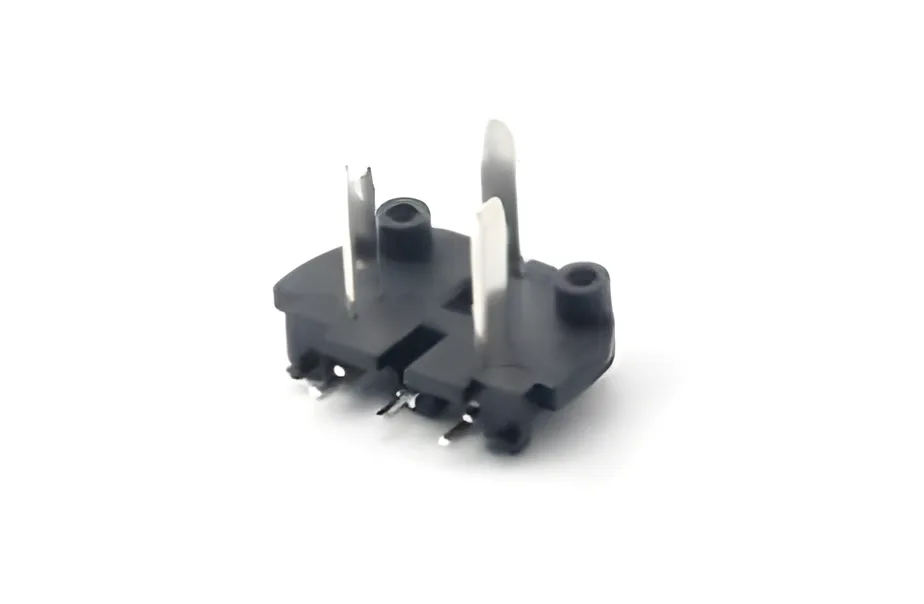
EV Charging Levels Explained
Before diving into connector types, you need to understand charging levels. The "level" defines how much power the charger delivers.
Level 1 charging uses a standard 120V AC household outlet at 12-16A. It adds roughly 3-5 miles of range per hour — adequate for plug-in hybrids but impractical for battery EVs.
Level 2 charging uses a 240V AC circuit. This is the workhorse of home and workplace charging, delivering 12-80 miles of range per hour. Most public AC stations and home ev charger installation setups are Level 2.
Level 3 / DC fast charging (DCFC) bypasses the vehicle's onboard charger, feeding DC power directly to the battery. DC fast chargers add 100-200+ miles of range in 20-30 minutes, making them essential for highway corridors and commercial fleets.
| Charging Level | Power Output | Voltage | Typical Charge Time (0–80%) | Primary Use Case |
|---|---|---|---|---|
| Level 1 (AC) | 1.2–1.9 kW | 120V AC | 24–40 hours | Emergency / overnight PHEV |
| Level 2 (AC) | 3.3–19.2 kW | 240V AC | 3–10 hours | Home, workplace, public AC |
| Level 3 (DC Fast) | 50–350+ kW | 200–1000V DC | 15–45 minutes | Highway, fleet, commercial |
The connector type determines which charging levels a vehicle can access. Some connectors support only AC, others only DC, and a few handle both.
Type 1 Connector (SAE J1772)
The Type 1 connector, formally known as SAE J1772, is the standard AC charging plug in North America and Japan. It uses a 5-pin design: two AC power pins (L1 and Neutral), a ground pin, a proximity detection pin (PP), and a control pilot pin (CP). The control pilot handles communication between the vehicle and the EVSE, negotiating the maximum current the circuit can safely deliver.
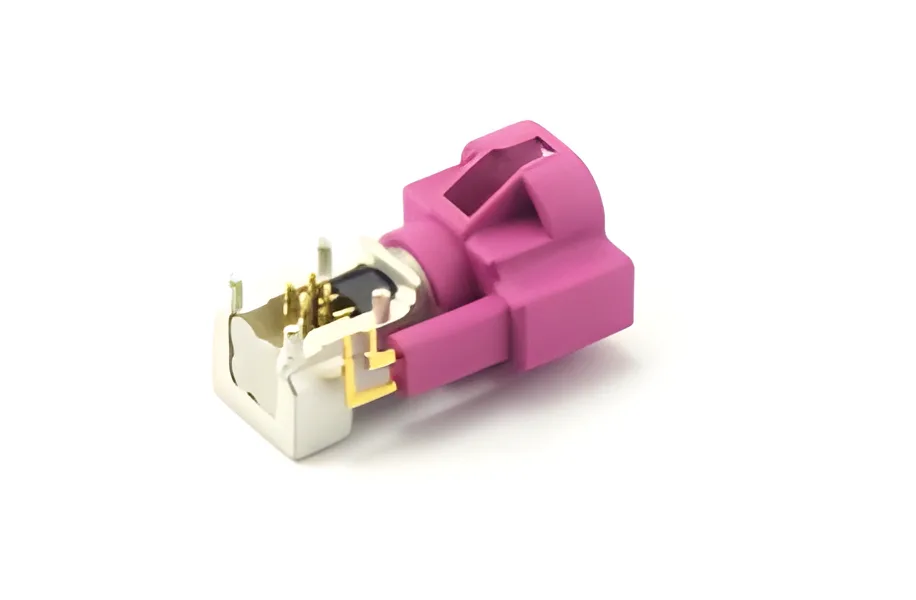
Type 1 Connector Specifications:
| Parameter | Specification |
|---|---|
| Standard | SAE J1772 / IEC 62196-2 Type 1 |
| Pins | 5 (L1, N, PE, CP, PP) |
| AC Phases | Single-phase only |
| Max Voltage | 240V AC |
| Max Current | 80A |
| Max Power | 19.2 kW |
| Charging Level | Level 1 and Level 2 |
| Locking | Mechanical latch |
| Regions | North America, Japan, South Korea |
Type 1 is a single-phase-only connector, which limits charging speed compared to three-phase Type 2 systems. Most real-world J1772 installations operate at 32A (7.7 kW) or 40A (9.6 kW). Every non-Tesla EV sold in North America before 2024 included a J1772 inlet, and millions of Level 2 stations use this plug.
Type 2 Connector (IEC 62196)
The Type 2 connector, standardized under IEC 62196-2, is the dominant AC charging plug in Europe, Australia, and much of the world outside North America and China. Type 2 uses a 7-pin design that supports both single-phase and three-phase AC power. On a three-phase 32A circuit, a Type 2 connector delivers 22 kW — nearly three times the typical J1772 installation.
Type 2 Connector Specifications:
| Parameter | Specification |
|---|---|
| Standard | IEC 62196-2 Type 2 |
| Pins | 7 (L1, L2, L3, N, PE, CP, PP) |
| AC Phases | Single-phase and three-phase |
| Max Voltage | 480V AC |
| Max Current | 63A (single) / 63A (three-phase) |
| Max Power | 43 kW (three-phase) |
| Charging Level | Level 2 (AC) |
| Locking | Electronic locking (EU) / Mechanical (AU) |
| Regions | Europe, Australia, New Zealand, Middle East, Africa |
In Australia, the type 2 connector is the mandated standard for AC charging. Every EV sold in Australia includes a Type 2 inlet. For Australian fleet operators and charging network builders, Type 2 is the only AC connector to consider.
The Type 2 plug also serves as the AC portion of the CCS2 combined connector, which adds two DC pins below the Type 2 inlet. A vehicle with a CCS2 inlet can accept both Type 2 AC and CCS2 DC fast charging through a single port.
CCS Connector (Combined Charging System)
The CCS connector is the most widely adopted DC fast charging standard globally. CCS combines an AC connector (Type 1 or Type 2) with two additional DC power pins to create a single inlet for both AC and DC charging.
There are two variants:
- CCS1 (Combo 1): Combines Type 1 (J1772) AC with DC pins. Used in North America.
- CCS2 (Combo 2): Combines Type 2 AC with DC pins. Used in Europe, Australia, and most other markets.
For a full comparison of the two variants, see our CCS1 vs CCS2 guide.
The DC pins sit below the AC connector. When AC charging, only the upper portion is used.
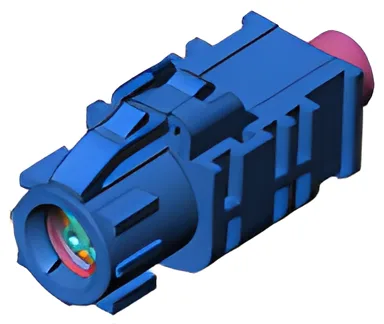
CCS Connector Specifications:
| Parameter | CCS1 (Combo 1) | CCS2 (Combo 2) |
|---|---|---|
| Standard | SAE J1772 CCS / IEC 61851-23 | IEC 62196-3 Configuration FF |
| AC Portion | Type 1 (5-pin) | Type 2 (7-pin) |
| DC Pins | 2 (DC+ and DC−) | 2 (DC+ and DC−) |
| Max DC Voltage | 1000V | 1000V |
| Max DC Current | 500A | 500A |
| Max DC Power | 350 kW | 350 kW |
| Communication | PLC (ISO 15118) | PLC (ISO 15118) |
| Regions | North America | Europe, Australia, South Korea |
CCS supports the ISO 15118 communication protocol, enabling Plug & Charge (automatic authentication), smart charging, and bidirectional power flow (V2G).
In the United States, CCS1 has been the dominant DC fast charging standard for non-Tesla EVs. However, the rise of NACS is reshaping this landscape.
In Australia, CCS2 is the DC fast charging standard. Every public DC fast charger uses CCS2, and all EVs sold in the market include a CCS2 inlet. For ev charger installation in Australia, CCS2 is mandatory for DC fast charging.
CZT manufactures high-reliability EV charging connectors including CCS inlets and cable assemblies rated for the full 350 kW CCS specification.
CHAdeMO Connector
CHAdeMO is a DC fast charging standard developed by a consortium of Japanese automakers including Toyota, Nissan, Mitsubishi, and Subaru. It was the first widely deployed DC fast charging standard, predating CCS by several years. The Nissan LEAF used CHAdeMO exclusively for fast charging through multiple generations.
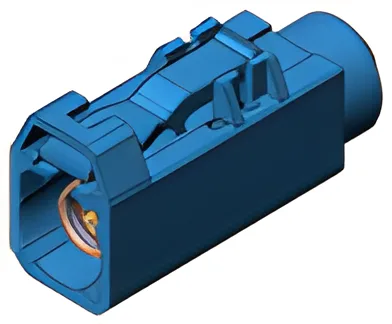
CHAdeMO Connector Specifications:
| Parameter | Specification |
|---|---|
| Standard | IEEE 2030.1.1 / IEC 61851-24 |
| Connector Type | DC only (separate from AC) |
| Pins | 10 (2 DC power, 8 signal/communication) |
| Max DC Voltage | 1000V |
| Max DC Current | 400A |
| Max DC Power | 400 kW (CHAdeMO 2.0) |
| Communication | CAN bus |
| V2G Support | Yes (native bidirectional) |
| Regions | Japan (declining elsewhere) |
CHAdeMO's standout feature is native bidirectional charging (V2G), making it ideal for vehicle-to-home and vehicle-to-grid applications, particularly in Japan where the technology is used for disaster resilience.
However, CHAdeMO's market share outside Japan has declined sharply. In North America and Europe, newer models have transitioned to CCS or NACS. CHAdeMO also requires a separate port from the AC connector, meaning vehicles need two charging inlets — a disadvantage compared to CCS, which combines both into a single port.
Tesla Connector (NACS / SAE J3400)
Tesla's proprietary connector, now officially standardized as the North American Charging Standard (NACS) under SAE J3400, is the most significant development in the EV charging landscape since CCS.
For over a decade, Tesla used its own connector exclusively across its Supercharger network — the largest DC fast charging network in North America. In late 2022, Tesla published the NACS specification and invited other automakers to adopt it. By mid-2024, virtually every major automaker selling EVs in North America — Ford, GM, Rivian, Hyundai, BMW, Mercedes-Benz, and others — announced NACS adoption for future models.

NACS / SAE J3400 Connector Specifications:
| Parameter | Specification |
|---|---|
| Standard | SAE J3400 (formerly Tesla proprietary) |
| Connector Type | Combined AC and DC |
| Pins | 5 (2 DC/AC power, ground, CP, PP) |
| Max DC Voltage | 1000V |
| Max DC Current | 500A (V3), 900A+ (V4) |
| Max DC Power | 350 kW (V3), 500+ kW (V4) |
| Max AC Power | 19.2 kW |
| Communication | PLC (ISO 15118) |
| Regions | North America |
NACS has several practical advantages over CCS1: the plug is roughly half the size and weight, it uses the same port for both AC and DC charging, and it comes with access to Tesla's Supercharger network. New EVs from 2025 onward ship with NACS ports, and the NEVI federal funding program now allows NACS alongside CCS1 at funded stations.
NACS is a North American standard only. In Europe, Australia, and other markets, CCS2 and Type 2 remain the standards with no NACS adoption path.
GB/T Connector
The GB/T connector is China's national EV charging standard, governed by the GB/T 20234 series. As the world's largest EV market, GB/T is by volume the most-used EV charging connector globally.
GB/T comes in two variants:
- GB/T AC: A 7-pin connector for single-phase and three-phase AC charging up to 27.7 kW.
- GB/T DC: A 9-pin connector for DC fast charging up to 250 kW.
GB/T Connector Specifications:
| Parameter | GB/T AC | GB/T DC |
|---|---|---|
| Standard | GB/T 20234.2 | GB/T 20234.3 |
| Pins | 7 | 9 |
| Max Voltage | 440V AC | 1000V DC |
| Max Current | 63A | 250A |
| Max Power | 27.7 kW | 250 kW |
| Communication | CP/PP | CAN bus |
| Regions | China, expanding with Chinese EV exports |
GB/T is increasingly relevant outside China as BYD, NIO, and XPeng enter global markets. Export vehicles are typically adapted with CCS2 or Type 2 for overseas markets.
The next-generation ChaoJi standard, jointly developed by China and Japan, aims to unify GB/T and CHAdeMO into a connector supporting up to 900 kW.
EV Charging Connector Comparison Table
Here is a side-by-side comparison of every major ev connector type in use today.
| Standard | Type | Max Power | Max Voltage | Max Current | Regions | Typical Vehicles |
|---|---|---|---|---|---|---|
| Type 1 (J1772) | AC | 19.2 kW | 240V AC | 80A | North America, Japan | Nissan LEAF (AC), Chevy Bolt (AC) |
| Type 2 (Mennekes) | AC | 43 kW | 480V AC | 63A | Europe, Australia, NZ | All European/AU EVs (AC) |
| CCS1 (Combo 1) | AC + DC | 350 kW | 1000V DC | 500A | North America | Ford Mustang Mach-E, Hyundai Ioniq 5 |
| CCS2 (Combo 2) | AC + DC | 350 kW | 1000V DC | 500A | Europe, Australia | BMW iX, Kia EV6, BYD Atto 3 (AU) |
| CHAdeMO | DC only | 400 kW | 1000V DC | 400A | Japan | Nissan LEAF (DC), Mitsubishi Outlander |
| NACS (SAE J3400) | AC + DC | 500+ kW | 1000V DC | 900A+ | North America | Tesla (all), Ford (2025+), GM (2025+) |
| GB/T AC | AC | 27.7 kW | 440V AC | 63A | China | BYD, NIO, XPeng (domestic) |
| GB/T DC | DC | 250 kW | 1000V DC | 250A | China | BYD, NIO, XPeng (domestic) |
Key takeaways:
- CCS and NACS dominate the Western market. US needs NACS and CCS1. Australia and Europe need CCS2 and Type 2.
- CHAdeMO is legacy. New installations should not prioritize CHAdeMO.
- GB/T is China-only for now. Export vehicles use CCS2 or Type 2 overseas.
EV Charging Connector Standards by Region
Regional standards matter for ev charger installation planning. Here is what each market requires.
| Region | AC Standard | DC Fast Charging Standard | Notes |
|---|---|---|---|
| United States | Type 1 (J1772) / NACS | CCS1 / NACS | NACS rapidly becoming primary standard |
| Canada | Type 1 (J1772) / NACS | CCS1 / NACS | Follows US standards |
| Europe (EU/UK) | Type 2 | CCS2 | Type 2 and CCS2 mandated by regulation |
| Australia | Type 2 | CCS2 | AS/NZS 3001.2 mandates Type 2 and CCS2 |
| New Zealand | Type 2 | CCS2 | Follows Australian standards |
| Japan | Type 1 | CHAdeMO / CCS | CHAdeMO legacy, CCS growing |
| China | GB/T AC | GB/T DC | Mandatory national standard |
| South Korea | Type 1 | CCS1 / CCS2 | Transitioning from Type 1 to CCS |
| India | Type 2 / GB/T AC | CCS2 / GB/T DC | Dual-standard market |
For US-based operators: The market is in transition. New builds should include NACS as the primary DC connector with CCS1 for backward compatibility.
For Australian operators: Type 2 for AC, CCS2 for DC. There is no NACS adoption in Australia, and CHAdeMO is effectively dead in the market.
How to Choose the Right EV Charging Connector
Selecting the right ev charging connector depends on your use case, location, and the vehicles you need to support.
1. Identify your market. North America needs NACS and CCS1. Europe and Australia need Type 2 and CCS2.
2. Determine the charging level. Home and workplace need AC connectors only. DC fast charging requires CCS or NACS infrastructure.
3. Assess your vehicle fleet. Mixed fleets may need dual-standard stations.
4. Plan for the future. In North America, prioritize NACS. In Australia and Europe, CCS2 is stable long-term.
5. Consider power requirements. Match connector choice to your power needs — 7 kW Type 2 for depot charging, 150-350 kW CCS2/NACS for highway corridors.
6. Source quality components. EV connectors must withstand thousands of mating cycles, extreme temperatures, and high electrical loads. Work with IATF 16949-certified manufacturers.
CZT provides EV charging connectors engineered to meet these demands, with ISO 9001 / IATF 16949 certification.
The Future of EV Charging Connectors
The EV charging connector landscape is consolidating. Several developments will shape the next decade.
NACS becomes the North American standard. By 2026, most new EVs sold in the US and Canada ship with NACS ports. CCS1 persists as legacy but declines in new installations.
Megawatt Charging System (MCS). The CharIN MCS standard targets commercial trucks and buses at up to 3.75 MW. Long-haul electric trucking depends on MCS deployment along freight corridors.
Bidirectional charging goes mainstream. V2G, V2H, and V2L capabilities are moving from niche to mainstream via ISO 15118-20 over CCS and upcoming NACS V4 support.
Wireless charging for specific use cases. SAE J2954 defines wireless power transfer at up to 11 kW — ideal for autonomous vehicles and bus depots but unlikely to replace plug-in charging broadly.
No single global standard. North America converges on NACS, Europe and Australia on CCS2, China on GB/T/ChaoJi. Connector manufacturers must support multiple standards.

Frequently Asked Questions
What are the main ev charger types? The main ev charger types are Type 1 (J1772), Type 2 (Mennekes), CCS1, CCS2, CHAdeMO, NACS (Tesla/SAE J3400), and GB/T. Type 1 and Type 2 are AC-only. CCS1, CCS2, and NACS handle both AC and DC. CHAdeMO and GB/T DC are DC-only.
What ev charging connector does Australia use? Australia uses the Type 2 connector for AC charging and CCS2 for DC fast charging, mandated by AS/NZS 3001.2. Every EV sold in Australia includes a CCS2 inlet. CHAdeMO and NACS are not used in the Australian market.
Is CCS or NACS better? In North America, NACS is becoming dominant due to its smaller size and Tesla Supercharger network access. Outside North America, CCS2 remains the standard. The "better" connector depends on your region.
Can I use a CCS charger with a Tesla? Yes. Older Teslas can use CCS1 with an adapter. Newer Tesla vehicles (2024+) with NACS ports use CCS1 stations via a NACS-to-CCS1 adapter. In Europe and Australia, Teslas use CCS2 natively.
How much does ev charger installation cost? EV charger installation costs vary widely. A home Level 2 charger typically costs $500-$2,000 for the unit plus $500-$1,500 for electrical work. Commercial Level 2 stations run $2,000-$5,000 per port. DC fast charging stations cost $50,000-$150,000+ per unit, with electrical infrastructure often exceeding the charger cost. In Australia, government rebates can offset 30-50% of residential ev charger installation costs.
CZT manufactures EV charging connectors, CCS inlets, and charging infrastructure components. With 30+ years of connector expertise, ISO 9001/IATF 16949 certification, and customers in 60+ countries, we support the global EV transition. Request a Quote →


