Verify LC duplex polarity by documenting which transmit path reaches which receive path through the complete installed connection. Connector color and the orientation of a duplex clip do not replace an end-to-end map. A production check should make reversed paths detectable before the assembly reaches the equipment line.
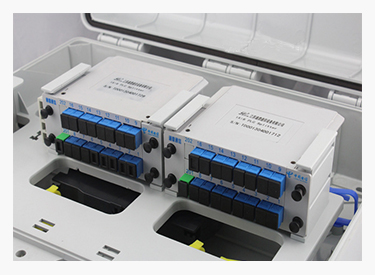
Figure 1. Official optical-distribution equipment illustrates why endpoint and panel-port labels belong in an end-to-end polarity map; the pictured interfaces are not identified as LC. CZT source · Original image.
Define endpoint labels and viewing direction
Assign stable identifiers to each fiber position at both ends. State whether a diagram shows the mating face or the cable-entry side. A position called left without a view direction can be interpreted in opposite ways by cable and equipment suppliers.
Keep circuit function separate from physical position. Record the host's actual transmit and receive arrangement from its documentation, then map the cable to it. Do not assume that two visually identical equipment ports use an interchangeable internal arrangement.
Follow the complete connection chain
Include patch leads, adapters, panels and any intermediate assemblies. A correct individual lead can still form an incorrect end-to-end connection when combined with another component. Save the installed mapping as part of the assembly drawing.
Fluke Networks' data-center connectivity guidance identifies polarity management as an end-to-end concern in optical connectivity. The specific map still needs to come from the product's actual interface design and selected assemblies.
Use a production polarity record
| Record field | Example of the required definition |
|---|---|
| End A identity | Equipment port and fiber-position labels |
| End B identity | Equipment port and corresponding labels |
| View | Explicit mating-face or other drawing view |
| Mapping | Each A position linked to its B destination |
| Test | Method, sample ID and measured continuity map |
| Status | Accepted, corrected and rechecked, or held |
Use an appropriate test method and equipment for the installed fiber. A link LED may show that one system configuration operates, but it is a weaker manufacturing record than an explicit tested fiber map.
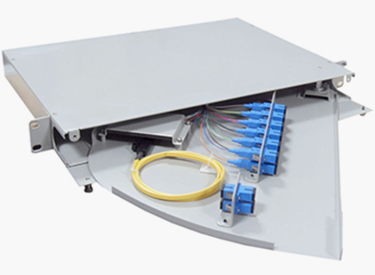
Figure 2. Official distribution-unit example shows multiple routed fibers. Preserve actual channel identities rather than assuming the internal mapping from the photograph. CZT source · Original image.
Control changes and field handling
Where a duplex construction permits polarity reversal, define who can perform it and how the resulting arrangement is labeled and verified. A convenient field correction should not erase the product's recorded configuration.
CZT's fiber-optic product family provides an interface-consultation route. The specifically identified catalog patch-cable example is SC-to-FC, so it should not be ordered as an LC duplex equivalent without a separate confirmed product proposal.
Label temporary test adapters and reference leads so they cannot be confused with production parts. Their mapping can differ from the installed assembly, and an unexplained test harness can make a correct cable appear reversed during receiving inspection.
A hypothetical failure is a cable supplier labeling the mating face while an assembler reads the drawing from the rear. Both may believe the left and right fibers match. An explicit view and measured map resolve the ambiguity before the lead is released. Retain that map with the cable revision, and repeat the relevant check whenever clips, adapters or equipment-side assignments change.
Connect this review to CZT product information
For LC, MPO, polish or polarity requirements, start with the fiber-optic product family. The available SC-to-FC assembly record is a different interface and is not presented here as a matching LC or MPO part. Ask CZT to confirm the exact configuration and available documentation.
Browse the relevant product family · View catalog resources
Discuss a drawing, sample or quotation
Share the part or family reference, current drawing revision, operating conditions and quantities. Include the specific checks described in this article so the inquiry identifies both the component and the evidence needed for your decision. Confirm sample availability and the proposed scope with the supplier.
Request a technical review or quotation
For broader context, read the related selection guide.