China produces over 60% of the world's electronic connectors. For procurement engineers, supply chain managers, and product designers, that statistic is impossible to ignore. Whether you need RJ45 jacks, fiber optic adapters, automotive terminals, or custom high-power busbars, there is almost certainly a connector manufacturer in China that can deliver what you need at a competitive price.
But navigating the Chinese connector market is not as simple as searching Alibaba and picking the lowest quote. The gap between a world-class connector supplier and a subpar one can mean the difference between a product that performs flawlessly for 20 years and one that fails in the field, triggering recalls, warranty claims, and damaged customer relationships.
This guide walks you through the entire sourcing process, from defining your requirements to managing ongoing quality. It is based on decades of experience in the connector industry and designed to help you make confident, informed decisions.
Why Source Connectors from China?
Before diving into the how, it is worth understanding the why. China's dominance in connector manufacturing is not accidental. It is the result of several structural advantages that benefit international buyers.
Cost efficiency. Labor costs, raw material access, and economies of scale allow Chinese factories to offer connectors at 30-50% lower cost compared to equivalent products from North American or European manufacturers. This is not about cutting corners. It is about operating within a mature, optimized supply chain ecosystem.
Manufacturing scale. China is home to thousands of connector factories, ranging from small workshops to publicly listed companies with thousands of employees. This means you can find a china connector factory capable of producing anything from 1,000 pieces to 100 million pieces per year.
Complete supply chain ecosystem. Connector manufacturing depends on precision stamping, injection molding, plating, and assembly. In Chinese manufacturing hubs like Wenzhou, Shenzhen, and Dongguan, all of these capabilities exist within a small geographic radius. This shortens lead times and reduces logistics costs.
Rapid prototyping and tooling. Chinese manufacturers can typically produce prototype tooling in 2-3 weeks, compared to 6-8 weeks in Western countries. For product development teams working on tight timelines, this speed advantage is significant.
Rising quality standards. The best Chinese connector manufacturers now hold ISO 9001, IATF 16949, UL, CE, and TUV certifications. They invest in automated optical inspection, CNC machining centers, and in-house testing labs that rival anything in Europe or Japan. The quality gap that existed 20 years ago has largely closed at the top end of the market.
Step 1: Define Your Requirements
The single most important thing you can do before contacting any connector supplier china is to clearly define what you need. Vague requirements lead to vague quotes, mismatched samples, and wasted time on both sides.
Use this checklist before you start reaching out to manufacturers:
Requirements Checklist
| Category | Details to Specify |
|---|---|
| Connector type | Board-to-board, wire-to-board, wire-to-wire, fiber optic, RF, power, etc. |
| Mating interface | Pin count, pitch, gender, keying, locking mechanism |
| Electrical specs | Rated voltage, rated current, contact resistance, insulation resistance |
| Mechanical specs | Mating cycles, insertion force, retention force, vibration resistance |
| Environmental specs | Operating temperature range, IP rating, salt spray hours, UV resistance |
| Materials | Housing material (PBT, PA66, LCP), contact material (copper alloy, phosphor bronze), plating (gold, tin, nickel) |
| Certifications | UL, CSA, TUV, CE, RoHS, REACH, IATF 16949 (automotive) |
| Volume | Annual estimated quantity, initial order quantity, ramp-up schedule |
| Timeline | Prototype delivery date, production start date, ongoing delivery cadence |
| Budget | Target unit price range, tooling budget, total landed cost target |
| Packaging | Tape and reel, tray, bulk, custom packaging requirements |
If you are designing a custom connector for a specific application, prepare a 2D drawing or 3D model. Even a rough sketch with critical dimensions is far more useful than a text description alone.
For guidance on which certifications matter for your application, see our detailed connector certifications guide.
Step 2: Find Qualified Manufacturers
With your requirements defined, the next step is building a shortlist of potential manufacturers. Here are the most effective channels for finding a qualified chinese connector manufacturer.
Trade Shows
Industry trade shows remain the best way to evaluate manufacturers face-to-face. Key events include:
- Electronica (Munich, Germany) — the world's largest electronics components trade show, held biennially. Most serious Chinese connector manufacturers exhibit here.
- Productronica (Munich, Germany) — focused on electronics production technology, with strong connector manufacturer presence.
- Electronica China (Shanghai) — the Asian counterpart, excellent for meeting a wide range of Chinese suppliers.
- CIOE (Shenzhen) — China International Optoelectronic Exposition, ideal for fiber optic connector sourcing.
B2B Platforms
Online platforms can help you cast a wider net, but require careful vetting:
- Alibaba / Made-in-China — useful for initial discovery, but treat listings as starting points, not final evaluations. Verified supplier badges indicate basic legitimacy, not quality.
- Global Sources — tends to attract more established manufacturers with export experience.
- Company websites — a manufacturer's own website often reveals more about their capabilities, certifications, and customer base than any third-party platform.
Industry Directories and Referrals
- Bishop & Associates connector industry reports
- Connector Supplier magazine directories
- IPC (Institute for Printed Circuits) member directories
- Referrals from non-competing companies in your industry — often the most reliable source
Evaluating Online Presence
When reviewing a potential connector manufacturer china, look for these signals on their website:
- Specific product datasheets with detailed specifications (not just photos)
- Certifications displayed with certificate numbers, not just logos
- Case studies or named customer references
- Factory photos showing real equipment, not stock images
- Technical blog content demonstrating engineering expertise
- Clear contact information with a physical address
A manufacturer that invests in a professional, technically detailed online presence is more likely to invest in quality manufacturing.
Step 3: Evaluate Manufacturer Capabilities
Once you have a shortlist of 3-5 potential suppliers, it is time to dig deeper. A thorough capability evaluation separates reliable long-term partners from risky short-term vendors.
Factory Audit Checklist
Whether you visit in person or conduct a remote audit, assess these areas:
Certifications and management systems:
- ISO 9001 (quality management) — baseline requirement
- IATF 16949 (automotive quality) — required for automotive connectors, strong signal of quality culture even for non-automotive applications
- UL recognition — essential for connectors sold in North America
- CE marking capability — required for European markets
- TUV certification — additional credibility for European customers
- RoHS/REACH compliance — mandatory for most markets
Manufacturing equipment:
- High-speed stamping presses (progressive die capability)
- Precision injection molding machines (with tonnage appropriate for your parts)
- Automated assembly lines
- CNC machining centers (for tooling and prototypes)
- Plating lines (in-house vs. outsourced)
Quality and testing:
- In-house testing laboratory
- Salt spray chamber, thermal cycling chamber, vibration testing equipment
- Optical measurement systems (CMM, vision systems)
- Electrical testing equipment (hipot, contact resistance, insulation resistance)
- Statistical process control (SPC) implementation
Capacity and workforce:
- Total production capacity vs. current utilization
- Number of employees (production, engineering, QC)
- R&D team size and capabilities
- Dedicated export/international sales team
Export experience:
- Percentage of revenue from export
- Countries and regions served
- Experience with your specific industry
- Familiarity with international shipping and documentation

Step 4: Request and Compare Quotations
A well-structured RFQ (Request for Quotation) gets you accurate, comparable quotes. A sloppy one gets you confusion and hidden costs.
What to Include in Your RFQ
- Complete technical drawing or 3D model
- Material and plating specifications
- Required certifications and test reports
- Annual volume estimate and initial order quantity
- Target delivery date
- Preferred Incoterms (FOB, CIF, DDP)
- Packaging and labeling requirements
- Any special requirements (custom marking, traceability, etc.)
How to Compare Quotes Fairly
Do not simply compare unit prices. Build a total landed cost model that includes:
| Cost Element | Notes |
|---|---|
| Unit price | Confirm what is included (plating, packaging, inspection) |
| Tooling cost | One-time cost for stamping dies and mold tooling. Can range from $2,000 to $50,000+ depending on complexity |
| MOQ | Minimum order quantity — affects your inventory carrying cost |
| Sample cost | Some manufacturers charge for samples, others provide them free |
| Shipping | Ocean freight, air freight, or express. Get actual quotes, not estimates |
| Customs duties | Varies by country and HS code. Check your local tariff schedule |
| Import taxes | VAT or GST applicable in your country |
| Payment terms | Early payment discounts vs. extended terms |
| Quality cost | Factor in the cost of incoming inspection and potential rejects |
A quote that is 20% cheaper but comes with a 5% defect rate is not actually cheaper. Always evaluate total cost of ownership.
Hidden Costs to Watch For
- Tooling ownership. Clarify who owns the tooling. If you pay for it, you should own it and be able to transfer it.
- Tooling maintenance. Dies and molds wear out. Understand who pays for refurbishment or replacement.
- Engineering change costs. If you modify the design after tooling, what are the charges?
- Small order surcharges. Some factories add surcharges for orders below their standard MOQ.
- Packaging upgrades. Tape-and-reel packaging for SMT connectors costs more than bulk packaging.
Step 5: Sample Testing and Validation
Never skip sample testing. Even if a manufacturer has perfect certifications and a beautiful factory, the only thing that matters is whether the actual parts meet your specifications.
Sample Testing Process
First article inspection (FAI): Measure critical dimensions against your drawing. Check plating thickness, material composition, and cosmetic appearance. Document everything with photos and measurements.
Functional testing: Mate and unmate the connectors for the rated number of cycles. Measure insertion force, retention force, and contact resistance at each interval. Verify that the connector performs within specification throughout its rated life.
Environmental testing: Subject samples to the environmental conditions specified in your requirements:
- Thermal cycling (e.g., -40C to +125C, 500 cycles)
- Salt spray (e.g., 48-96 hours per ASTM B117)
- Humidity (e.g., 85C/85% RH, 1000 hours)
- Vibration (per your application standard)
Third-party testing: For critical applications, send samples to an independent test lab (UL, TUV, SGS, Bureau Veritas) for verification. This adds cost and time but provides an unbiased assessment.
Cross-reference testing: If the connector is a replacement for an existing part, test it side-by-side with the incumbent product. Verify form, fit, and function compatibility.
Approval Process
Establish a formal sample approval process:
- Request initial samples (T0 samples from prototype tooling)
- Evaluate and provide feedback
- Request revised samples if needed (T1, T2)
- Approve production tooling (P0 samples)
- Conduct PPAP (Production Part Approval Process) for automotive applications
- Issue formal written approval before production begins
Do not rush this phase. It is far cheaper to catch problems during sampling than during mass production.
Step 6: Negotiate Terms and Place Orders
With approved samples in hand, you are ready to finalize commercial terms. Here are the key areas to negotiate.
Payment Terms
Common payment structures for sourcing from a connector supplier in China:
- T/T (Telegraphic Transfer): Most common. Typical terms are 30% deposit with order, 70% balance before shipment. Established relationships may move to net-30 or net-60 after shipment.
- L/C (Letter of Credit): Provides security for both parties. Recommended for large first orders or when working with a new supplier. Adds banking fees but reduces risk.
- PayPal / Credit Card: Sometimes used for small sample orders. Not practical for production volumes.
Incoterms
Understand what you are paying for:
- EXW (Ex Works): You arrange everything from the factory door. Lowest quoted price but highest buyer responsibility.
- FOB (Free on Board): Seller delivers to the port and handles export clearance. You arrange ocean freight and insurance. Most common for China sourcing.
- CIF (Cost, Insurance, Freight): Seller arranges shipping and insurance to your destination port. Convenient but you have less control over shipping costs.
- DDP (Delivered Duty Paid): Seller handles everything to your door, including customs clearance and duties. Highest quoted price but simplest for the buyer.
Other Key Terms
- Lead time: Typical production lead time for connectors is 4-8 weeks after order confirmation. Clarify whether this includes tooling time.
- Quality agreement: A formal document specifying acceptable quality levels (AQL), inspection methods, defect definitions, and corrective action procedures. Essential for any serious business relationship.
- NDA (Non-Disclosure Agreement): If you are sharing proprietary designs, execute an NDA before sending technical documents. Chinese law does recognize and enforce NDAs, but use a bilingual (English/Chinese) version for clarity.
- Tooling agreement: Separate document covering tooling ownership, maintenance responsibility, and transfer rights.
Step 7: Quality Control and Ongoing Management
Placing the order is not the finish line. Ongoing quality management is what separates successful sourcing programs from problematic ones.
Incoming Inspection
Establish a receiving inspection procedure for every shipment:
- Visual inspection per AQL sampling plan (typically AQL 0.65 for critical defects, AQL 1.0 for major, AQL 2.5 for minor)
- Dimensional verification of critical features
- Electrical testing (contact resistance, insulation resistance, hipot)
- Plating thickness verification (X-ray fluorescence)
- Material verification if required (XRF or FTIR)
Statistical Process Control
Request SPC data from your manufacturer for critical dimensions and characteristics. Key metrics to monitor:
- Cpk (process capability index) — target 1.33 or higher
- Control charts for critical dimensions
- Defect rate trends (PPM)
Regular Audits
- Conduct annual factory audits (in-person or remote)
- Review quality data quarterly
- Track on-time delivery performance
- Monitor corrective action closure rates
Communication Best Practices
Effective communication with your Chinese connector supplier makes everything else easier:
- Assign a dedicated contact on both sides. Avoid routing everything through sales.
- Use written communication for all technical matters. Email creates a record. Verbal agreements do not.
- Be specific and visual. Annotated drawings and photos communicate better than paragraphs of text.
- Respect time zones. Wenzhou and Shenzhen are GMT+8. Schedule calls during overlapping business hours.
- Learn basic cultural norms. Direct confrontation is less effective than collaborative problem-solving. Frame quality issues as shared challenges, not accusations.
- Visit the factory at least once. Face-to-face relationships carry significant weight in Chinese business culture and will improve every interaction that follows.
Common Mistakes When Sourcing Connectors from China
After working with international buyers for over three decades, we have seen the same mistakes repeated. Avoid these and you will be ahead of most sourcing programs.
Choosing on price alone. The cheapest quote almost always has a hidden cost — whether it is lower material quality, skipped testing, or poor consistency. Evaluate total cost of ownership, not just unit price.
Skipping the factory audit. Photos and certifications on a website are a starting point, not proof. A factory audit reveals the truth about a manufacturer's capabilities, culture, and commitment to quality.
Providing unclear specifications. If your drawing is ambiguous, the manufacturer will interpret it in the way that is easiest or cheapest for them. Invest time in clear, complete technical documentation.
No quality agreement. Without a written quality agreement, you have no objective basis for rejecting defective parts or demanding corrective action. Get it in writing before production starts.
Poor communication cadence. Going silent for weeks and then sending urgent requests creates stress and errors. Establish a regular communication rhythm — weekly updates during production, monthly reviews during steady-state.
Ignoring intellectual property protection. If your connector design is proprietary, take steps to protect it: NDA, patent filing in China, and working with manufacturers who have a track record of respecting IP.
Not having a backup supplier. Single-sourcing from any country is risky. Qualify at least two manufacturers for critical components.
Red Flags to Watch For
Not every china connector factory is a good partner. Watch for these warning signs during your evaluation:
- No certifications or unwillingness to share certificates. Legitimate manufacturers are proud of their certifications and will share them readily. If a supplier is evasive, walk away.
- Reluctant to share factory photos or allow visits. A manufacturer that will not show you their facility likely has something to hide — or does not actually have a factory.
- Unrealistically low prices. If a quote is 50% below every other supplier, the manufacturer is either using inferior materials, skipping quality steps, or planning to raise prices after you are committed.
- No references or customer list. Established manufacturers can point to real customers and real projects. New or unreliable ones cannot.
- Inconsistent communication. If responses are slow, vague, or contradictory during the quoting phase — when the supplier is trying to win your business — imagine how communication will be after you have placed the order.
- Pressure to skip sampling. Any manufacturer that pushes you to go straight to production without sample approval is prioritizing their timeline over your quality.
- No English-speaking technical staff. Sales staff may speak English, but if the engineering and quality teams cannot communicate with you directly, technical issues will be lost in translation.
Frequently Asked Questions
What is the typical MOQ for custom connectors from China?
MOQ varies significantly by connector type and complexity. For standard connectors with existing tooling, MOQs can be as low as 1,000-5,000 pieces. For custom connectors requiring new tooling, manufacturers typically require 10,000-50,000 pieces for the initial order to justify the tooling investment. However, many manufacturers are flexible on MOQ if you commit to an annual volume forecast. Discuss your volume expectations openly during the quoting phase.
How long does it take to develop a custom connector from scratch?
A typical custom connector development timeline is 8-16 weeks, broken down as follows: design review and DFM feedback (1-2 weeks), tooling fabrication (3-6 weeks), first samples and testing (2-4 weeks), tooling revision if needed (2-4 weeks). Simple modifications to existing designs can be faster. Complex multi-cavity tools or connectors requiring UL certification will take longer. Plan for 4-6 months from initial contact to production-ready parts to give yourself adequate margin.
How do I protect my intellectual property when working with a Chinese manufacturer?
Start with a bilingual NDA before sharing any proprietary designs. File patents in China through the China National Intellectual Property Administration (CNIPA) if your design is novel. Work with established, reputable manufacturers — publicly listed companies and those serving major global OEMs have far more to lose from IP violations than small workshops. Include IP protection clauses in your supply agreement. Finally, consider splitting manufacturing across multiple suppliers so that no single factory has your complete design.
What certifications should I require from a Chinese connector manufacturer?
At minimum, require ISO 9001 for quality management and RoHS/REACH compliance for environmental regulations. For automotive applications, IATF 16949 is essential. For connectors sold in North America, UL recognition is typically required. For European markets, CE marking and TUV certification add credibility. For telecom applications, Telcordia (GR) compliance may be needed. Always verify certifications directly with the issuing body — do not rely solely on certificates provided by the manufacturer. For a deeper dive, read our connector certifications guide.
Can I visit connector factories in China? What should I expect?
Yes, and you should. Most reputable manufacturers welcome factory visits and will arrange transportation from the nearest airport. Major connector manufacturing clusters are located in Wenzhou (Zhejiang province), Shenzhen and Dongguan (Guangdong province), and Kunshan (Jiangsu province, near Shanghai). During a visit, expect a facility tour covering stamping, molding, plating, assembly, and testing areas. Bring your technical team if possible — engineer-to-engineer conversations reveal far more than sales presentations. Plan to visit 2-3 factories per trip to make the travel investment worthwhile.
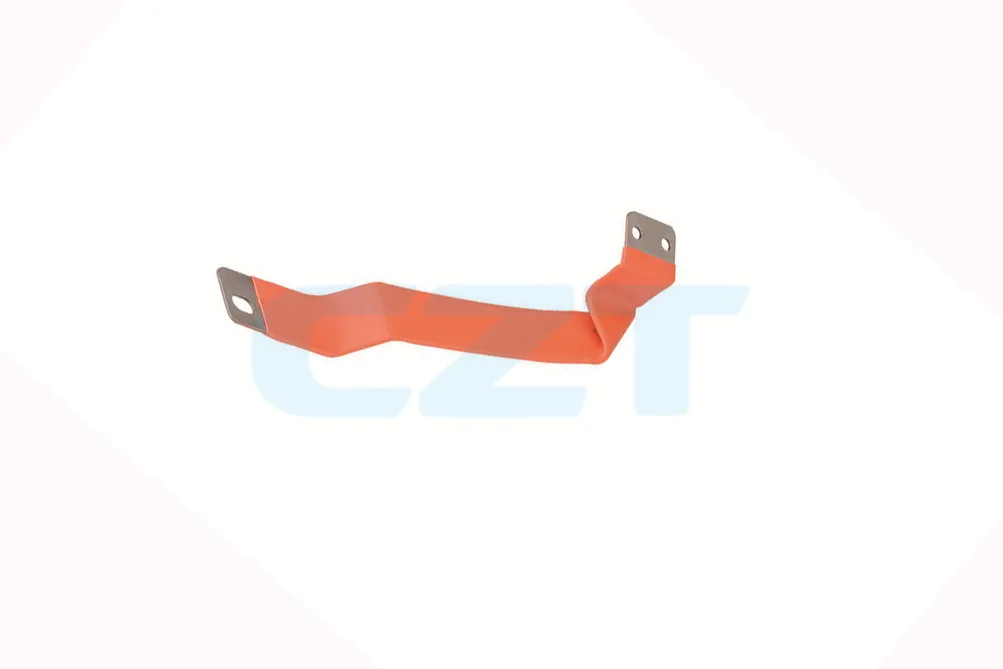
Partner with a Proven Connector Manufacturer
Sourcing connectors from China does not have to be complicated or risky. With clear requirements, thorough evaluation, and disciplined quality management, you can build a supply chain that delivers high-quality connectors at competitive prices with reliable delivery.
The key is choosing the right manufacturing partner — one with the certifications, capabilities, experience, and commitment to quality that your products demand.
CZT (Wenzhou Yihua Connector Co., Ltd.) is a publicly listed connector manufacturer (SZSE: 002897) with over 30 years of experience serving global OEMs across telecom, automotive, solar energy, industrial, and consumer electronics markets. With 3,000+ employees, ISO 9001 / IATF 16949 / UL / CE / TUV certifications, and customers in 60+ countries including Huawei, ZTE, Foxconn, Ericsson, and Samsung, we have the scale, quality systems, and export expertise to be your trusted connector partner.
Whether you need standard catalog connectors, custom-designed solutions, or a second source for an existing part, our engineering team is ready to help.
Request a Quote → | Learn About CZT → | Browse Our Products →