A connector keying matrix should prevent incorrect assembly by documenting which interfaces can approach and mate with one another. Cavity count and color are useful identifiers, but the design should be based on verified geometry and the project's actual misconnection risks.
Use controlled drawings for candidates from the automotive connector family. Do not assume that different colors imply different mechanical keys, or that identical cavity counts imply a shared mating interface. Those relationships must be established for the selected system.

Figure 1. CZT connector CAD models. A keying review compares actual interface geometry rather than color alone. CZT source · Original image.
List the interfaces at the assembly station
Include every connector an operator can encounter within the same reach or service area. Record function, voltage or signal category, mating counterpart and installation location. Consider optional equipment and service replacement parts as well as the main production variant.
Assess the consequence of a wrong connection with the system owner. A connector that cannot fully latch might still allow undesirable contact during an incorrect attempt, so the review should define what misconnection prevention must achieve.
Avoid solving this by labels alone when the product requirements call for mechanical prevention. Labels can support the design, but their role should be explicit.
Construct the pairwise matrix
Place plug or harness interfaces on one axis and equipment interfaces on the other. Mark intended pairs first, then review every unintended pair. Use drawings and, where appropriate, controlled sample checks to establish the result.
| Matrix field | Content |
|---|---|
| Interface ID | Unique project name and location |
| Approved counterpart | Exact controlled reference |
| Keying description | Geometry established by the drawing |
| Visual aid | Color or label, with its limited role |
| Wrong-pair result | Verified rejection or unresolved risk |
Do not fill the wrong-pair cells from a catalog photograph. Keep unverified combinations visible until the required evidence is obtained.
Check assembly and service conditions
For a hypothetical auxiliary-equipment panel, two neighboring two-circuit interfaces may be intended for different functions. Different housing colors would make recognition easier, but a documented keying difference may be needed to control the project's misconnection risk.
Check whether an operator wearing gloves or working in a restricted space can still identify and release the correct pair. Include servicing if a replacement harness can be routed differently from the production assembly.
When physical checks are used, follow a defined non-damaging procedure. Forcing incompatible parts can damage the keying and create misleading results for subsequent trials.
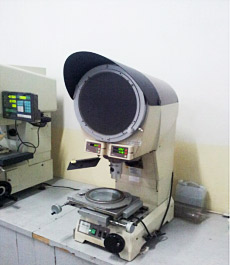
Figure 2. CZT optical-inspection equipment. Dimensional verification supports a keying matrix; no particular automotive key or wrong-mating result is demonstrated. CZT source · Original image.
Keep the matrix under change control
Link every matrix row to the applicable drawing and variant BOM. A color, key or location change can affect more than one pairing and should trigger review of the relevant row and column.
Release the matrix with the evidence and remaining actions, not just a set of product names. This gives purchasing a clear restriction on substitutions and gives assembly engineering a practical way to assess new options before they create another interface that can be confused at the workstation.
Connect this review to CZT product information
Start with the relevant CZT product family and provide the original interface reference or controlled drawing. Ask which configurations and supporting documents are available for the task described here. Confirm the mating arrangement, required features and project conditions before choosing an orderable part.
Browse the relevant product family · View catalog resources
Discuss a drawing, sample or quotation
Share the part or family reference, current drawing revision, operating conditions and quantities. Include the specific checks described in this article so the inquiry identifies both the component and the evidence needed for your decision. Confirm sample availability and the proposed scope with the supplier.
Request a technical review or quotation
For broader context, read the related selection guide.