JST connectors (Japan Solderless Terminal) are among the most widely used small electrical connectors in the world. Originally developed by J.S.T. Mfg. Co., Ltd. in Japan, JST connectors are found in consumer electronics, RC vehicles, drones, battery packs, automotive electronics, and industrial equipment. Their compact size, reliable locking, and wide range of pitch sizes make them the default choice for low-to-medium current connections in space-constrained applications.
The challenge with JST connectors is that "JST" refers to a manufacturer, not a single connector standard. JST makes dozens of connector series with different pitches, current ratings, and locking mechanisms. This guide covers the most commonly used JST series and how to select the right one for your application.

JST Connector Basics
All JST connectors share a common design philosophy:
- Crimp contacts: Wires are crimped to metal contacts, which are then inserted into the plastic housing
- Friction or latch locking: Connectors mate with a friction fit or a positive latch that prevents accidental disconnection
- Polarized housings: The asymmetric housing shape prevents incorrect mating orientation
- Wire-to-board or wire-to-wire: Most JST series are available in both configurations
JST connectors are specified by their pitch — the center-to-center distance between adjacent pins. Common pitches range from 1.0mm to 5.0mm.
Most Common JST Series
JST-PH (2.0mm Pitch)
The JST-PH series is one of the most recognizable JST connectors, widely used for LiPo battery connections in RC vehicles, drones, and portable electronics. The 2.0mm pitch provides a good balance of compact size and current capacity.
- Pitch: 2.0mm
- Current rating: 2A per contact
- Voltage rating: 100V AC/DC
- Pin count: 2–16 positions
- Wire gauge: AWG 32–24 (0.05–0.2mm²)
- Locking: Friction fit (no positive latch)
The 2-pin JST-PH is the standard connector for small LiPo batteries in RC aircraft and drones. The 3-pin and 4-pin variants are used for balance charging connectors on multi-cell LiPo packs.
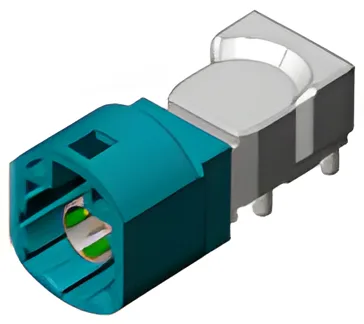
JST-XH (2.5mm Pitch)
The JST-XH series is the standard balance connector for LiPo battery packs in RC vehicles and hobby electronics. The 2.5mm pitch is slightly larger than PH, allowing higher current capacity.
- Pitch: 2.5mm
- Current rating: 3A per contact
- Voltage rating: 250V AC/DC
- Pin count: 2–20 positions
- Wire gauge: AWG 30–22 (0.05–0.3mm²)
- Locking: Positive latch
JST-XH is the dominant balance connector for LiPo packs: 3-pin for 2S, 4-pin for 3S, 5-pin for 4S, and so on. The positive latch prevents accidental disconnection during charging.
JST-SH (1.0mm Pitch)
The JST-SH series is an ultra-compact connector for high-density applications. At 1.0mm pitch, it is one of the smallest JST series and is widely used in smartphones, wearables, and compact IoT devices.
- Pitch: 1.0mm
- Current rating: 1A per contact
- Voltage rating: 50V AC/DC
- Pin count: 2–20 positions
- Wire gauge: AWG 32–28 (0.05–0.08mm²)
- Locking: Friction fit
JST-SH is commonly used for STEMMA QT and Qwiic I²C connectors in the maker/hobbyist ecosystem, standardized by Adafruit and SparkFun for sensor connections.
JST-GH (1.25mm Pitch)
The JST-GH series is widely used in drone flight controllers and autopilot systems. It is the standard connector for the Pixhawk/ArduPilot ecosystem and many commercial drone components.
- Pitch: 1.25mm
- Current rating: 1A per contact
- Voltage rating: 50V AC/DC
- Pin count: 2–15 positions
- Wire gauge: AWG 32–28
- Locking: Positive latch
JST-GH is specified by the Dronecode project as the standard connector for Pixhawk-compatible flight controllers. UART, I²C, SPI, CAN, and power connections on Pixhawk boards all use JST-GH.
JST-ZH (1.5mm Pitch)
The JST-ZH series fills the gap between SH (1.0mm) and PH (2.0mm). It is used in compact consumer electronics and some automotive applications.
- Pitch: 1.5mm
- Current rating: 1A per contact
- Voltage rating: 50V AC/DC
- Pin count: 2–15 positions
- Wire gauge: AWG 32–26
JST-SM (2.5mm Pitch, Waterproof)
The JST-SM series is a waterproof connector designed for outdoor and automotive applications. It uses a silicone seal to achieve IP67 rating.
- Pitch: 2.5mm
- Current rating: 3A per contact
- IP rating: IP67
- Pin count: 2–5 positions
- Common use: LED strip lighting, outdoor sensors, automotive accessories
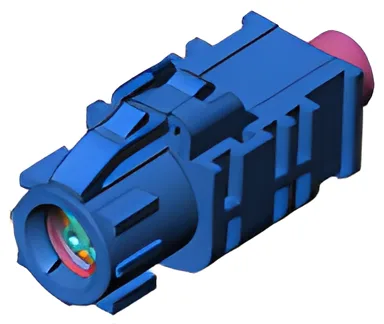
JST-VH (3.96mm Pitch)
The JST-VH series is a higher-current connector for power applications. The larger pitch allows heavier wire gauges and higher current ratings.
- Pitch: 3.96mm
- Current rating: 10A per contact
- Voltage rating: 250V AC/DC
- Pin count: 2–12 positions
- Wire gauge: AWG 22–16 (0.3–1.5mm²)
- Common use: Power supplies, motor connections, battery packs
JST-EH (2.5mm Pitch)
The JST-EH series is similar to XH but with a different locking mechanism. It is used in some consumer electronics and industrial applications.
- Pitch: 2.5mm
- Current rating: 3A per contact
JST Series Comparison Table
| Series | Pitch | Current/pin | Voltage | IP | Common Use |
|---|---|---|---|---|---|
| SH | 1.0mm | 1A | 50V | — | Wearables, IoT, I²C |
| GH | 1.25mm | 1A | 50V | — | Drones, Pixhawk |
| ZH | 1.5mm | 1A | 50V | — | Consumer electronics |
| PH | 2.0mm | 2A | 100V | — | LiPo batteries, RC |
| XH | 2.5mm | 3A | 250V | — | LiPo balance, hobby |
| SM | 2.5mm | 3A | — | IP67 | Outdoor, LED strips |
| EH | 2.5mm | 3A | 250V | — | Industrial |
| VH | 3.96mm | 10A | 250V | — | Power, motors |

Identifying Unknown JST Connectors
When you encounter an unknown JST connector, measure:
- Pitch: Distance between pin centers (use calipers)
- Pin count: Number of positions
- Housing width and height: Compare to JST datasheets
- Locking mechanism: Friction fit vs positive latch
The pitch measurement is usually sufficient to narrow down the series. A 2.0mm pitch connector is almost certainly JST-PH; 2.5mm is XH or SM; 1.25mm is GH.
JST Connector Crimping
JST connectors require proper crimping tools for reliable connections. Using pliers or incorrect tools results in:
- Inconsistent crimp geometry
- High contact resistance
- Contacts that pull out of the housing
JST-specific crimping tools (or universal ratchet crimpers with the correct die set) are required. The crimp must form both the wire crimp (mechanical connection) and the insulation crimp (strain relief) simultaneously.
For low-volume work, pre-crimped wire assemblies are available from distributors, eliminating the need for crimping tools.
Automotive Applications
In automotive electronics, JST connectors are used for:
- Sensor connections: O2 sensors, MAP sensors, temperature sensors
- Actuator connections: Solenoids, small motors
- ECU harness sub-connectors: Internal connections within control units
- Battery management systems: Cell voltage monitoring connections in EV battery packs
For automotive applications, use JST connectors rated for the operating temperature range (typically -40°C to +85°C or +105°C) and verify chemical resistance to automotive fluids.
CZT's automotive connector range includes JST-compatible connectors and wire harness assemblies for automotive and industrial applications.
Summary
JST connectors are not a single product — they are a family of connectors from a single manufacturer, spanning pitches from 1.0mm to 5.0mm and current ratings from 1A to 10A per contact. The key to selecting the right JST series:
- Determine the required pitch based on space constraints and wire gauge
- Check the current rating against your application's requirements
- Verify the voltage rating for your system voltage
- Consider IP rating if the connector will be exposed to moisture
- Use the correct crimping tool for reliable terminations
For the most common applications: JST-PH for LiPo batteries, JST-XH for balance connectors, JST-GH for drone electronics, JST-SH for compact IoT, and JST-VH for power connections.


