When specifying single-mode fiber optic cable, you will encounter two designations: OS1 and OS2. Both are single-mode fiber types, but they differ in attenuation specifications, cable construction, and the applications they are designed for. Choosing the wrong type won't cause an immediate failure, but it can limit your link budget and create problems when you try to extend the network later.
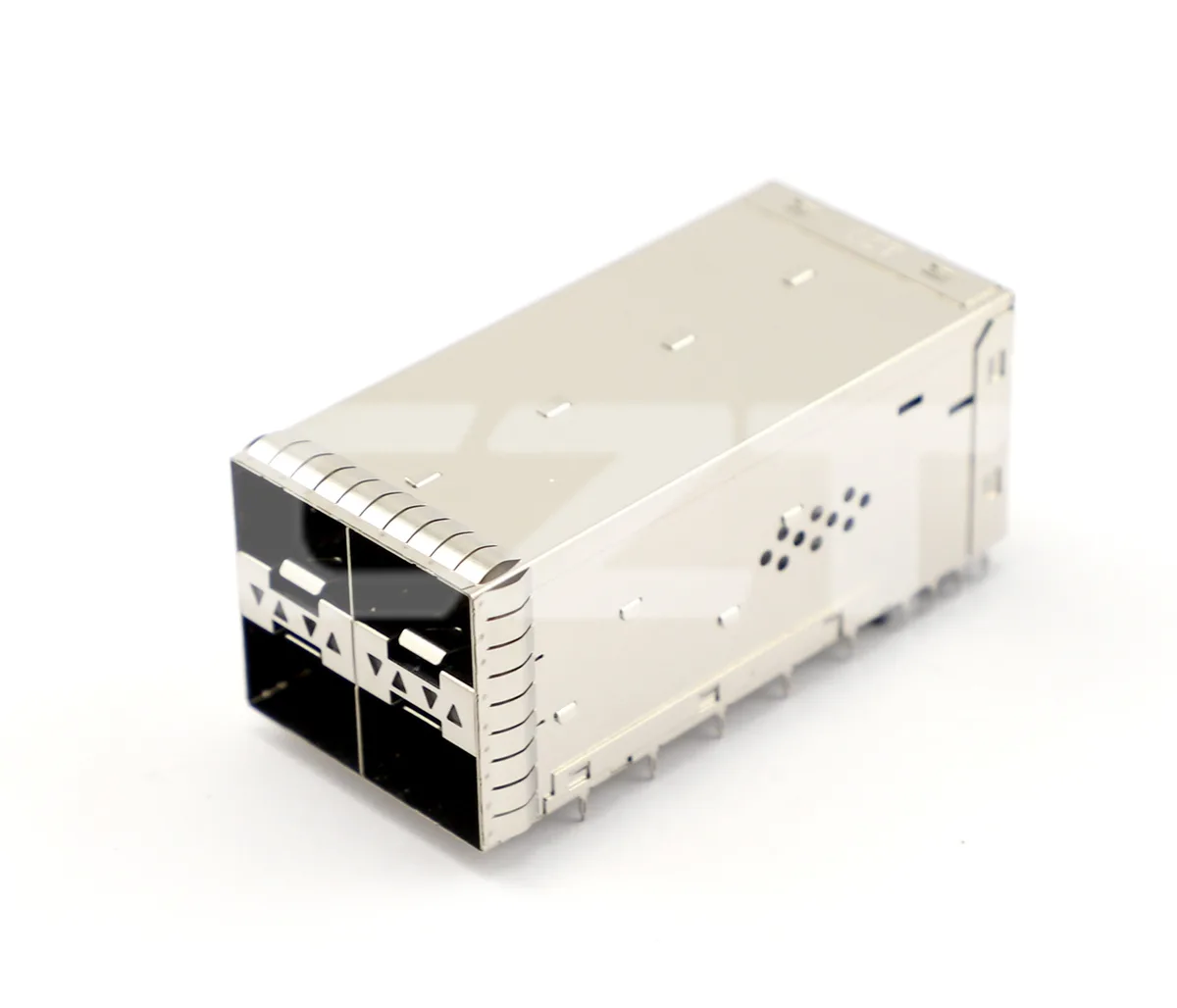
Single-Mode Fiber Basics
Single-mode fiber (SMF) has a very small core diameter — typically 9µm — that allows only one mode of light to propagate. This eliminates modal dispersion, enabling transmission over much longer distances than multimode fiber.
Single-mode fiber is used for:
- Long-distance telecommunications (hundreds of kilometers)
- Campus and building backbone cabling (hundreds of meters to kilometers)
- Data center interconnects requiring distances beyond multimode fiber's limits
- Any application requiring the lowest possible attenuation
The ITU-T G.652 standard defines the most common single-mode fiber specification, which is the basis for both OS1 and OS2.
What Is OS1?
OS1 is defined by ISO/IEC 11801 and IEC 60793-2-50 (fiber type B1.1 or B1.3). It specifies single-mode fiber with:
- Attenuation at 1310nm: ≤ 1.0 dB/km
- Attenuation at 1550nm: ≤ 1.0 dB/km
- Cable construction: Tight-buffered (indoor)
- Typical application: Indoor building cabling
The tight-buffered construction of OS1 cable means each fiber is individually coated with a 900µm buffer directly over the 250µm fiber coating. This makes the cable more flexible and easier to terminate, but the tight buffer adds stress to the fiber when the cable bends or is exposed to temperature changes.
OS1 is designed for indoor use — in buildings, data centers, and equipment rooms where the cable is protected from the elements.

What Is OS2?
OS2 is also defined by ISO/IEC 11801 and IEC 60793-2-50 (fiber type B1.3). It specifies single-mode fiber with tighter attenuation specifications:
- Attenuation at 1310nm: ≤ 0.4 dB/km
- Attenuation at 1550nm: ≤ 0.4 dB/km
- Cable construction: Loose-tube (outdoor) or tight-buffered (indoor)
- Typical application: Outdoor, long-distance, and high-performance indoor
The lower attenuation of OS2 (0.4 dB/km vs 1.0 dB/km) is achieved through improved fiber manufacturing — specifically, lower water peak attenuation and better core geometry. OS2 fiber meets the ITU-T G.652.D specification, which includes the "low water peak" requirement that eliminates the absorption peak at 1383nm.
Loose-tube construction (common for outdoor OS2 cable) places multiple fibers inside a gel-filled or dry-fill tube, which floats freely inside the cable jacket. This isolates the fibers from mechanical stress and temperature-induced cable movement, making loose-tube cable more suitable for outdoor and direct-burial applications.
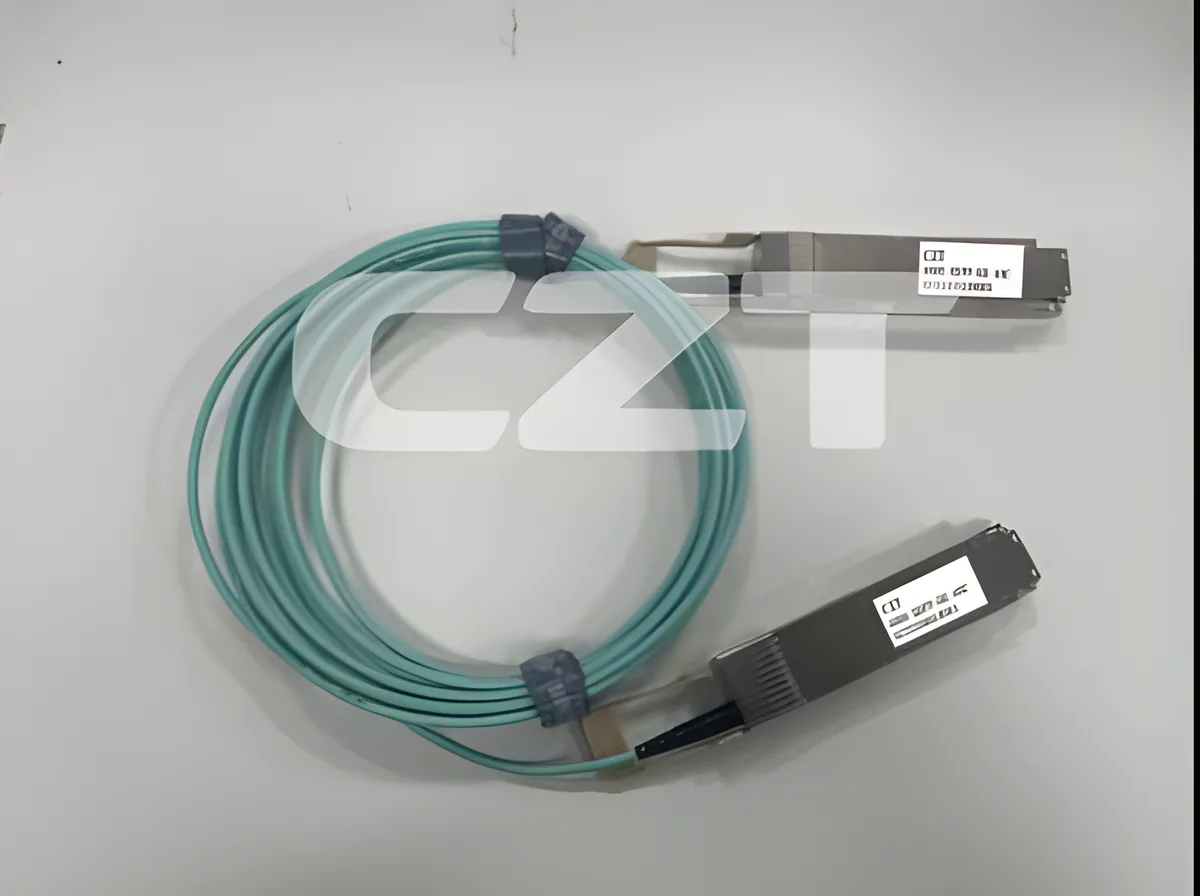
OS1 vs OS2: Specification Comparison
| Parameter | OS1 | OS2 |
|---|---|---|
| Attenuation @ 1310nm | ≤ 1.0 dB/km | ≤ 0.4 dB/km |
| Attenuation @ 1550nm | ≤ 1.0 dB/km | ≤ 0.4 dB/km |
| Water peak (1383nm) | Not specified | ≤ 0.4 dB/km (G.652.D) |
| Cable construction | Tight-buffered | Loose-tube or tight-buffered |
| Typical use | Indoor | Outdoor, long-distance |
| ITU-T fiber type | G.652.B or G.652.C | G.652.D |
| ISO/IEC designation | B1.1 or B1.3 | B1.3 |
| Max link distance | ~2 km (10GBASE-LR) | ~10 km (10GBASE-LR) |
Are OS1 and OS2 Physically Compatible?
Yes. OS1 and OS2 use the same 9µm core diameter and the same connector types (LC, SC, ST, FC). You can connect an OS1 patch cable to an OS2 trunk cable — the connectors are physically identical.
However, the link performance will be limited by the higher-attenuation OS1 segment. If you have a 10km OS2 trunk with OS1 patch cables at each end, the total link attenuation will be higher than an all-OS2 link. For short patch cable runs (< 10m), the difference is negligible. For longer runs, use OS2 throughout.
When to Use OS1
OS1 is appropriate for:
- Short indoor runs (< 500m) where the higher attenuation is within the link budget
- Patch cables in equipment rooms and data centers (the short length means attenuation difference is negligible)
- Cost-sensitive indoor installations where OS2's lower attenuation is not needed
In practice, OS1 is becoming less common as OS2 prices have dropped. Many installers now specify OS2 for all single-mode applications, even indoor, to future-proof the installation.
When to Use OS2
OS2 is the better choice for:
- Outdoor cable runs (loose-tube construction for weather resistance)
- Long-distance links (> 500m) where the lower attenuation extends the link budget
- High-speed applications (100G, 400G) where link budget is tight
- WDM (Wavelength Division Multiplexing) systems that use the 1383nm window
- Any new installation where future-proofing is a priority
For outdoor applications, always specify outdoor-rated OS2 cable with UV-resistant jacket, moisture protection (gel-filled or dry-fill tubes), and appropriate armoring for direct-burial or aerial installation.
OS2 and High-Speed Ethernet
For 10 Gigabit Ethernet and above, OS2 is strongly preferred:
| Standard | Fiber | Max Distance |
|---|---|---|
| 10GBASE-LR | OS2 | 10 km |
| 10GBASE-LR | OS1 | ~2 km |
| 40GBASE-LR4 | OS2 | 10 km |
| 100GBASE-LR4 | OS2 | 10 km |
| 400GBASE-LR8 | OS2 | 10 km |
The 10km reach of 10GBASE-LR and similar standards is specified for OS2 fiber. Using OS1 reduces the maximum distance significantly due to the higher attenuation.
Connector Compatibility
OS1 and OS2 use the same connector types:
- LC (most common for data center and enterprise)
- SC (common in telecom and access networks)
- ST (legacy installations)
- FC (test equipment, some telecom)
Connectors are available in UPC (Ultra Physical Contact) and APC (Angled Physical Contact) polish types. APC connectors (identified by green color coding) provide lower back-reflection and are required for some WDM and analog applications. UPC and APC connectors are not interchangeable — never mate a UPC connector with an APC connector.
CZT's fiber optic connector range includes LC, SC, ST, and FC connectors compatible with both OS1 and OS2 single-mode fiber, in UPC and APC polish types.
Summary
| Choose OS1 when... | Choose OS2 when... |
|---|---|
| Short indoor runs (< 500m) | Outdoor installations |
| Patch cables in equipment rooms | Long-distance links (> 500m) |
| Budget is the primary constraint | High-speed (10G+) applications |
| Attenuation is within link budget | WDM systems |
| New installations (future-proofing) |
For most new installations, OS2 is the recommended choice regardless of distance. The price premium over OS1 is small, and OS2's lower attenuation and G.652.D compliance provide better performance and more headroom for future upgrades.


