Selecting the right fiber optic cable is one of the most consequential decisions in any network build. Choose wrong and you either overspend on capacity you do not need or hit a bandwidth ceiling that forces a costly re-pull within a few years.
The two fundamental fiber optic types are single-mode fiber (SMF) and multi-mode fiber (MMF). Each has a distinct core design, distance capability, and cost profile. This guide walks you through every technical difference, explains the multi-mode OM grades, and gives you a clear framework for choosing the right one.
Quick Comparison: Single-Mode vs Multi-Mode Fiber
| Feature | Single-Mode Fiber | Multi-Mode Fiber |
|---|---|---|
| Core Diameter | 9 μm | 50 μm or 62.5 μm |
| Cladding Diameter | 125 μm | 125 μm |
| Light Paths | One (single ray) | Multiple (many rays) |
| Wavelength | 1310 nm / 1550 nm | 850 nm / 1300 nm |
| Max Distance | 100 km+ | Up to 550 m (OM4 at 10G) |
| Bandwidth | Virtually unlimited | Up to 4700 MHz·km (OM5) |
| Cable Color | Yellow | Orange (OM1/OM2), Aqua (OM3/OM4), Lime (OM5) |
| Fiber Cost | Slightly higher | Slightly lower |
| Transceiver Cost | Higher | Lower |
| Common Standard | OS2 | OM1 through OM5 |
| Best For | Long-haul, campus backbone, FTTH | Data centers, LANs, short-reach links |
This table captures the headline differences. The sections below unpack each one in detail.

What Is Single-Mode Fiber?
Single-mode fiber uses an extremely small core, typically 9/125 μm (9 μm core, 125 μm cladding). The core is so narrow that it permits only a single mode of light to propagate along the fiber. This eliminates a phenomenon called modal dispersion, where multiple light paths arrive at the receiver at slightly different times and blur the signal.
Because there is no modal dispersion, single-mode fiber optic cable can carry data over very long distances, often 100 km or more without signal regeneration, depending on the transceiver and wavelength used.
Key Characteristics of Single-Mode Fiber
- Core/cladding: 9/125 μm (standardized by ITU-T G.652)
- Operating wavelengths: 1310 nm and 1550 nm
- Standard grade: OS2 (low water peak, suitable for CWDM/DWDM)
- Attenuation: ~0.35 dB/km at 1310 nm, ~0.20 dB/km at 1550 nm
- Jacket color: Yellow (industry convention)
- Connector polish: Typically APC (green) or UPC (blue)
Single-mode fiber is the backbone of global telecommunications. Every undersea cable, every long-haul terrestrial route, and most fiber-to-the-home (FTTH) deployments use single-mode fiber.
OS2 — The Single-Mode Standard
You will sometimes see single-mode fiber labeled as OS1 or OS2. OS1 refers to older tight-buffered indoor cable with slightly higher attenuation (1.0 dB/km). OS2 is the current standard for loose-tube and blown-fiber cable, rated at 0.4 dB/km at 1310 nm and 0.3 dB/km at 1550 nm. For any new installation, OS2 is the correct choice.
What Is Multi-Mode Fiber?
Multi-mode fiber has a much larger core, either 50/125 μm or 62.5/125 μm. This wider core allows multiple modes (light paths) to travel simultaneously through the fiber. The tradeoff is that these modes arrive at the far end at slightly different times, a phenomenon called modal dispersion, which limits both bandwidth and maximum transmission distance.
Multi-mode fiber operates at shorter wavelengths, primarily 850 nm, using inexpensive VCSEL (Vertical-Cavity Surface-Emitting Laser) transceivers. This makes the overall system cost lower for short-reach links.
Key Characteristics of Multi-Mode Fiber
- Core/cladding: 50/125 μm (OM3, OM4, OM5) or 62.5/125 μm (OM1, OM2)
- Operating wavelength: 850 nm (primary), 1300 nm (secondary)
- Standard grades: OM1, OM2, OM3, OM4, OM5
- Attenuation: ~3.0 dB/km at 850 nm (OM3/OM4)
- Jacket color: Orange (OM1/OM2), Aqua (OM3/OM4), Lime green (OM5)
- Connector polish: UPC (standard)
Multi-mode fiber dominates inside data centers and enterprise buildings where link lengths rarely exceed a few hundred meters.
Single-Mode vs Multi-Mode: Detailed Comparison
Let's break down the technical differences across every dimension that matters for network design.
Core Size and Light Propagation
The core diameter is the defining physical difference. Single-mode fiber's 9 μm core is roughly one-fifth the diameter of multi-mode fiber's 50 μm core. A smaller core means tighter alignment tolerances during connector mating, but it also means zero modal dispersion and far greater reach.
Multi-mode fiber's larger core makes it easier to couple light from an LED or VCSEL source, which is one reason the transceivers cost less.
Bandwidth and Data Rate
Single-mode fiber has effectively unlimited bandwidth for practical purposes. The limiting factor is always the transceiver, not the fiber. A single strand of OS2 fiber can support everything from 1G to 400G and beyond using different transceiver technologies.
Multi-mode fiber bandwidth is constrained by its effective modal bandwidth (EMB), measured in MHz·km. Higher OM grades offer higher EMB, which translates to higher data rates over longer distances.
Distance
This is where the two fiber optic types diverge most dramatically.
| Data Rate | Single-Mode (OS2) | Multi-Mode (OM3) | Multi-Mode (OM4) |
|---|---|---|---|
| 1 Gbps | Up to 100 km | Up to 1000 m | Up to 1100 m |
| 10 Gbps | Up to 40 km | Up to 300 m | Up to 400 m |
| 25 Gbps | Up to 10 km | Up to 70 m | Up to 100 m |
| 40 Gbps | Up to 10 km | Up to 100 m | Up to 150 m |
| 100 Gbps | Up to 10 km | Up to 70 m (SR4) | Up to 100 m (SR4) |
| 400 Gbps | Up to 10 km | Up to 70 m (SR8) | Up to 100 m (SR8) |
For any link longer than about 500 meters, single-mode fiber is the only practical option.
Wavelength and Light Source
Single-mode fiber uses 1310 nm and 1550 nm wavelengths generated by distributed feedback (DFB) lasers or externally modulated lasers (EML). These longer wavelengths experience lower attenuation in glass.
Multi-mode fiber uses 850 nm wavelengths generated by VCSELs. VCSELs are cheaper to manufacture and consume less power, which keeps transceiver costs down.
Color Coding
The fiber optic industry uses jacket color to identify fiber types at a glance.
| Fiber Type | Jacket Color | Connector Color (UPC) | Connector Color (APC) |
|---|---|---|---|
| Single-Mode OS2 | Yellow | Blue | Green |
| Multi-Mode OM1 | Orange | Beige | N/A |
| Multi-Mode OM2 | Orange | Black | N/A |
| Multi-Mode OM3 | Aqua | Aqua | N/A |
| Multi-Mode OM4 | Aqua | Aqua | N/A |
| Multi-Mode OM5 | Lime Green | Lime Green | N/A |
APC (Angled Physical Contact) polish is almost exclusively used with single-mode fiber. Multi-mode connectors use UPC (Ultra Physical Contact) polish.
Multi-Mode Fiber Grades Explained
Not all multi-mode fiber is created equal. The OM (Optical Multi-mode) classification system, defined by ISO/IEC 11801, distinguishes five grades based on bandwidth performance.
| Grade | Core Size | Bandwidth (850 nm) | Bandwidth (1300 nm) | 1G Max Distance | 10G Max Distance | 40/100G Max Distance |
|---|---|---|---|---|---|---|
| OM1 | 62.5 μm | 200 MHz·km | 500 MHz·km | 275 m | 33 m | Not supported |
| OM2 | 50 μm | 500 MHz·km | 500 MHz·km | 550 m | 82 m | Not supported |
| OM3 | 50 μm | 2000 MHz·km | 500 MHz·km | 1000 m | 300 m | 100 m |
| OM4 | 50 μm | 4700 MHz·km | 500 MHz·km | 1100 m | 400 m | 150 m |
| OM5 | 50 μm | 4700 MHz·km | 500 MHz·km | 1100 m | 400 m | 150 m |
OM1 and OM2 — Legacy Grades
OM1 (62.5 μm) and OM2 (50 μm) are legacy fiber grades. They were widely installed in the 1990s and early 2000s for Fast Ethernet and Gigabit Ethernet. Neither grade supports 10G Ethernet at useful distances. If you encounter OM1 or OM2 in an existing building, plan for replacement when upgrading to 10G or higher.
OM3 and OM4 — The Current Workhorses
OM3 and OM4 are the most commonly deployed multi-mode fiber grades today. Both use a 50 μm core optimized for 850 nm VCSEL lasers. OM4 offers higher effective modal bandwidth (4700 MHz·km vs 2000 MHz·km), which extends its reach at 10G and above.
For most data center and enterprise deployments, OM4 is the recommended choice. The price premium over OM3 is minimal, and the extra distance margin provides valuable headroom.
OM5 — Wideband Multi-Mode
OM5 is the newest grade, designed to support shortwave wavelength division multiplexing (SWDM). SWDM uses four wavelengths (850, 880, 910, 940 nm) on a single fiber strand, enabling 40G and 100G transmission over fewer fibers. OM5 is backward compatible with OM3 and OM4 at 850 nm.
OM5 adoption has been slower than expected because parallel optics (SR4, SR8) using OM4 remain cost-effective for most data center operators. Consider OM5 if you want to reduce fiber strand count for future high-speed links.
When to Choose Single-Mode Fiber
Single-mode fiber is the right choice when any of the following conditions apply.
Long-distance links. Any link exceeding 500 meters should use single-mode fiber. This includes campus backbone connections between buildings, metropolitan area networks, and long-haul telecommunications routes.
Fiber-to-the-home (FTTH). Passive optical networks (PON) for residential and business broadband use single-mode fiber exclusively. GPON, XGS-PON, and 25G-PON all operate on single-mode fiber at 1310/1490/1550 nm wavelengths.
Wavelength division multiplexing (WDM). If you plan to use CWDM or DWDM to multiplex many channels onto a single fiber pair, single-mode is required. DWDM systems can carry 96 or more channels on a single fiber, delivering aggregate throughput measured in terabits per second.
Future-proofing. Single-mode fiber has no practical bandwidth ceiling. The same fiber installed today will support whatever transceiver technology emerges in the next 20 to 30 years. For outside plant and backbone infrastructure with a long expected lifespan, this makes single-mode the safer investment.
Wide area networks (WAN). Enterprise WAN connections between offices, data centers, and cloud on-ramps almost always require single-mode fiber due to distance requirements.
When to Choose Multi-Mode Fiber
Multi-mode fiber makes economic sense in specific scenarios.
Data center interconnects under 100 meters. Inside a data center, most links between switches, servers, and storage run less than 100 meters. Multi-mode fiber with VCSEL-based transceivers (SR, SR4, SR8) delivers the lowest cost per port at 10G, 25G, 40G, and 100G.
Enterprise building LANs. Horizontal and riser cabling within a single building rarely exceeds 300 meters. OM4 multi-mode fiber handles 10G comfortably at these distances, and the lower transceiver cost adds up quickly across hundreds of ports.
Cost-sensitive short-reach links. When the total link budget matters and distances are short, multi-mode fiber paired with VCSEL transceivers can cost 30% to 50% less per link than an equivalent single-mode setup. The savings come primarily from the transceiver side.
Existing multi-mode infrastructure. If a building already has OM3 or OM4 fiber installed and the distances work for your target data rate, there is no reason to rip and replace. Use the existing multi-mode plant and save the capital for other upgrades.
Connector Compatibility
One of the convenient aspects of fiber optic cabling is that both single-mode and multi-mode fiber use the same connector types. The physical connector form factor does not change between fiber types.
The most common fiber optic connector types used with both single-mode and multi-mode fiber include:
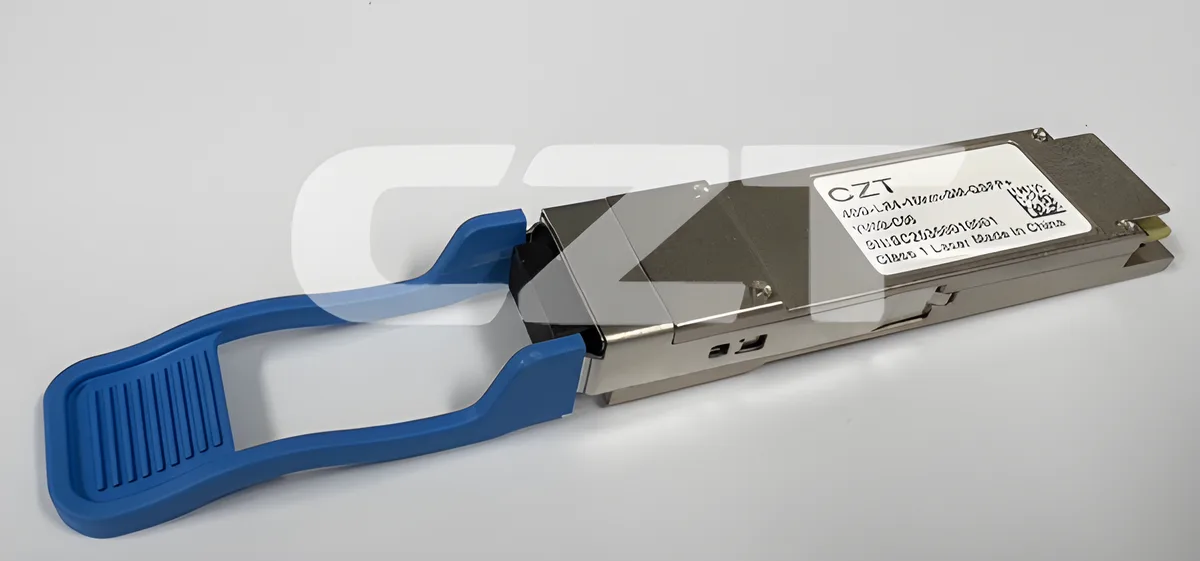
- LC connector — The dominant connector in modern data centers and telecom. Small form factor, 1.25 mm ferrule, push-pull latching. Used with SFP, SFP+, SFP28, and QSFP modules.
- SC connector — Widely used in FTTH/PON deployments and legacy telecom. 2.5 mm ferrule, push-pull snap-in latching.
- ST connector — Bayonet-style twist-lock connector found in older LAN installations. Still encountered in industrial and military applications.
- MPO/MTP connector — Multi-fiber push-on connector used for parallel optics (40G SR4, 100G SR4, 400G SR8) in data centers. Available in 12-fiber and 24-fiber configurations.
For a detailed comparison of the two most popular connectors, see our guide on LC vs SC connectors.
Color Coding Matters
While the connectors are physically identical, the color coding tells you whether a patch cable is single-mode or multi-mode. Never mix fiber types in a link. Connecting a single-mode patch cord to a multi-mode trunk (or vice versa) will cause severe signal loss or a complete link failure.
- Yellow patch cable = single-mode
- Orange patch cable = multi-mode OM1/OM2
- Aqua patch cable = multi-mode OM3/OM4
- Lime green patch cable = multi-mode OM5
APC vs UPC Polish
Single-mode connectors come in two polish types: UPC (Ultra Physical Contact) with a blue ferrule tip and APC (Angled Physical Contact) with a green ferrule tip. APC connectors have an 8-degree angled end face that reduces back-reflection to below -65 dB, making them essential for analog video, CATV, and PON applications.
Multi-mode connectors use UPC polish exclusively. The larger core and shorter distances make APC unnecessary.
Important: APC and UPC connectors must never be mated together. The angled and flat end faces will not make proper contact, causing high insertion loss and potential damage to the ferrule.
Cost Considerations
The cost comparison between single-mode and multi-mode fiber is more nuanced than most people realize. You need to evaluate total cost of ownership, not just the cable price.
Fiber Cable Cost
Multi-mode fiber cable is slightly cheaper than single-mode cable, but the difference is modest. For indoor riser or plenum-rated cable, expect multi-mode to cost roughly 10% to 15% less per meter than single-mode. For outside plant cable, the gap narrows further.
Transceiver Cost
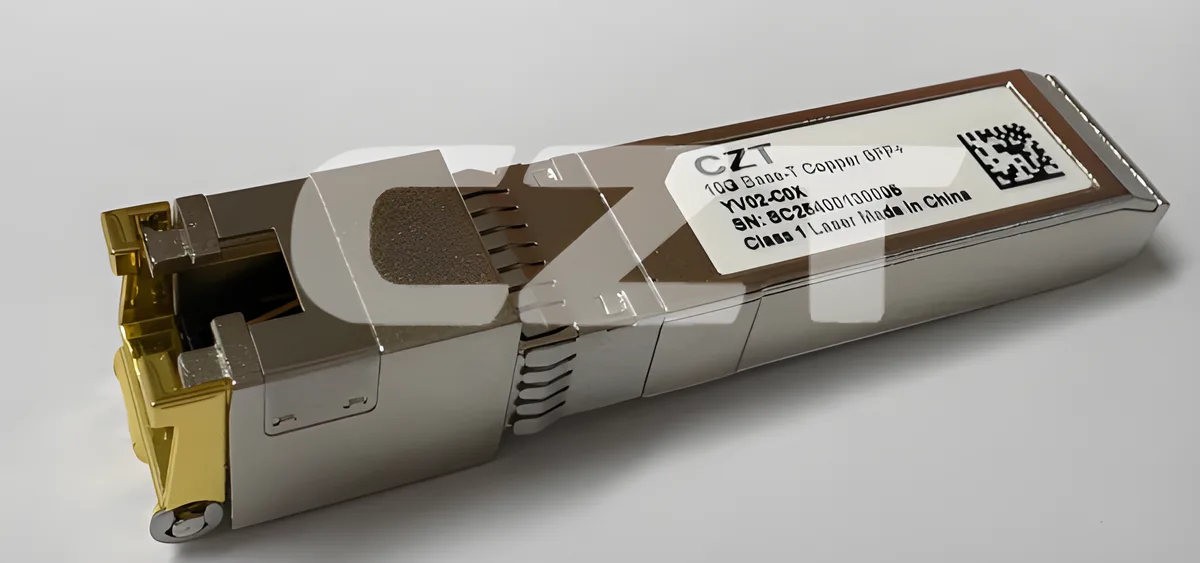
This is where the real cost difference lives. VCSEL-based multi-mode transceivers (SFP+ SR, QSFP+ SR4) are significantly cheaper than their single-mode counterparts (SFP+ LR, QSFP+ LR4).
| Transceiver Type | Multi-Mode (SR) | Single-Mode (LR) | Difference |
|---|---|---|---|
| 10G SFP+ | $15 - $30 | $30 - $80 | 2x - 3x |
| 25G SFP28 | $25 - $50 | $50 - $120 | 2x - 3x |
| 100G QSFP28 | $80 - $150 (SR4) | $200 - $500 (LR4) | 2.5x - 3x |
| 400G QSFP-DD | $300 - $600 (SR8) | $800 - $2000 (DR4) | 2.5x - 3x |
Prices are approximate and vary by vendor and volume.
Total Cost of Ownership
For a data center with 500 ports at 10G and average link lengths under 100 meters:
- Multi-mode option: ~$7,500 - $15,000 in transceivers + ~$5,000 in cabling = $12,500 - $20,000
- Single-mode option: ~$15,000 - $40,000 in transceivers + ~$5,500 in cabling = $20,500 - $45,500
The multi-mode advantage is clear for short-reach, high-port-count environments.
However, for a campus backbone with 20 links at 10G spanning 500 m to 2 km:
- Single-mode is the only option that works at these distances, so the comparison is moot.
The decision framework is straightforward: if multi-mode fiber can reach the distance you need, it will almost always be cheaper. If it cannot, single-mode is your only option.
Browse our full range of fiber optic connectors engineered for both single-mode and multi-mode applications.
Frequently Asked Questions
Can I use single-mode transceivers with multi-mode fiber?
Technically, a single-mode transceiver will launch light into multi-mode fiber, and it may work over very short distances (under 30 meters). However, this is not a supported configuration. The mode field mismatch causes unpredictable performance, and no transceiver vendor will guarantee operation. Always match the transceiver type to the fiber type.
Is single-mode fiber more fragile than multi-mode?
No. Both fiber types use the same 125 μm cladding and similar coating materials. They have identical bend radius specifications and mechanical durability. The smaller core of single-mode fiber does require tighter alignment tolerances in connectors, but modern manufacturing has made this a non-issue.
Can I convert from multi-mode to single-mode without re-cabling?
Not directly. The two fiber types are physically different and cannot be interchanged. However, you can use media converters or mode-conditioning patch cables as a temporary bridge in some scenarios. For a permanent upgrade, replacing the fiber is the correct approach.
What does "laser-optimized" multi-mode fiber mean?
OM3, OM4, and OM5 fibers are described as "laser-optimized" because their refractive index profile is specifically engineered to work with 850 nm VCSEL laser sources. Older OM1 and OM2 fibers were designed for LED sources and perform poorly with laser transceivers at high data rates.
Should I install single-mode fiber everywhere to future-proof?
It depends on the application. For outside plant, campus backbone, and any link that might need to span long distances in the future, single-mode is the safer bet. For inside a data center where links are short and port counts are high, multi-mode fiber with VCSEL transceivers remains the most cost-effective solution. Many organizations install both: single-mode for backbone and inter-building links, multi-mode for intra-building and data center connections.
Choose the Right Fiber Optic Connector for Your Network
Whether you are deploying single-mode fiber for a long-haul telecom network or multi-mode fiber inside a data center, the connector quality matters just as much as the fiber itself. Poor connectors introduce insertion loss, back-reflection, and reliability problems that degrade network performance over time.
CZT manufactures precision fiber optic connectors for both single-mode and multi-mode applications. Our product line includes LC, SC, ST, and MPO/MTP connectors built to IEC 61754 standards, with insertion loss as low as 0.10 dB. With over 30 years of connector manufacturing experience and ISO 9001 certification, we deliver the consistency and reliability that network operators demand.


