Choosing the right fiber optic connector can make or break your network deployment. The LC connector and SC connector are two of the most widely used fiber optic connectors in the world, yet they serve different purposes and excel in different environments.
Whether you are building out a high-density data center or rolling out a fiber-to-the-home (FTTH) network, understanding the difference between LC and SC connectors will help you make a smarter purchasing decision. In this guide, we break down every technical detail, compare real-world performance, and explain exactly when to use each one.
Quick Comparison: LC vs SC at a Glance
| Feature | LC Connector | SC Connector |
|---|---|---|
| Full Name | Lucent Connector | Subscriber Connector |
| Ferrule Diameter | 1.25 mm | 2.5 mm |
| Connector Size | Small form factor | Standard form factor |
| Latching Mechanism | Push-pull tab | Push-pull snap-in |
| Typical Configuration | Duplex | Simplex or Duplex |
| Insertion Loss (SM) | ≤ 0.10 dB | ≤ 0.20 dB |
| Return Loss (SM) | ≥ 55 dB | ≥ 55 dB |
| Port Density | High | Moderate |
| Primary Use Cases | Data centers, SFP modules | FTTH, PON, legacy telecom |
| Relative Cost | Moderate | Lower |
This table gives you the headline numbers. Keep reading for the full technical breakdown and application guidance.
What Is an LC Connector?
The LC connector (Lucent Connector) was developed by Lucent Technologies in the late 1990s as a miniaturized alternative to existing fiber connectors. It uses a 1.25 mm ceramic ferrule, exactly half the diameter of the older SC and ST connectors, which makes it the go-to choice for high-density fiber applications.

Key Specifications of the LC Connector
- Ferrule diameter: 1.25 mm (zirconia ceramic)
- Connector body width: 6.25 mm per connector
- Latching mechanism: Push-pull retention tab (similar to an RJ-45 clip)
- Polishing types: UPC (Ultra Physical Contact), APC (Angled Physical Contact)
- Insertion loss: Typically 0.10 dB or less for single-mode
- Return loss: 55 dB or greater (UPC), 65 dB or greater (APC)
- Durability: Rated for 500+ mating cycles minimum
- Standards compliance: IEC 61754-20, TIA/EIA-604-10 (FOCIS-10)
The LC connector's small form factor (SFF) design is its defining advantage. A standard 1U patch panel can hold up to 72 LC duplex ports, compared to only 24 SC duplex ports in the same space. This 3:1 density advantage is the primary reason LC connectors dominate modern data center environments.
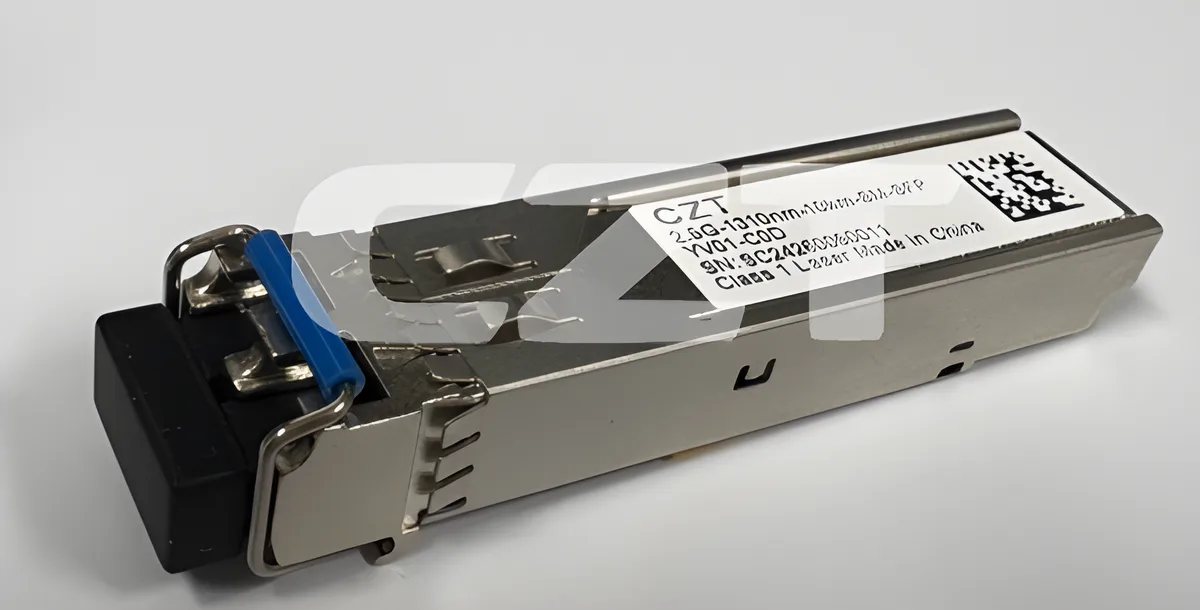
LC connectors are almost always deployed in duplex configuration, with two connectors joined by a clip for simultaneous transmit and receive paths. They are the standard interface for SFP, SFP+, SFP28, and QSFP transceiver modules, which means virtually every modern switch and router uses LC ports.
LC Connector Color Coding
- Blue: Single-mode UPC
- Green: Single-mode APC (8-degree angled ferrule)
- Beige/Cream: Multimode OM1/OM2
- Aqua: Multimode OM3/OM4
- Violet: Multimode OM5
What Is an SC Connector?
The SC connector (Subscriber Connector, sometimes called Standard Connector or Square Connector) was developed by Nippon Telegraph and Telephone (NTT) in the mid-1980s. It uses a 2.5 mm ceramic ferrule housed in a rectangular, snap-in body that provides a secure and reliable connection.

Key Specifications of the SC Connector
- Ferrule diameter: 2.5 mm (zirconia ceramic)
- Connector body width: 12.5 mm per connector
- Latching mechanism: Push-pull snap-in (no twisting required)
- Polishing types: UPC, APC
- Insertion loss: Typically 0.20 dB or less for single-mode
- Return loss: 55 dB or greater (UPC), 65 dB or greater (APC)
- Durability: Rated for 1,000+ mating cycles
- Standards compliance: IEC 61754-4, TIA/EIA-604-3 (FOCIS-3)
The SC connector was one of the first fiber connectors to use a true push-pull engagement mechanism, eliminating the need for twisting or threading. This made it significantly easier to install than the older FC (ferrule connector) and ST (straight tip) connectors that required rotational alignment.
SC connectors are available in both simplex (single fiber) and duplex (dual fiber) configurations. The duplex version uses a molded clip to join two simplex connectors side by side. SC connectors remain the dominant interface for GPON and EPON optical line terminals (OLTs) and optical network terminals (ONTs) used in FTTH deployments worldwide.
SC Connector Color Coding
- Blue: Single-mode UPC
- Green: Single-mode APC
- Beige/Cream: Multimode OM1/OM2
- Aqua: Multimode OM3/OM4
The larger body of the SC connector makes it easier to grip and handle, which is a practical advantage for field technicians working in tight spaces like outdoor cabinets and wall-mounted enclosures.
LC vs SC: Detailed Comparison
Now that you understand each connector individually, let us put them head to head across every metric that matters for network design and procurement.
Size and Form Factor
The most obvious difference between LC and SC connectors is physical size. The LC connector body is roughly half the width of an SC connector (6.25 mm vs. 12.5 mm). This size difference directly translates to port density on patch panels, switches, and distribution frames.
For a standard 19-inch, 1U rack-mount patch panel:
- LC duplex: Up to 72 ports (144 fibers)
- SC duplex: Up to 24 ports (48 fibers)
If rack space is at a premium, as it is in virtually every data center, the LC connector delivers three times the fiber density.
Optical Performance
| Parameter | LC Connector | SC Connector |
|---|---|---|
| Insertion Loss (SM, typical) | 0.10 dB | 0.20 dB |
| Insertion Loss (SM, max) | 0.15 dB | 0.25 dB |
| Insertion Loss (MM, typical) | 0.10 dB | 0.20 dB |
| Return Loss (UPC) | ≥ 55 dB | ≥ 55 dB |
| Return Loss (APC) | ≥ 65 dB | ≥ 65 dB |
The LC connector generally achieves lower insertion loss than the SC connector. This is partly due to the smaller ferrule diameter, which allows for tighter alignment tolerances during manufacturing. In long-haul or high-loss-budget applications, this difference can be meaningful.
Return loss performance is comparable between the two connector types when using the same polish grade (UPC or APC).
Durability and Mating Cycles
SC connectors are rated for a minimum of 1,000 mating cycles, while LC connectors are typically rated for 500 mating cycles. In practice, both connector types can exceed these ratings when properly maintained and cleaned.
The SC connector's larger body and simpler latching mechanism make it slightly more robust in environments where connectors are frequently plugged and unplugged by field technicians. The LC connector's smaller latch tab can be more susceptible to breakage if handled roughly.
Cost Comparison
SC connectors are generally 10-20% less expensive than LC connectors on a per-unit basis. The SC connector's longer market history and simpler manufacturing process contribute to this cost advantage. However, when you factor in the higher port density of LC connectors, the total cost per fiber port in a patch panel or enclosure often favors LC.
| Cost Factor | LC | SC |
|---|---|---|
| Per-connector cost | Moderate | Lower |
| Patch panel cost per port | Lower (higher density) | Higher (lower density) |
| Transceiver compatibility | SFP/SFP+ (standard) | GBIC (legacy) |
| Total rack cost per fiber | Lower | Higher |
Ease of Installation
Both connectors use a push-pull mechanism, so neither requires rotational alignment. The SC connector's larger body is easier to grip with gloved hands, making it a preferred choice for outdoor and field installations. The LC connector's smaller size can make it slightly more challenging to handle, but its RJ-45-style latch is intuitive for technicians familiar with copper networking.
When to Choose LC Connectors
The LC connector is the right choice when density, performance, and modern equipment compatibility are your top priorities.
High-density data centers. If you are building or upgrading a data center, LC connectors are the industry standard. Their small form factor lets you maximize fiber count per rack unit, which directly reduces your real estate and cooling costs. Hyperscale data centers from major cloud providers almost exclusively use LC-based structured cabling.
SFP and SFP+ transceiver modules. Every SFP, SFP+, SFP28, and most QSFP28 breakout modules use LC duplex interfaces. If your switches and routers use these transceivers, you need LC patch cords and trunk cables to connect them.
Modern telecom infrastructure. Central offices and mobile backhaul networks are migrating to LC-based optical distribution frames (ODFs) to increase fiber density. If you are deploying new telecom infrastructure, LC connectors future-proof your investment.
Space-constrained environments. In-building fiber distribution, network closets, and compact edge computing enclosures all benefit from the LC connector's smaller footprint. You can fit more connections in less space without sacrificing optical performance.
CZT's fiber optic connector product line includes LC connectors in UPC and APC polish grades, available in simplex, duplex, and multi-fiber configurations for both single-mode and multimode applications.
When to Choose SC Connectors
The SC connector remains the best choice for several important application areas where its larger size and lower cost are genuine advantages.
FTTH and PON deployments. The SC connector is the dominant interface for GPON and EPON equipment. Optical line terminals (OLTs), optical network terminals (ONTs), and passive splitters in FTTH networks almost universally use SC or SC/APC connectors. If you are deploying fiber to residential or business subscribers, SC connectors are the standard.
Passive optical networks. PON splitters, wavelength division multiplexers (WDMs), and optical distribution networks (ODNs) are designed around the SC connector form factor. Using SC connectors throughout your PON ensures compatibility and simplifies inventory management.
Legacy system maintenance. Many existing telecom networks, enterprise LANs, and industrial installations were built with SC connectors. If you are maintaining or extending these systems, staying with SC connectors avoids the cost and complexity of migration.
Field installations and outdoor cabinets. The SC connector's larger body is easier to handle in challenging field conditions. Technicians wearing gloves, working in poorly lit cabinets, or performing installations in extreme temperatures often prefer the SC connector's more forgiving form factor.
For FTTH and telecom applications, explore CZT's telecom and datacom solutions to find SC connector assemblies optimized for outside plant and central office environments.
LC and SC in Real-World Applications
Understanding where each connector type fits in real-world network architectures helps you make better procurement decisions. Here is how LC and SC connectors are deployed across the major application areas.
Data Centers
Modern data centers are built almost entirely on LC connectivity. The typical signal path runs from server SFP+ ports through LC duplex patch cords to LC-based structured cabling (trunk cables and cassettes) and into top-of-rack or end-of-row switches.
LC connectors support all common data center speeds: 1G, 10G, 25G, 40G (via MPO-to-LC breakout), and 100G (via MPO-to-LC breakout). The push toward 400G and 800G is shifting some connections to MPO/MTP connectors, but LC remains dominant for server-to-switch links.
Telecommunications
Telecom networks use both LC and SC connectors, depending on the network segment. Central offices and core transport networks are increasingly LC-based for density reasons. Access networks and FTTH last-mile connections remain SC-based due to PON equipment standards.
The transition point between LC and SC often occurs at the optical distribution frame (ODF) in the central office, where trunk fibers from the core network (LC) are cross-connected to access fibers heading to subscribers (SC).
Enterprise LAN
Enterprise campus and building networks typically use LC connectors for backbone and horizontal fiber runs. LC duplex patch cords connect switches, routers, and media converters. Some older enterprise installations still use SC connectors, but new deployments almost always specify LC.
FTTH (Fiber to the Home)
FTTH networks are the SC connector's strongest application area. From the OLT in the central office to the splitter cabinet in the neighborhood to the ONT on the subscriber's wall, SC and SC/APC connectors are the standard interface. The green SC/APC connector is particularly common in FTTH because its angled polish minimizes back-reflections that can degrade video overlay signals.
Can You Convert Between LC and SC?
Yes. There are several ways to bridge LC and SC connectivity within the same network.
Hybrid patch cables. An LC-to-SC hybrid patch cord has an LC connector on one end and an SC connector on the other. This is the simplest way to connect an LC-based device to an SC-based patch panel, or vice versa. Hybrid patch cables are available in single-mode and multimode versions with any combination of UPC and APC polish.
Adapter panels and couplers. An LC-to-SC adapter (also called a hybrid coupler or hybrid bulkhead) allows you to mate an LC patch cord with an SC patch cord through a panel-mounted adapter. These are useful in patch panels and distribution frames where you need to transition between connector types.
Media converters and patch panel migration. For larger-scale migrations from SC to LC infrastructure, you can use structured cabling cassettes that accept SC connections on one side and present LC connections on the other. This approach lets you migrate incrementally without replacing all existing SC cabling at once.
When specifying hybrid assemblies, make sure both ends meet the same optical performance standards. A well-made LC-to-SC hybrid patch cable should achieve insertion loss of 0.30 dB or less across the entire assembly.
For more information on fiber optic connector types and compatibility, read our guide on types of fiber optic connectors.
Frequently Asked Questions
Is LC or SC better for single-mode fiber?
Both LC and SC connectors work well with single-mode fiber. The LC connector typically achieves slightly lower insertion loss (0.10 dB vs. 0.20 dB), which can matter in long-distance or loss-sensitive applications. For new single-mode installations, LC is generally the preferred choice unless your equipment specifically requires SC interfaces.
Can I use LC connectors with multimode fiber?
Yes. LC connectors are fully compatible with multimode fiber in all grades (OM1, OM2, OM3, OM4, OM5). In fact, LC is the standard connector for 10G SFP+ SR (short-reach) transceivers that use OM3 or OM4 multimode fiber. The connector type does not determine the fiber type; you can use either LC or SC with either single-mode or multimode fiber.
Why are SC connectors still used if LC connectors are smaller?
SC connectors remain widely used for three reasons. First, FTTH and PON equipment standards are built around the SC form factor, and the installed base is enormous. Second, SC connectors are less expensive per unit, which matters in cost-sensitive access network deployments. Third, the larger SC body is easier to handle in field conditions, reducing installation errors.
What does APC mean on an LC or SC connector?
APC stands for Angled Physical Contact. An APC connector has a ferrule end face polished at an 8-degree angle, which directs reflected light away from the fiber core. This results in return loss of 65 dB or greater, compared to 55 dB for standard UPC (Ultra Physical Contact) polish. APC connectors are identified by their green color and are required in applications sensitive to back-reflections, such as FTTH, CATV, and analog video systems. Both LC and SC connectors are available in APC versions.
How do I clean LC and SC connectors?
Both connector types should be cleaned before every mating using a dry cleaning method. For LC connectors, use a 1.25 mm cleaning stick or a cassette-style cleaner designed for 1.25 mm ferrules. For SC connectors, use a 2.5 mm cleaning stick or cassette cleaner. Never use alcohol-based cleaners unless the connector is heavily contaminated, and always follow up with a dry wipe. Inspect the ferrule end face with a fiber inspection microscope (200x or 400x magnification) after cleaning to verify it is free of debris.
Choose the Right Fiber Connector for Your Project
The choice between LC and SC connectors comes down to your specific application. For high-density data center and modern telecom environments, the LC connector's compact size and superior port density make it the clear winner. For FTTH, PON, and field installations, the SC connector's proven reliability and lower per-unit cost keep it firmly in place as the industry standard.
In many networks, you will use both. The key is matching the right connector to the right application segment and ensuring consistent optical performance across your entire fiber plant.
CZT manufactures both LC and SC fiber optic connectors with custom configurations available. With over 30 years of precision connector manufacturing experience and ISO 9001/IATF 16949 certification, we deliver consistent quality to customers in 60+ countries. Request a Quote →


