The ST connector (Straight Tip) was one of the first widely adopted fiber optic connectors and remains in use in legacy networks, military systems, and some industrial applications. Developed by AT&T in the 1980s, the ST connector's distinctive bayonet locking mechanism made it the dominant fiber connector through the 1990s before LC and SC connectors took over in enterprise networking.
Understanding ST connectors is important for anyone maintaining legacy fiber infrastructure, working with military or industrial systems, or specifying connectors for applications where the ST's mechanical properties are advantageous.
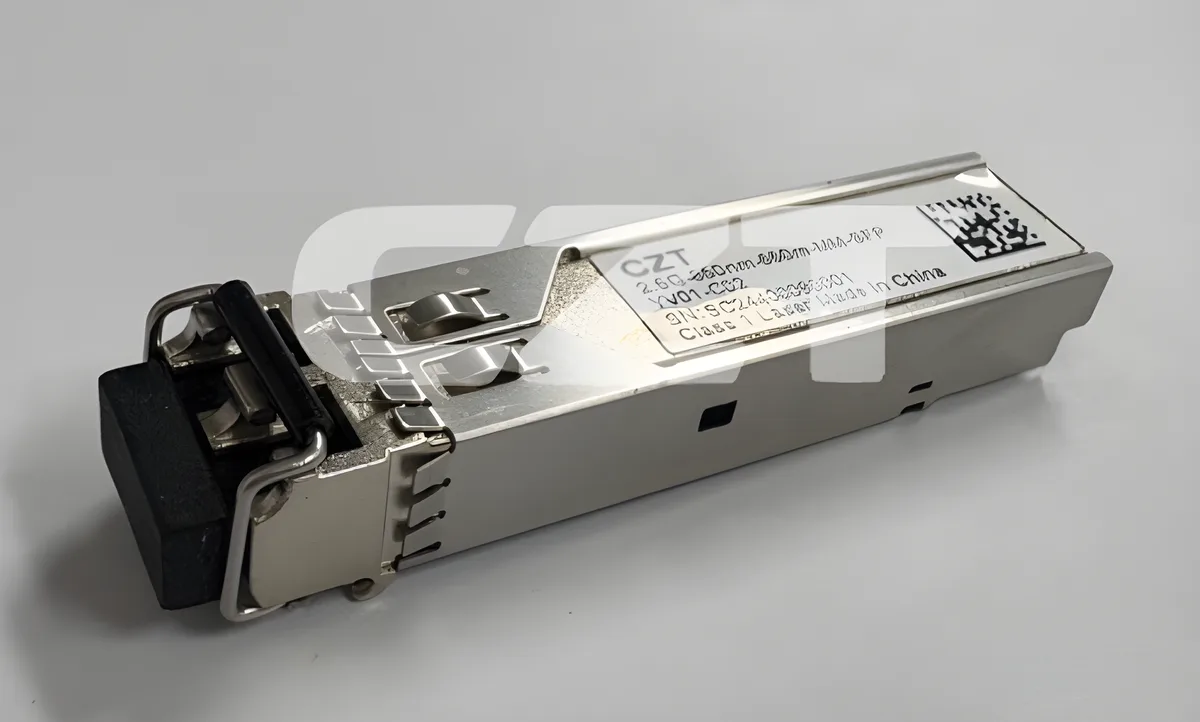
ST Connector Physical Design
The ST connector uses a 2.5mm ceramic ferrule — the same diameter as the SC connector — to hold and align the fiber. The key distinguishing feature is the bayonet coupling mechanism: a quarter-turn twist locks the connector in place, similar to a BNC coaxial connector.
Key Physical Characteristics
- Ferrule diameter: 2.5mm (same as SC, FC)
- Coupling mechanism: Bayonet (quarter-turn twist-lock)
- Body material: Metal (nickel-plated brass or stainless steel)
- Ferrule material: Ceramic (zirconia)
- Polish types: PC (Physical Contact), UPC (Ultra Physical Contact), APC (Angled Physical Contact)
- Fiber compatibility: Single-mode and multimode
The bayonet mechanism provides a positive lock that resists accidental disconnection from vibration — a significant advantage in industrial and military environments. However, it also means the connector cannot be mated in a straight push-pull motion; the quarter-turn requires more clearance than LC or SC connectors.
ST Connector Specifications
| Parameter | Value |
|---|---|
| Ferrule diameter | 2.5mm |
| Insertion loss (typical) | 0.3 dB (multimode), 0.2 dB (single-mode) |
| Return loss (PC) | ≥ 25 dB |
| Return loss (UPC) | ≥ 50 dB |
| Return loss (APC) | ≥ 60 dB |
| Mating cycles | 500+ |
| Operating temperature | -40°C to +75°C |
| Standard | IEC 61754-2 |
ST vs SC vs LC: Key Differences
| Parameter | ST | SC | LC |
|---|---|---|---|
| Ferrule diameter | 2.5mm | 2.5mm | 1.25mm |
| Coupling | Bayonet (twist) | Push-pull | Push-pull latch |
| Duplex option | Separate connectors | Duplex clip | Duplex housing |
| Panel density | Low | Medium | High |
| Vibration resistance | Excellent (bayonet) | Good | Good |
| Installation speed | Slower (twist) | Fast | Fast |
| Current use | Legacy, military | Enterprise, telecom | Data center, enterprise |
The ST connector's bayonet mechanism is both its strength and its weakness. The positive lock is excellent for vibration-prone environments, but the twist-to-lock action is slower than SC's push-pull and LC's latch, and the connector requires more clearance to mate and unmate.

Where ST Connectors Are Still Used
Legacy Enterprise Networks
Many enterprise networks installed in the 1990s and early 2000s used ST connectors throughout. These installations are still in service and require ST connectors for moves, adds, and changes. ST patch panels, wall plates, and patch cables remain widely available for this reason.
Military and Defense
The ST connector's bayonet locking mechanism and metal body make it well-suited for military applications where vibration, shock, and rough handling are expected. MIL-SPEC versions of the ST connector (MIL-PRF-29504) are used in military communications equipment, avionics, and shipboard systems.
Industrial Automation
Some industrial fiber optic networks (particularly older PROFIBUS and industrial Ethernet installations) use ST connectors. The vibration resistance is valued in factory environments with heavy machinery.
Security and CCTV Systems
Older security camera systems and access control networks often used ST connectors for fiber runs. These systems are still in service and require ST connectors for maintenance.
Test and Measurement Equipment
Some fiber optic test equipment (OTDRs, optical power meters, light sources) uses ST connectors or includes ST adapters. The ST's robust metal body is well-suited for test equipment that is frequently connected and disconnected.
ST Connector Polish Types
Like other fiber connectors, ST connectors are available in three polish types:
PC (Physical Contact): The fiber end face is polished to a slight convex curve, ensuring physical contact between the two fiber cores when mated. Return loss ≥ 25 dB. Suitable for most multimode applications.
UPC (Ultra Physical Contact): A more refined polish that achieves better physical contact and lower back-reflection. Return loss ≥ 50 dB. Used in single-mode applications and analog video transmission.
APC (Angled Physical Contact): The end face is polished at an 8° angle, directing back-reflections away from the fiber core. Return loss ≥ 60 dB. Required for high-speed single-mode applications, CATV, and wavelength-division multiplexing (WDM) systems.
APC ST connectors are less common than APC LC or SC connectors but are available for applications requiring very low back-reflection.
Installing ST Connectors
ST connectors can be terminated using field polishing or pre-polished methods:
Field polishing: Apply epoxy to the ferrule, insert the fiber, cure, cleave, and polish through the standard abrasive film sequence. The 2.5mm ferrule is the same size as SC, so the same polishing puck can be used.
Pre-polished: Pre-polished ST connectors are available from several manufacturers, using the same stub-fiber and index-matching gel approach as pre-polished LC and SC connectors.
The bayonet coupling requires a specific mating technique: align the key on the connector with the slot on the adapter, push in, and twist clockwise until the bayonet locks. To unmate, twist counterclockwise and pull.
Migrating from ST to LC or SC
Many organizations with legacy ST infrastructure are migrating to LC or SC as they upgrade their networks. The migration options:
ST-to-LC or ST-to-SC hybrid patch cables: One end terminates in ST, the other in LC or SC. These allow new LC/SC equipment to connect to existing ST patch panels.
ST-to-LC or ST-to-SC adapters: Inline adapters that convert between connector types. Useful for connecting ST-terminated fiber to LC or SC equipment.
Full replacement: Replace ST patch panels and connectors with LC or SC during a network upgrade. This is the cleanest solution but requires more work.
CZT's fiber optic connector range includes ST connectors for both new installations and legacy maintenance, along with ST-to-LC and ST-to-SC hybrid cables and adapters.
Summary
The ST connector is a mature, reliable fiber connector that remains relevant in legacy networks, military systems, and industrial applications. Its bayonet locking mechanism provides excellent vibration resistance, but its lower panel density and slower mating compared to LC and SC make it unsuitable for new high-density installations.
For new fiber installations, LC is the preferred choice for high-density data center and enterprise applications, and SC for telecom and access network applications. ST should be specified only when:
- Maintaining or extending existing ST infrastructure
- Military or defense applications requiring MIL-SPEC connectors
- Industrial applications where the bayonet lock's vibration resistance is specifically required


