Choose press-fit or soldered SFP cage installation from the actual PCB fabrication and assembly capability. The method affects hole or pad requirements, tooling, board support and rework. Neither approach should be selected solely from a photograph of the finished cage or a general preference for one assembly process.
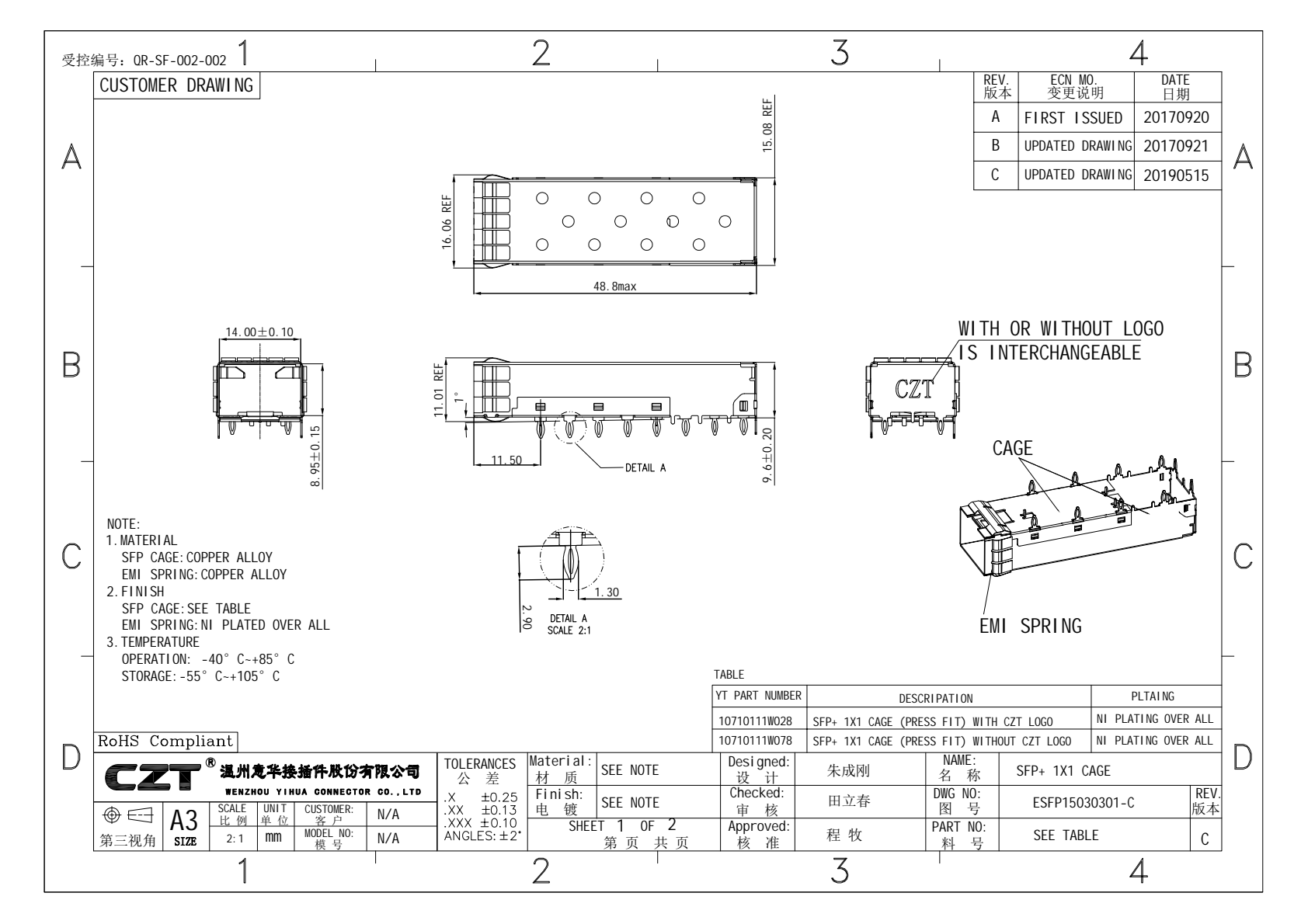
Figure 1. Official CZT cage drawing makes mounting features visible for a process review; determine the specified board and installation requirements from the complete document. CZT source · Original PDF, page 1.
Identify the precise termination arrangement
Determine separately how the cage and electrical receptacle attach to the board. A press-fit cage may be used with a receptacle whose termination method differs. An integrated assembly presents another process boundary. Keep those identities explicit in the assembly BOM.
CZT's pluggable-I/O product family includes cage and connector catalog references. Confirm the mounting method of the actual proposed part from its controlled drawing. The family name does not establish hole dimensions, solderability conditions or compatible tooling.
Review PCB fabrication requirements
For a press-fit proposal, obtain the finished-hole requirements and the board conditions specified by the supplier. Review them with the PCB fabricator and assembly house together. For a soldered proposal, obtain the recommended footprint and permitted assembly process conditions for the exact construction.
TE's pluggable-I/O product documentation illustrates the distinction between product drawings and application specifications. Use that same evidence structure for the selected supplier, without transferring TE dimensions or process limits to CZT products.
Compare the production process
| Process question | Press-fit review | Soldered review |
|---|---|---|
| Board interface | Finished-hole and board requirements | Pad or hole and solder requirements |
| Assembly equipment | Insertion tooling and board support | Placement and soldering process |
| Verification | Seating and insertion-process evidence | Seating and joint inspection |
| Rework | Extraction method and hole condition | Removal method and board heat exposure |
| Nearby parts | Tool access and support clearance | Placement and process access |
Fill the comparison with actual factory proposals. A theoretical process advantage has little value if the proposed site cannot perform or inspect it consistently.
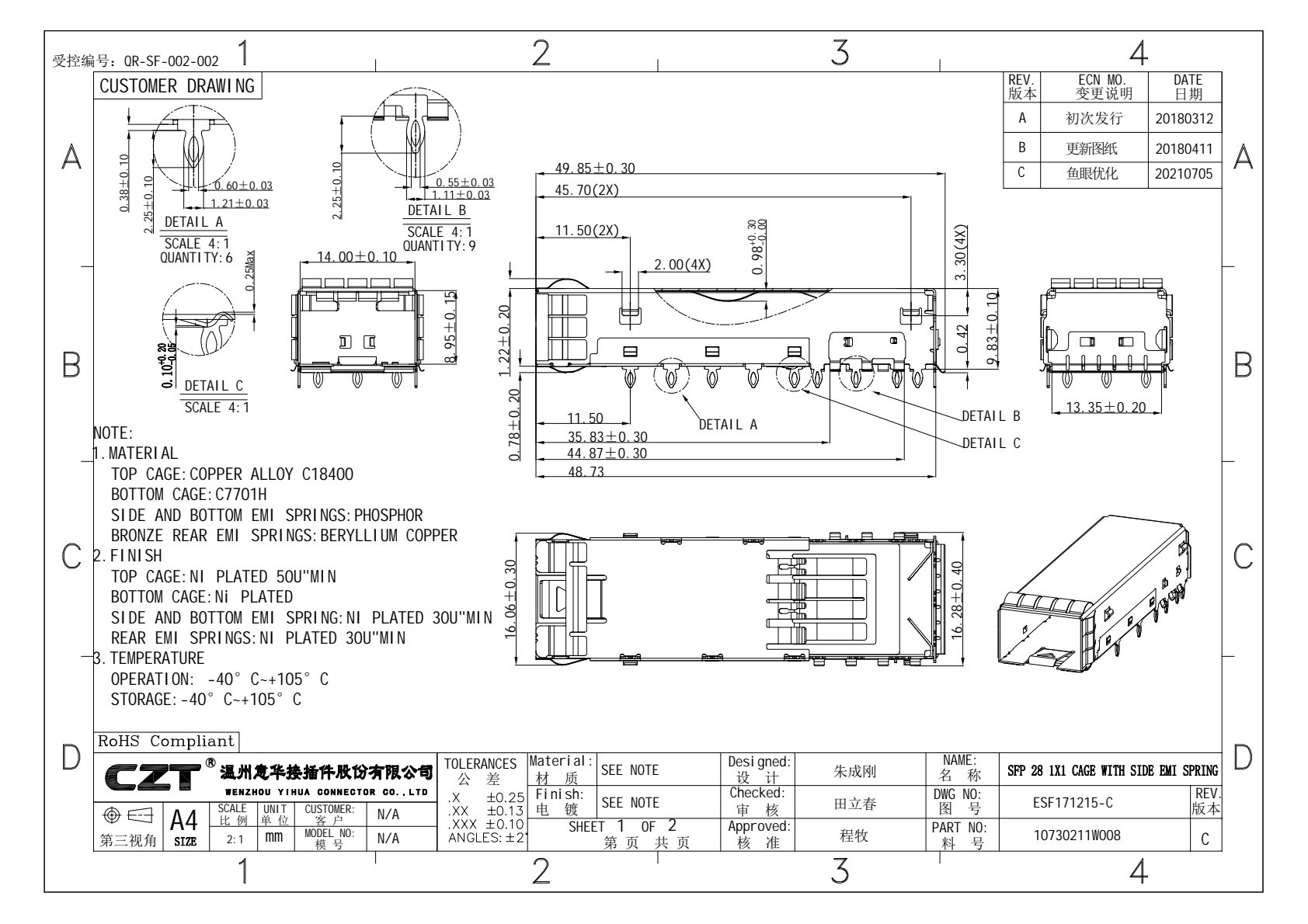
Figure 2. Official CZT SFP28 cage drawing provides another mounting configuration to examine; shared form-factor terminology does not establish an identical assembly process. CZT source · Original PDF, page 1.
Qualify the assembled result
Use first articles to verify seating, board condition and mechanical retention according to the agreed requirements. Record any inspection that is destructive and define how production evidence will be maintained afterward. Review rework separately; an assembly can be acceptable on first insertion yet have an unvalidated repair route.
A common planning gap is to reserve space for the cage but none for the installation or extraction tool. Include those envelopes before the board layout is frozen.
Define the inspection response to a partly seated part before pilot assembly. The instruction should state whether reseating is permitted and what additional checks follow. An undocumented second insertion can conceal a process deviation that should have been investigated.
The final selection should identify the exact part, board requirements, assembly procedure and inspection record. Keep process changes under review even when the circuit and external port geometry remain unchanged. A successful electrical bring-up does not, by itself, establish the quality of the board-to-cage mechanical installation.
Connect this review to CZT product information
Start with the relevant CZT product family and provide the original interface reference or controlled drawing. Ask which configurations and supporting documents are available for the task described here. Confirm the mating arrangement, required features and project conditions before choosing an orderable part.
Browse the relevant product family · View catalog resources
Discuss a drawing, sample or quotation
Share the part or family reference, current drawing revision, operating conditions and quantities. Include the specific checks described in this article so the inquiry identifies both the component and the evidence needed for your decision. Confirm sample availability and the proposed scope with the supplier.
Request a technical review or quotation
For broader context, read the related selection guide.