Harness protection near hot or abrasive surfaces should be selected from measured exposure and actual material evidence. A sleeve described as heat resistant does not establish the installed conductor temperature or prove resistance to the rubbing present in a particular machine. Define the problem before choosing the covering.
The wire-harness family contains related assembly references. A custom protection choice still needs controlled wire, sleeve and installation information. Catalog names and appearance should not be treated as verified temperature or abrasion ratings.
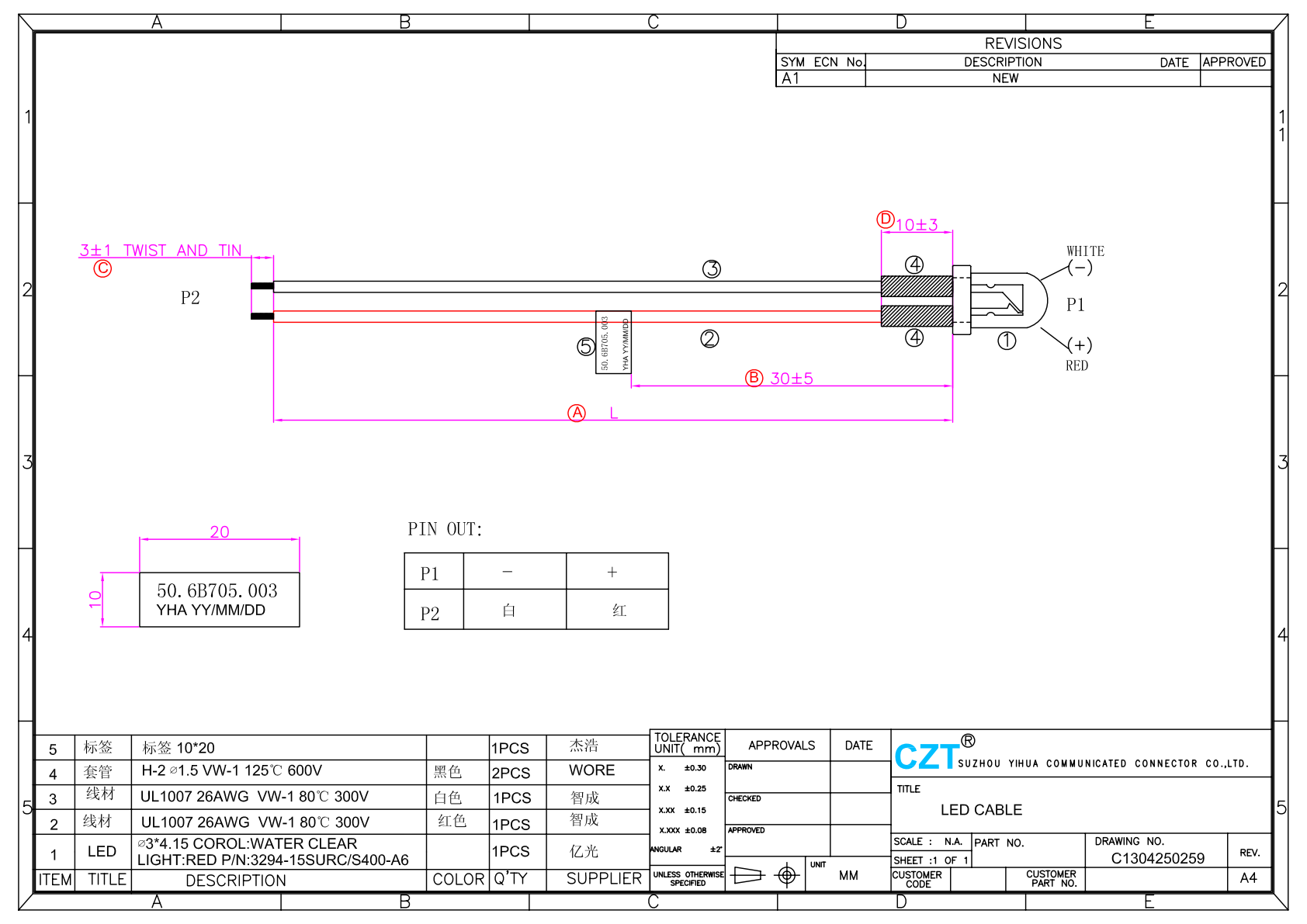
Figure 1. Official LED CABLE mechanical drawing. This actual harness reference illustrates construction and labeling; it does not establish the installed harness temperature grade. CZT source · Original PDF, page 1.
Map the heat and contact conditions
Identify nearby heat sources and measure the relevant operating temperatures and durations. Record distance, orientation and airflow with the measurements. A brief warm-up observation may not represent a longer operating state.
Mark every location where the harness touches a surface or could contact it during motion, vibration or service. Describe the surface material, edge condition and expected relative movement.
Separate the temperature experienced by the protective covering from the temperature of the conductor or termination. A covering can change heat flow, so its effect should be checked in the installed assembly rather than assumed beneficial in every respect.
Collect material-specific evidence
Obtain data for the actual wire insulation and protective product, including the conditions attached to any claimed limits. Confirm dimensions and installation requirements. A material family's general reputation does not identify the capability of one supplied sleeve.
| Evidence item | Application question |
|---|---|
| Temperature history | What exposure must the assembly tolerate? |
| Contact map | Where does rubbing or edge contact occur? |
| Material documentation | Which stated limits apply to the supplied parts? |
| Installation drawing | How are covering and supports positioned? |
| Representative trial | Does the complete arrangement meet requirements? |
Where material evidence is missing, leave that item open. Do not create a rating by combining unrelated values from separate supplier documents.
Test the proposed arrangement
Use production-intent coverings, supports and routing. Inspect the actual contact areas before and after the agreed thermal and mechanical sequence. Perform relevant electrical and visual checks and retain individual sample results.
For a hypothetical motor enclosure, moving a support away from a hot casting may reduce exposure more effectively than simply adding another layer of sleeve. Compare the proposed arrangements under the same operating conditions so the decision is based on evidence.
A protective treatment that survives on a straight sample may still bunch, slide or expose an edge after installation. Record those observations instead of considering only the material itself.

Figure 2. CZT temperature-and-humidity chamber. Environmental exposure must be defined for the installed harness; this chamber image is not an abrasion or hot-surface test result. CZT source · Original image.
Make protection reproducible
Specify covering type, length, start and end locations, support method and inspection points. Include service instructions if the protection is disturbed during maintenance.
Review changes to heat sources, routing or machine motion against the original exposure map. Approval should describe the installed arrangement and measured conditions. It should not imply an unlimited service life or a verified temperature capability beyond the actual component documentation and application tests.
Connect this review to CZT product information
Start with the relevant CZT product family and provide the original interface reference or controlled drawing. Ask which configurations and supporting documents are available for the task described here. Confirm the mating arrangement, required features and project conditions before choosing an orderable part.
Browse the relevant product family · View catalog resources
Discuss a drawing, sample or quotation
Share the part or family reference, current drawing revision, operating conditions and quantities. Include the specific checks described in this article so the inquiry identifies both the component and the evidence needed for your decision. Confirm sample availability and the proposed scope with the supplier.
Request a technical review or quotation
For broader context, read the related selection guide.