Harness insulation and withstand testing should be planned around the actual circuit groups and embedded components. Applying a generic test to every conductor independently can be unsuitable for an assembly containing devices or intentional links. The approved test program must preserve those relationships while checking the required insulation boundaries.
Cirris discusses this issue in its high-voltage testing guidance for cables with components. Candidates in the wire-harness family still need their own circuit definition and product-specific test requirements; a catalog cable label cannot supply those limits.

Figure 1. CZT dielectric-test bench. The manufacturer publishes this dielectric-test bench; actual circuit grouping and limits remain project-specific. CZT source · Original image.
Inventory connections and components
Start with the controlled schematic and point-to-point table. Identify power, signal, shields, isolated circuits and any embedded resistors, diodes, capacitors or other devices. Mark the component limits and intended connections that affect testing.
Do not rely on the tester's learned description without verification. A program can misidentify a component or omit a relevant relationship. The resulting test may then check the wrong boundary or apply an inappropriate condition.
Include unpopulated or otherwise unconnected terminals where the design requires insulation verification. A terminal absent from the continuity net list may still matter to the insulation plan.
Define each test group explicitly
List which points are connected together during each test step and which groups must remain separated. Establish test voltage, timing and acceptance limits through the applicable product requirements and equipment capabilities.
| Plan field | Required detail |
|---|---|
| Test group | Named set of electrically related points |
| Opposing group | Boundary whose insulation is evaluated |
| Embedded devices | Relevant limits and protection arrangement |
| Test condition | Approved method, level and duration |
| Acceptance | Requirement reference and result |
Do not copy settings from a different harness because it uses the same connector. The internal circuit can change the appropriate method even when the external interface is identical.
Verify before testing production assemblies
Review the program against the approved grouping table and use an authorized verification method. Qualified personnel should confirm that the setup implements the intended conditions before testing saleable product.
For a hypothetical control cable containing a suppression component, the connection groups may need to prevent an unintended voltage from appearing across that component. The solution comes from the actual circuit and tester architecture, not from deleting the component from the documentation.
Retain the reviewed program and setup evidence. A verbal instruction to skip a step is not an adequate configuration control.
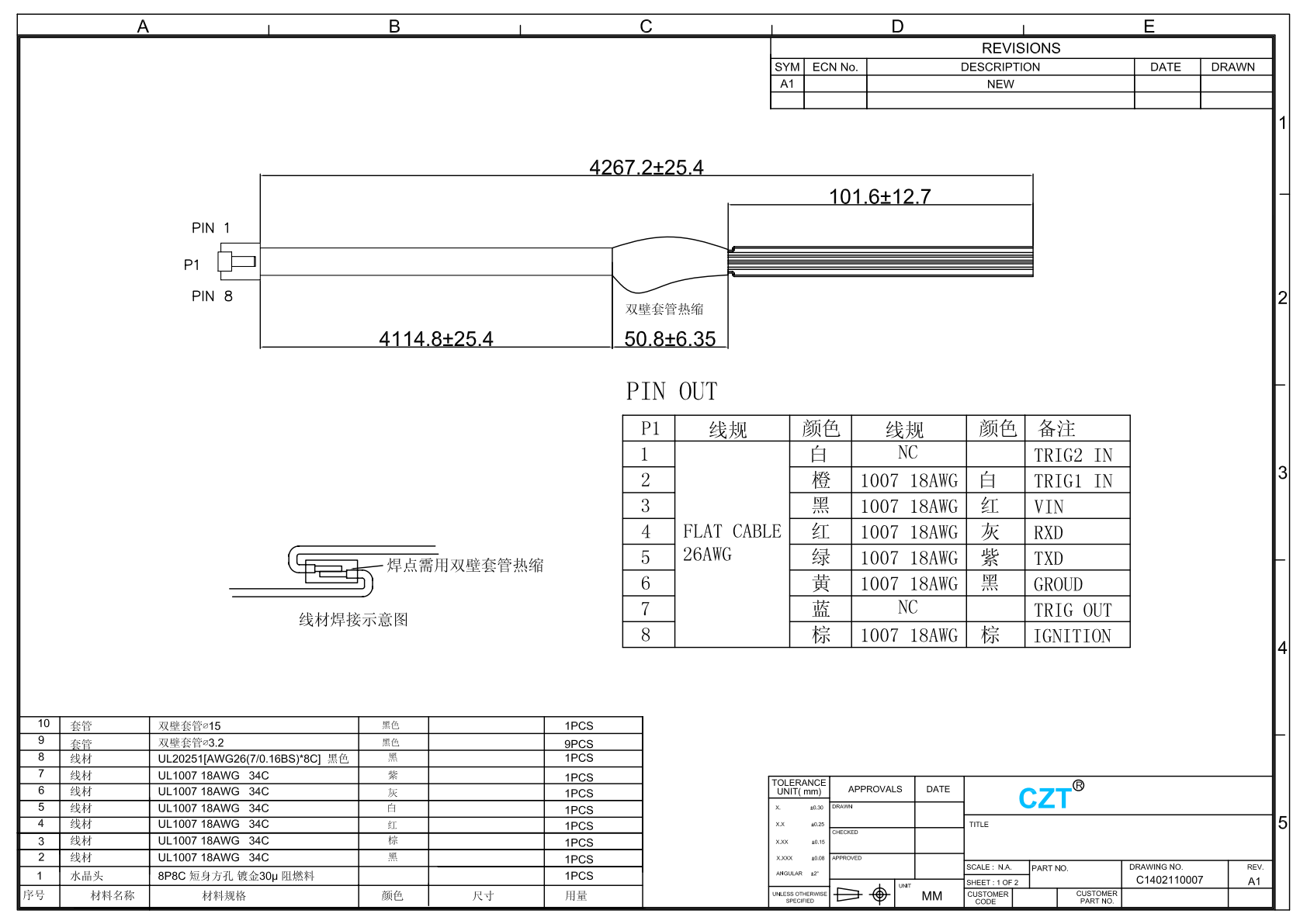
Figure 2. Official cable drawing. Use the actual connection map and embedded-component definition when planning insulation groups; the drawing is not a withstand-test result. CZT source · Original PDF, page 1.
Keep test conclusions separate
Report insulation resistance, dielectric withstand and ordinary continuity according to their respective requirements. Passing one does not establish the others, and none independently proves the product's complete service life.
After changes to embedded parts, wiring or tester configuration, revisit the affected grouping and limits. A well-defined plan gives manufacturing a reproducible procedure and gives engineering a clear explanation of which insulation boundaries were evaluated without overstating what a general pass indication means.
Connect this review to CZT product information
Start with the relevant CZT product family and provide the original interface reference or controlled drawing. Ask which configurations and supporting documents are available for the task described here. Confirm the mating arrangement, required features and project conditions before choosing an orderable part.
Browse the relevant product family · View catalog resources
Discuss a drawing, sample or quotation
Share the part or family reference, current drawing revision, operating conditions and quantities. Include the specific checks described in this article so the inquiry identifies both the component and the evidence needed for your decision. Confirm sample availability and the proposed scope with the supplier.
Request a technical review or quotation
For broader context, read the related selection guide.