Validate an Anderson-type DC connection by the exact housing, contact, conductor and termination process. A broad series name or advertised current does not establish whether a particular contact-and-wire combination is appropriate. The documentation for the actual manufacturer's part must control the review.
For genuine Anderson products, the SB assembly instructions specify conductor and tooling conditions for the covered system. Those instructions should not be generalized to another manufacturer's similar-looking product. The CZT automotive family is a separate catalog reference, without an implied official distribution or drop-in equivalence claim.

Figure 1. CZT harness-production equipment. Termination-process context for the contact-and-wire review; no pictured line or product is identified as an Anderson assembly. CZT source · Original image.
Identify the complete combination
Record the full housing and contact references, conductor material, wire construction and insulation outside diameter. Identify any reducers or accessories through their approved references rather than by an informal workshop description.
Check that the selected contact is intended for the conductor and housing. A wire fitting physically into a contact barrel does not establish that the resulting termination is qualified.
Keep the equipment's operating conditions in the file, including load pattern and ambient environment. The review needs a real application boundary before any sample result can become useful approval evidence.
Establish the termination process
Use the applicable strip-length and tooling instructions for the exact combination. Identify the tool, die or applicator and its controlled setup. Preserve sample preparation records so a later production batch can be compared with the evaluated specimens.
| Record | Purpose |
|---|---|
| Contact and wire codes | Defines the termination pair |
| Tool and setup | Reproduces the assembly method |
| Visual inspection | Finds preparation and assembly concerns |
| Mechanical test | Evaluates the specified retention requirement |
| Electrical and thermal test | Evaluates the actual current path |
Do not invent a crimp-height or pull requirement from a different contact's document. Where data is missing, obtain it or define an approved qualification plan with the responsible engineer.
Evaluate samples under relevant conditions
Check contact insertion and retention using the manufacturer's method. Measure the defined electrical path and apply the application's agreed thermal test conditions. Record cable length, routing, ambient reference and mating counterpart.
For a hypothetical battery-handling fixture, two wire options may meet a simple continuity check but produce different installed temperatures. Compare them under the same setup and retain individual results. Do not infer the cause from conductor size alone without reviewing termination and measurement differences.
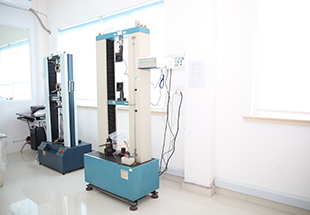
Figure 2. CZT tensile-test equipment. Mechanical retention is a separate sample check; this manufacturer equipment photograph does not validate an Anderson-type termination. CZT source · Original image.
Release only the demonstrated arrangement
Document the approved combination and manufacturing instructions. If the conductor, contact, tooling or housing changes, reassess the affected evidence rather than carrying approval forward automatically.
Keep load-carrying validation distinct from any requirement to connect or disconnect under load. The latter needs its own model-specific evidence and system review. This separation prevents a successful termination experiment from becoming an unsupported claim about switching capability or compatibility with other brands.
Connect this review to CZT product information
Start with the relevant CZT product family and provide the original interface reference or controlled drawing. Ask which configurations and supporting documents are available for the task described here. Confirm the mating arrangement, required features and project conditions before choosing an orderable part.
Browse the relevant product family · View catalog resources
Discuss a drawing, sample or quotation
Share the part or family reference, current drawing revision, operating conditions and quantities. Include the specific checks described in this article so the inquiry identifies both the component and the evidence needed for your decision. Confirm sample availability and the proposed scope with the supplier.
Request a technical review or quotation
For broader context, read the related selection guide.