A local hot spot on an ESS busbar should be investigated by comparing electrical loss, heat removal and installation condition at the affected location. A warm joint can indicate elevated resistance, but a thermal image alone cannot identify the cause. Begin with a repeatable operating condition and preserve the as-found assembly before making adjustments.

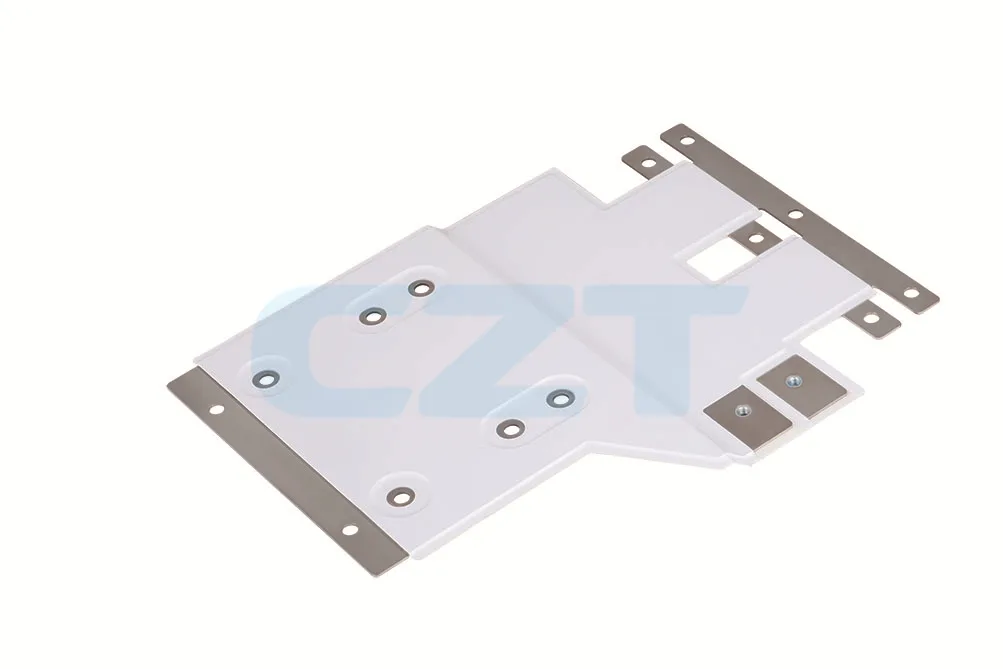
Figure 1. CZT laminated busbar geometry highlights several contact locations that should be identified separately when investigating a local temperature difference. CZT source · Original image.
Establish a useful temperature comparison
Record load, surrounding-air temperature, enclosure state and cooling operation. Compare the suspect location with nearby conductor regions and equivalent joints under similar duty. A temperature difference observed at different currents or airflow conditions may not indicate the same mechanism.
For thermal images, document surface condition and measurement settings. Different finishes can make apparent-temperature comparisons misleading. Add suitable contact measurements where needed and keep each measurement location visible in the investigation record.
Separate the joint from the rest of the path
Inspect hardware identity, stack order, seating, cable or terminal loading and any visible contamination or damage. Avoid immediate retightening because it changes the condition being investigated. Record the existing state first, then plan controlled checks.
Low-resistance measurements need a defined probing geometry. HIOKI's four-terminal measurement explanation describes the separation of current and voltage connections used to reduce lead-related measurement error. Place and document the sense points consistently so that before-and-after readings describe the same section.
Build an evidence-to-action table
| Observation | Next check |
|---|---|
| Hot joint, cooler adjacent conductor | Examine contact stack and joint voltage drop |
| Broad warm conductor region | Review load and local heat-removal conditions |
| One parallel path warmer | Measure current distribution as well as resistance |
| Temperature changes with enclosure state | Review airflow and nearby heat sources |
| Damage or unstable readings | Preserve sample and expand the failure investigation |
These checks narrow hypotheses; none establishes a root cause without supporting observations or test data.

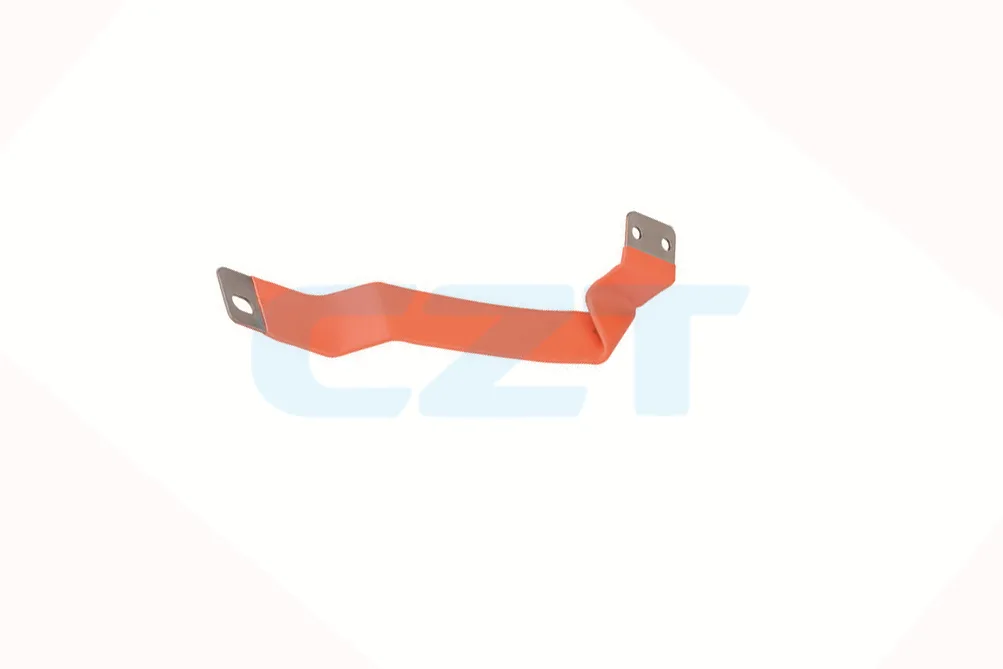
Figure 2. CZT flexible energy-storage connection shows end contact regions and a formed central section; use the installed geometry when separating contact and thermal hypotheses. CZT source · Original image.
Verify the correction under the original duty
Suppose a revised support removes force from a terminal and the joint temperature falls. Keep the same current, enclosure and measurement positions for the comparison. Otherwise, an accompanying airflow change could be responsible for the apparent improvement.
CZT's busbar and energy-storage family can support an inquiry about the actual returned or proposed construction. The label Energy Storage Laminated Busbar does not establish the cause of a field hot spot or a verified remedy.
Keep readings from equivalent undisturbed joints as comparison evidence where available. Record their geometry, load and assembly history instead of treating them as automatically healthy controls. If the suspect joint must be opened, agree which surfaces and hardware will be retained before the assembly is changed irreversibly.
The final record should distinguish the observed condition, tested hypotheses, selected correction and repeat-test result. Include remaining uncertainty where the damaged sample prevents a conclusive finding. This prevents a plausible explanation from becoming an unsupported failure-rate or product-quality claim.
Connect this review to CZT product information
Catalog references to discuss are listed below. Use the identifiers to request the current drawing and confirm the configuration required by your application.
| Catalog reference | Product information | Drawing record | Reference inquiry |
|---|---|---|---|
| Energy-storage laminated busbar catalog record | Energy-storage laminated busbar catalog record | Request the current drawing | Ask about this reference |
| Energy-storage flexible-connection catalog record | Energy-storage flexible-connection catalog record | Request the current drawing | Ask about this reference |
These entries identify catalog families. Their listing does not establish a numerical rating, finished-part tolerance or test approval; obtain that evidence for the requested revision.
Browse the relevant product family · View catalog resources
Discuss a drawing, sample or quotation
Share the part or family reference, current drawing revision, operating conditions and quantities. Include the specific checks described in this article so the inquiry identifies both the component and the evidence needed for your decision. Confirm sample availability and the proposed scope with the supplier.
Request a technical review or quotation
For broader context, read the related selection guide.