A repeatable busbar temperature-rise test begins with a reproducible assembly and load condition. Record the conductor, joints, supports, enclosure and cooling arrangement before applying current. A temperature number without those boundaries is difficult to compare and should not be converted into a general current rating for other installations.

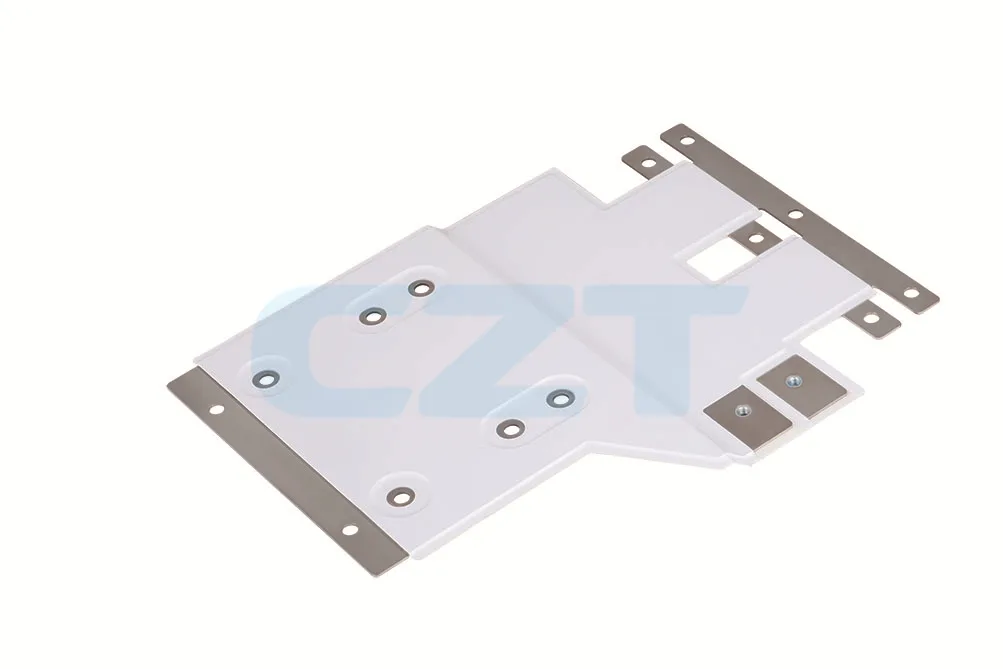
Figure 1. CZT laminated energy-storage busbar example. Its contact faces and broad conductor region help distinguish joint and conductor measurement locations before a temperature-rise test. CZT source · Original image.
Define the test assembly
Identify the drawing revision, material, finish and joint hardware. Show the current entry and exit positions, support locations and neighboring conductive parts. Cable connections used by the laboratory can remove or introduce heat, so include their construction and routing in the record.
CZT's busbar power-distribution family is a starting point for defining a candidate construction. The catalog includes rigid, laminated and flexible product descriptions, but these labels do not establish a common temperature-rise result. Tie the test request to a specific assembly drawing.
Control load and temperature measurements
Specify whether the intended duty is steady or cyclic and record the actual current throughout the run. Define how a stable condition will be recognized before testing, using the applicable product or system requirement. Do not select the end time after looking for a convenient result.
Place temperature sensors at the expected conductor and joint hot spots and at representative surrounding-air locations. Photograph each location. If thermal imaging is used, document surface treatment and measurement settings so that differences in surface appearance are not mistaken for differences in temperature.
Use a practical run sheet
| Record group | Information to preserve |
|---|---|
| Assembly | Drawing, sample ID, joint hardware and installation photographs |
| Load | Current waveform, duration and recorded deviations |
| Environment | Air temperature, enclosure state and cooling conditions |
| Sensors | Locations, equipment identity and calibration status |
| Result | Temperature histories, stability criterion and observed damage |
The run sheet should distinguish measured temperatures from calculated temperature rise. Retain raw time-series data instead of saving only the highest displayed value.

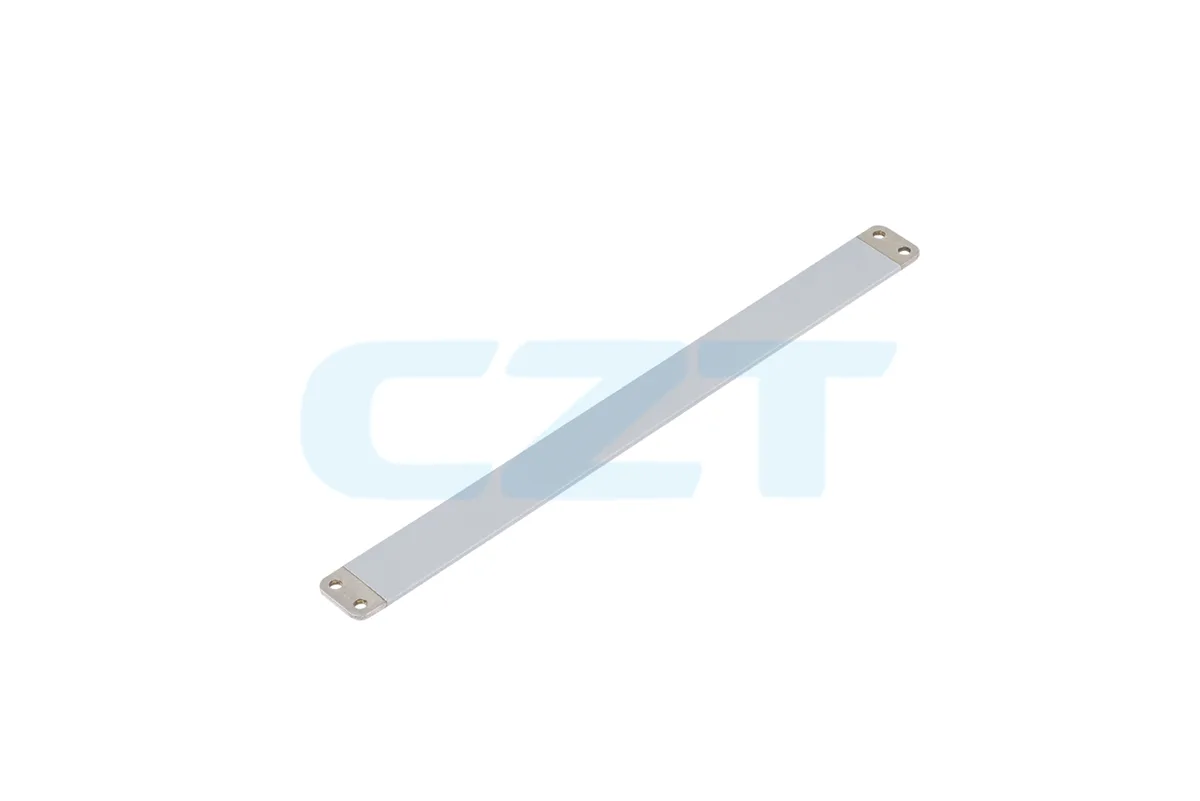
Figure 2. CZT rigid busbar example. The long conductor and end interfaces illustrate why fixture connections and heat-removal boundaries belong in the test record. CZT source · Original image.
Compare results on equal terms
Imagine two otherwise similar samples tested at the same current. One uses long supply cables in an open fixture; the other sits beside a warm device inside an enclosure. A lower temperature in the first run does not demonstrate that its busbar geometry is intrinsically better. The comparison changed the installation boundary as well as the sample.
For design comparisons, hold the fixture, sensor locations and surrounding conditions consistent, then state the variable being changed. For qualification, demonstrate that the fixture represents the released installation closely enough for the intended conclusion.
Retain the sensor attachment method as well as its location. A replaced sensor, loose attachment or changed wire route can affect repeatability. Inspect those details when a repeated run differs before concluding that the conductor construction has changed.
Finish the report with a bounded statement identifying the tested assembly and conditions. Any extrapolation to another current, enclosure or connection arrangement needs an engineering basis. This turns the experiment into useful design evidence without presenting a laboratory configuration as proof of every field installation.
Connect this review to CZT product information
Catalog references to discuss are listed below. Use the identifiers to request the current drawing and confirm the configuration required by your application.
| Catalog reference | Product information | Drawing record | Reference inquiry |
|---|---|---|---|
| Energy-storage laminated busbar catalog record | Energy-storage laminated busbar catalog record | Request the current drawing | Ask about this reference |
| Data-center rigid-connection catalog record | Data-center rigid-connection catalog record | Request the current drawing | Ask about this reference |
These entries identify catalog families. Their listing does not establish a numerical rating, finished-part tolerance or test approval; obtain that evidence for the requested revision.
Browse the relevant product family · View catalog resources
Discuss a drawing, sample or quotation
Share the part or family reference, current drawing revision, operating conditions and quantities. Include the specific checks described in this article so the inquiry identifies both the component and the evidence needed for your decision. Confirm sample availability and the proposed scope with the supplier.
Request a technical review or quotation
For broader context, read the related selection guide.