A USB-C temperature-rise result describes a connector, cable, PCB and operating state together. It does not establish the performance of every board using the same receptacle. A useful qualification plan therefore fixes the complete electrical path and records the conditions that control heat flow.
Before selecting a sample from the USB-C family, obtain its actual electrical documentation. A catalog drawing reference alone does not establish a usable current or power level. USB-IF also explains that cable capabilities differ and that a cable does not extend the capabilities of the attached product in its cable and connector guidance.

Figure 1. CZT Type-C receptacle example illustrates the component whose contacts, board and paired cable must be identified in a power-temperature test. CZT source · Original image.
Define the operating combinations
List the source, sink, controller configuration and cable used for each run. State which power operating condition the system actually reaches, rather than entering only the maximum number advertised for one component.
Check the intended condition against the limits of every relevant part. Include power protection devices and PCB conductors. If the system negotiates a different state during the experiment, retain that record; the resulting temperatures cannot be interpreted as evidence for the originally planned load.
Test both plug orientations where applicable. Keep the mating cable identity visible in the test log so an unexplained difference can be investigated rather than averaged away.
Locate measurements deliberately
Choose temperature measurement locations that can be reproduced on another sample. Record how each sensor is attached and whether the attachment could change heat flow or interfere with mating.
| Log field | Purpose |
|---|---|
| Ambient measurement location | Defines the reference temperature |
| Connector and shell points | Tracks the local interface |
| Nearby PCB locations | Reveals board contribution |
| Current and voltage history | Confirms the applied operating state |
| Cable and assembly revision | Defines the qualified combination |
Where direct contact measurement is impractical, explain the limitations of the selected technique. A shell temperature image does not automatically reveal the hottest internal contact.
Wait for a defined measurement condition
Specify the criterion used to call a run stable and preserve the temperature history. A convenient fixed waiting time can miss a slow change caused by the board or enclosure warming up.
For a hypothetical sensor gateway, an open-board trial and an enclosed trial may produce different results despite identical current. Record them as separate configurations. The enclosure test answers the installed-product question; the open-board test may help diagnose the heat path.
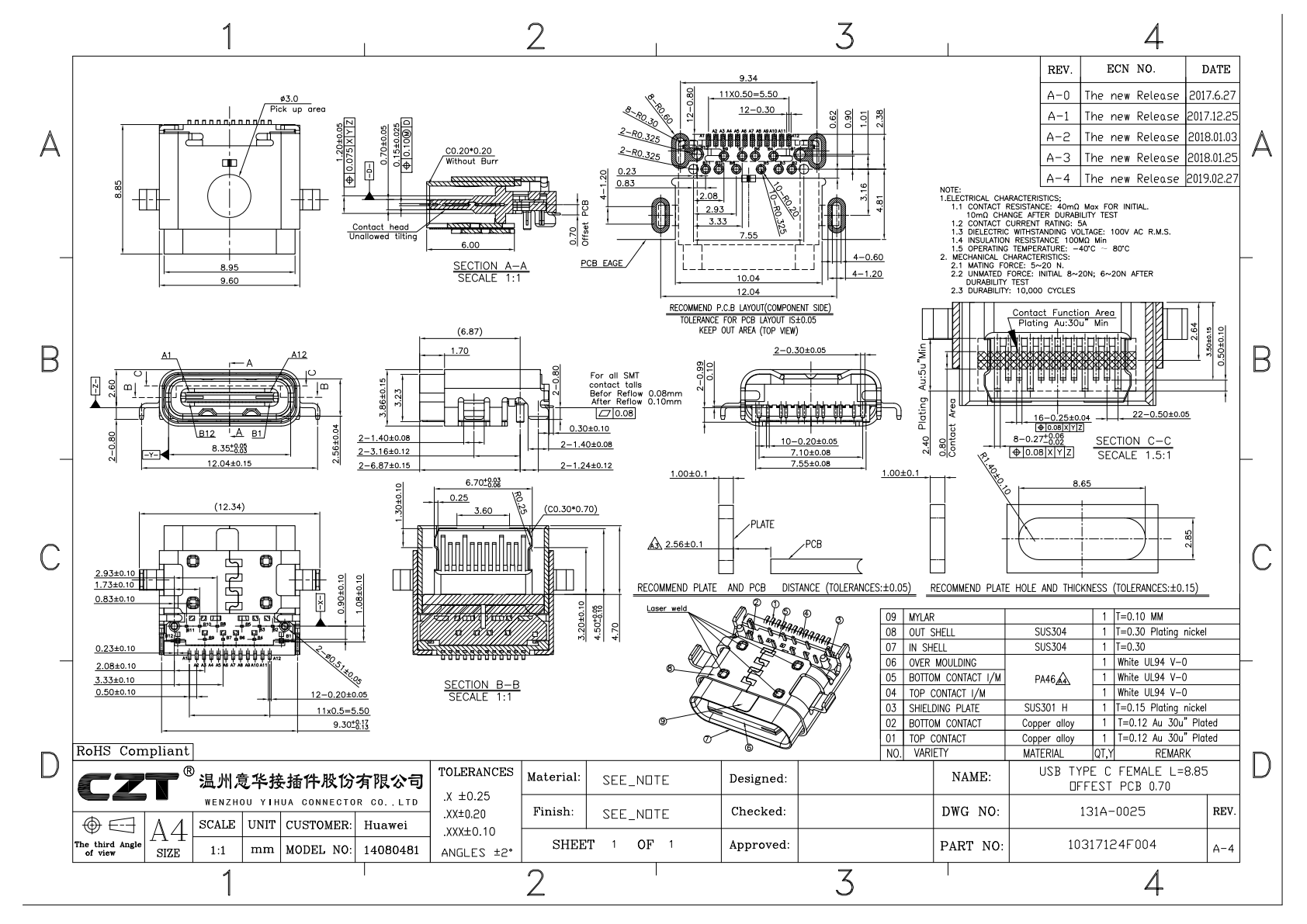
Figure 2. Official Type-C drawing provides the construction reference for a test specimen; permitted current and thermal conditions need separate verified requirements. CZT source · Original PDF, page 1.
Make the approval narrow and usable
Compare the measured temperatures and rise against the agreed component and system limits. Document any untested ambient, cable or operating combination. A passing low-load experiment provides no result for a higher load that was never applied.
The final record should allow purchasing and engineering to identify the exact sample configuration, repeat the test and understand the approved operating range. If the PCB copper, power policy or cable changes, use the original record to decide which runs need to be repeated.
Connect this review to CZT product information
Start with the relevant CZT product family and provide the original interface reference or controlled drawing. Ask which configurations and supporting documents are available for the task described here. Confirm the mating arrangement, required features and project conditions before choosing an orderable part.
Browse the relevant product family · View catalog resources
Discuss a drawing, sample or quotation
Share the part or family reference, current drawing revision, operating conditions and quantities. Include the specific checks described in this article so the inquiry identifies both the component and the evidence needed for your decision. Confirm sample availability and the proposed scope with the supplier.
Request a technical review or quotation
For broader context, read the related selection guide.