Crimp connectors join wires to terminals or other wires by mechanically deforming a metal sleeve around the wire conductor. A properly made crimp creates a gas-tight connection with low contact resistance, high pull-out strength, and long-term reliability. A poorly made crimp — using the wrong tool, wrong connector size, or incorrect technique — creates a high-resistance joint that generates heat, causes voltage drop, and eventually fails.
Crimping is the dominant wire termination method in automotive, aerospace, industrial, and consumer electronics because it is faster than soldering, more consistent when done correctly, and more resistant to vibration.
How Crimping Works
A crimp connection works by cold-welding the wire strands to the connector barrel. When the crimp tool compresses the barrel:
- The barrel deforms around the wire strands
- The strands deform and interlock with each other and the barrel
- The oxide layer on the wire and barrel surfaces is broken, creating metal-to-metal contact
- The resulting joint is mechanically strong and electrically conductive
A good crimp is a cold weld — the metal flows together without heat. This is why crimp connections are more vibration-resistant than solder joints: solder is brittle and can crack under repeated flexing, while a crimp joint flexes with the wire.
Crimp Connector Types
Butt Splice Connectors
Butt splices join two wire ends together in a straight line. The wire is inserted from each end of the barrel, and the barrel is crimped in the middle.
- Standard butt splice: Bare metal barrel, requires heat-shrink or tape for insulation
- Insulated butt splice: Pre-insulated with PVC or nylon, color-coded by wire gauge
- Heat-shrink butt splice: Contains a heat-shrink tube with adhesive lining; shrinking the tube seals the connection against moisture
Insulated butt splices are color-coded:
- Red: 22–18 AWG (0.5–0.75mm²)
- Blue: 16–14 AWG (1.5–2.5mm²)
- Yellow: 12–10 AWG (4–6mm²)
Ring Terminals
Ring terminals (also called ring lugs) have a circular hole that fits over a bolt or stud. They are used for grounding connections, battery terminals, and any connection that must be secured with a fastener.
Ring terminals are available in:
- Insulated: PVC or nylon sleeve over the barrel
- Uninsulated: Bare metal, used where the terminal will be covered by a boot or heat-shrink
- Flanged: Wider flange for better contact area on large studs
- Locking: Serrated ring that bites into the mating surface to prevent loosening
Ring terminal hole sizes are specified by the stud diameter (M4, M5, M6, M8, M10, etc.).
Spade (Fork) Terminals
Spade terminals (fork terminals) have a U-shaped end that slides under a screw head without removing the screw completely. They are used on terminal blocks, switches, and equipment where frequent disconnection is needed.
Spade terminals are available in standard and fully insulated versions, and in various fork widths to match different screw sizes.
Pin and Socket Connectors
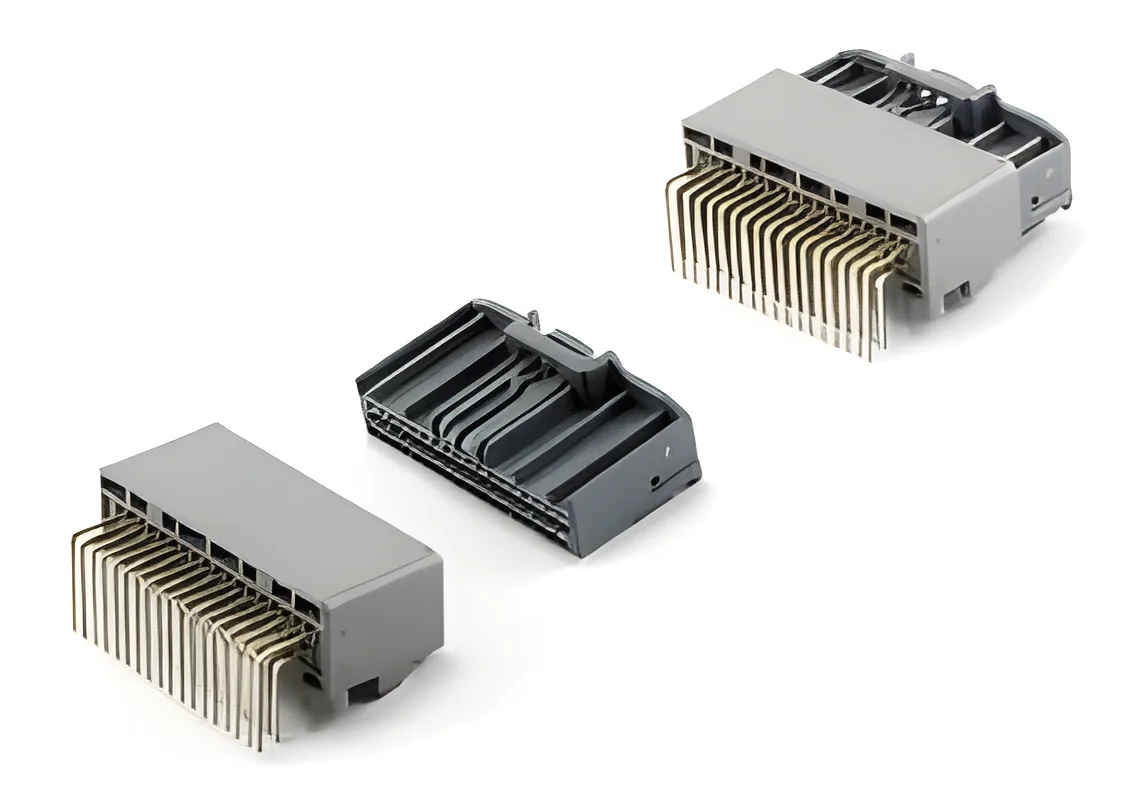
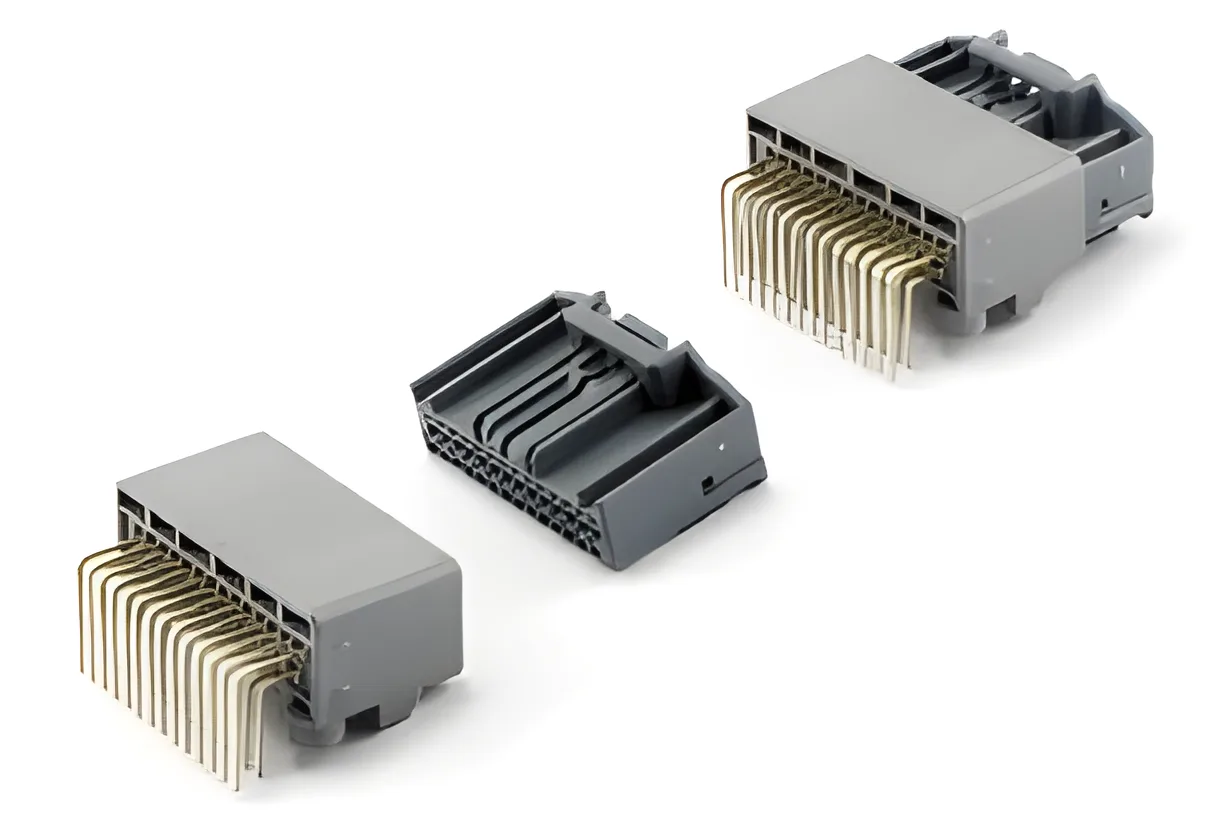
Pin connectors (male) and socket connectors (female) are used in multi-pin connector housings. The crimp contact is inserted into a plastic housing after crimping. This is the construction used in automotive connectors (Deutsch, TE Superseal, Molex, JST) and industrial connectors (M12, Han).
The crimp contact must be sized for the wire gauge and the connector housing. Using the wrong contact size results in contacts that won't seat properly in the housing or that pull out under tension.
Ferrules (End Sleeves)
Ferrules are used to terminate stranded wire for insertion into screw terminals, spring-cage terminals, and push-in terminals. The ferrule holds the strands together, preventing individual strands from spreading and causing short circuits.
Ferrules are color-coded by cross-section:
- White: 0.5mm²
- Grey: 0.75mm²
- Red: 1.0mm²
- Black: 1.5mm²
- Blue: 2.5mm²
- Yellow: 4.0mm²
- Grey (large): 6.0mm²
Ferrules require a dedicated ferrule crimping tool — standard automotive crimp tools will not produce the correct crimp geometry.
Bullet Connectors
Bullet connectors are cylindrical connectors used for inline connections in automotive and motorcycle wiring. The male bullet inserts into the female socket. They are commonly used for lighting, accessories, and trailer wiring.
Flag Terminals
Flag terminals have the wire barrel at 90° to the connection tab, allowing the wire to exit perpendicular to the mating surface. Used where space constraints prevent a straight terminal from fitting.
Crimp Tools
The crimp tool is as important as the connector. Using the wrong tool — or no tool at all — is the most common cause of crimp failures.
Ratchet Crimp Tools
Ratchet crimp tools are the standard for reliable crimping. The ratchet mechanism prevents the tool from opening until the crimp is fully completed, ensuring consistent crimp depth regardless of operator technique.
Ratchet tools are available for:
- Insulated terminals: For standard automotive butt splices, ring terminals, and spade terminals
- Non-insulated terminals: For bare metal contacts
- Pin contacts: For automotive connector contacts (Deutsch, TE, Molex, JST)
- Ferrules: For wire end sleeves
Hydraulic Crimp Tools
For large cable lugs (25mm² and above), hydraulic crimp tools provide the force needed to properly compress large-diameter barrels. Battery cable terminals, welding cable lugs, and high-current power connections require hydraulic crimping.
Bench Crimp Tools
For high-volume production, bench-mounted crimp tools (applicators) are used with automatic feed systems. These tools produce highly consistent crimps and are used in automotive wire harness manufacturing.
What NOT to Use
Pliers: Pliers cannot produce a consistent crimp geometry. The resulting crimp may look acceptable but will have high contact resistance and low pull-out strength.
Combination wire stripper/crimper tools: The cheap combination tools sold at hardware stores produce poor crimps. The crimp die geometry is incorrect for most connector types.
Crimp Quality Inspection
A good crimp should be inspected for:
Pull-out force: The wire should not pull out of the terminal when subjected to the specified pull force (varies by wire gauge and connector type). A simple tug test is not sufficient for critical applications — use a calibrated pull tester.
Visual inspection: The barrel should be uniformly compressed without cracks, splits, or sharp edges. The wire insulation should not be crimped into the barrel (only the conductor should be crimped).
Cross-section inspection: For critical applications, a cross-section of the crimp can be examined under a microscope to verify that the strands are properly deformed and the barrel is uniformly compressed.
Contact resistance: Measure resistance across the crimp joint. A good crimp should have < 1 mΩ resistance for most wire gauges.

Common Crimp Mistakes
Wrong connector size: The connector barrel must match the wire gauge. A barrel that is too large will not compress properly around the wire; too small and the wire won't fit.
Insufficient strip length: Strip exactly the length specified for the connector. Too short and the wire won't reach the end of the barrel; too long and bare wire will extend beyond the barrel.
Crimping the insulation: The crimp should compress only the conductor portion of the barrel. If the insulation is crimped into the conductor barrel, the crimp will have high resistance.
Not using the strain relief: Many connectors have a separate insulation crimp (strain relief) that grips the wire insulation. Always crimp both the conductor barrel and the insulation crimp.
Using the wrong die: Crimp tools have multiple die positions for different wire gauges. Using the wrong die produces an incorrect crimp geometry.
Automotive Crimp Connectors
In automotive applications, crimp connectors must withstand:
- Temperature cycling (-40°C to +125°C or higher under-hood)
- Vibration and shock
- Chemical exposure (oil, fuel, brake fluid, coolant)
- Humidity and condensation
Automotive-grade crimp connectors use:
- Tin-plated or gold-plated contacts for corrosion resistance
- Nylon or high-temperature PVC insulation for heat resistance
- Sealed variants with silicone wire seals for IP67 protection
CZT's automotive connector range includes crimp contacts and housings for automotive wire harness applications, with options for sealed and unsealed configurations across multiple connector families.
Summary
Crimp connectors are the foundation of reliable wire termination in automotive, industrial, and electronics applications. The key principles:
- Match the connector to the wire gauge — use the color-coded size guide
- Use a ratchet crimp tool — never use pliers
- Crimp both the conductor barrel and the strain relief
- Inspect every crimp — visual check plus pull test for critical applications
- Use the right connector type for the application (butt splice, ring terminal, pin contact, ferrule)
A properly made crimp connection is more reliable than a solder joint in most applications. The investment in quality crimp tools and connectors pays off in reduced failures and maintenance costs.


