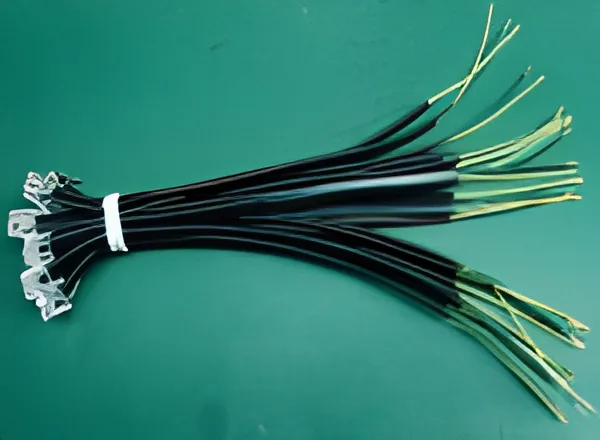
A custom RJ45 cable assembly needs an explicit end-to-end wire map and a defined continuity inspection method. A tester's green indicator is useful only when the programmed map, fixture and acceptance conditions match the released drawing.
Use the CZT RJ45 and Ethernet family to identify assembly candidates. Catalogue assembly names provide identification; the approved customer drawing defines the actual wiring and test scope.
Create the connection table before programming the tester
Label both ends from a stated view direction and identify each contact. Record the required connection from every contact at end A to the corresponding destination at end B. Include shield or shell connections separately where relevant.
Avoid describing a custom assembly solely as straight-through or crossover. Those shorthand terms can hide auxiliary connections, unused positions or a particular equipment interface. The table should make every intended connection visible.
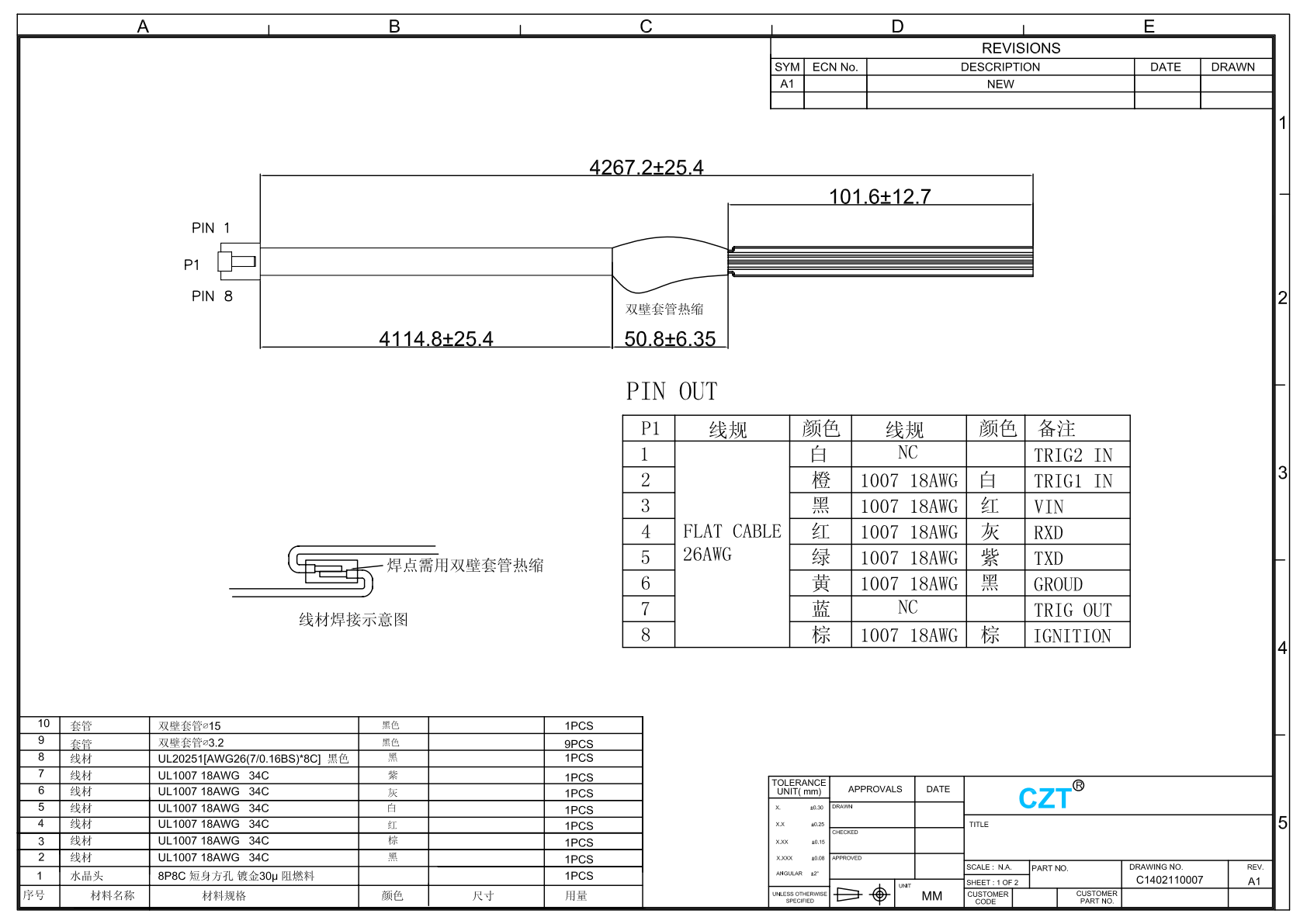
Figure 1. CZT drawing C1402110007, linked from the official 8P8C-to-open-cable page, shows length datums and a pin-out table. CZT source · Original PDF, page 1.
Define what continuity inspection must detect
List open circuits, unintended connections and incorrect mappings. State any resistance requirement and measurement method that applies to the finished assembly. A simple wire map and a precision resistance check do not necessarily use the same setup.
Validate the fixture as part of the process. A miswired adapter can make a correctly wired cable appear defective or allow an incorrect assembly to appear acceptable.
Use a test-record worksheet
| Field | Required content |
|---|---|
| Assembly | Part number, drawing revision and serial or lot ID |
| Connection | End A pin, end B pin and shield mapping |
| Fixture | Adapter identity and verification status |
| Program | Approved tester recipe and revision |
| Test coverage | Opens, shorts, mapping and other defined checks |
| Result | Raw observation, disposition and operator reference |
Retain the approved map alongside the program. This lets a reviewer verify the intended requirement without relying on a tester file that may be difficult to interpret later.

Figure 2. Official QWY-1013-10 8P8C plug photograph, showing the housing, latch and contact region. CZT source · Original image.
Challenge the setup deliberately
Before routine production, verify that the test process detects representative known faults under an approved validation method. Use controlled test artifacts rather than damaging saleable material without a plan.
For a hypothetical custom cable, swapping two tester-adapter positions could make every assembly show the same apparent wire-map problem. Checking the adapter against the released table would identify the setup error before unnecessary rework.
Separate continuity from transmission performance
A correct end-to-end map does not establish the assembly's high-frequency transmission performance or its mechanical durability. Define those requirements and tests separately when the application needs them.
Keep the released drawing, tester program, fixture configuration and inspection record synchronized. If wiring changes, update all four deliberately. This turns continuity testing into a traceable manufacturing control instead of a ritual check whose connection to the actual product is unclear.
Connect this review to CZT product information
Catalog references to discuss are listed below. Use the identifiers to request the current drawing and confirm the configuration required by your application.
| Catalog reference | Product information | Drawing record | Reference inquiry |
|---|---|---|---|
| 8P8C TO OPEN CABLE | 8P8C-to-open-ended cable catalog record | Listed PDF | Ask about this reference |
A catalog drawing reference is a starting document, not a substitute for reviewing its revision, options and suitability for the complete assembly.
Browse the relevant product family · View catalog resources
Discuss a drawing, sample or quotation
Share the part or family reference, current drawing revision, operating conditions and quantities. Include the specific checks described in this article so the inquiry identifies both the component and the evidence needed for your decision. Confirm sample availability and the proposed scope with the supplier.
Request a technical review or quotation
For broader context, read the related selection guide.