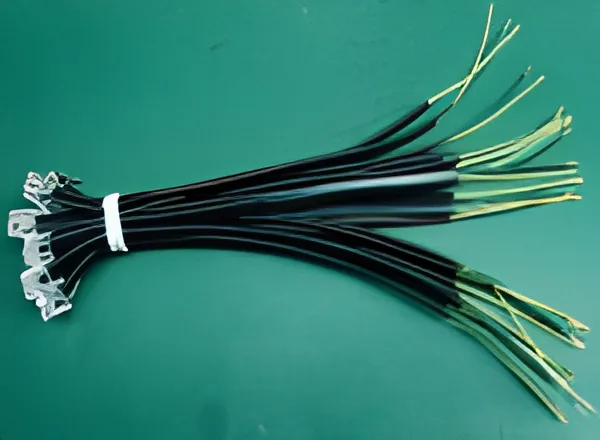
Dimension an RJ45 cable assembly by defining where its length begins and ends, how it is measured and which installed bends are permitted. A purchase line that specifies only an overall length can leave the plug, boot and strain-relief geometry open to conflicting interpretations.
For assemblies in the CZT RJ45 and Ethernet family, use an approved assembly drawing to connect the length requirement with the actual installation. Keep cable and connector identities attached to that drawing.
Establish the measurement datums
Choose reference surfaces that can be identified consistently on the finished assembly. State whether length includes plug bodies, boots or other end features. Define the measurement condition, including whether the cable is laid out straight without tension or measured by another approved method.
Avoid measuring a flexible part under an unspecified pull. Different handling can produce different readings even when the assembly has not changed.
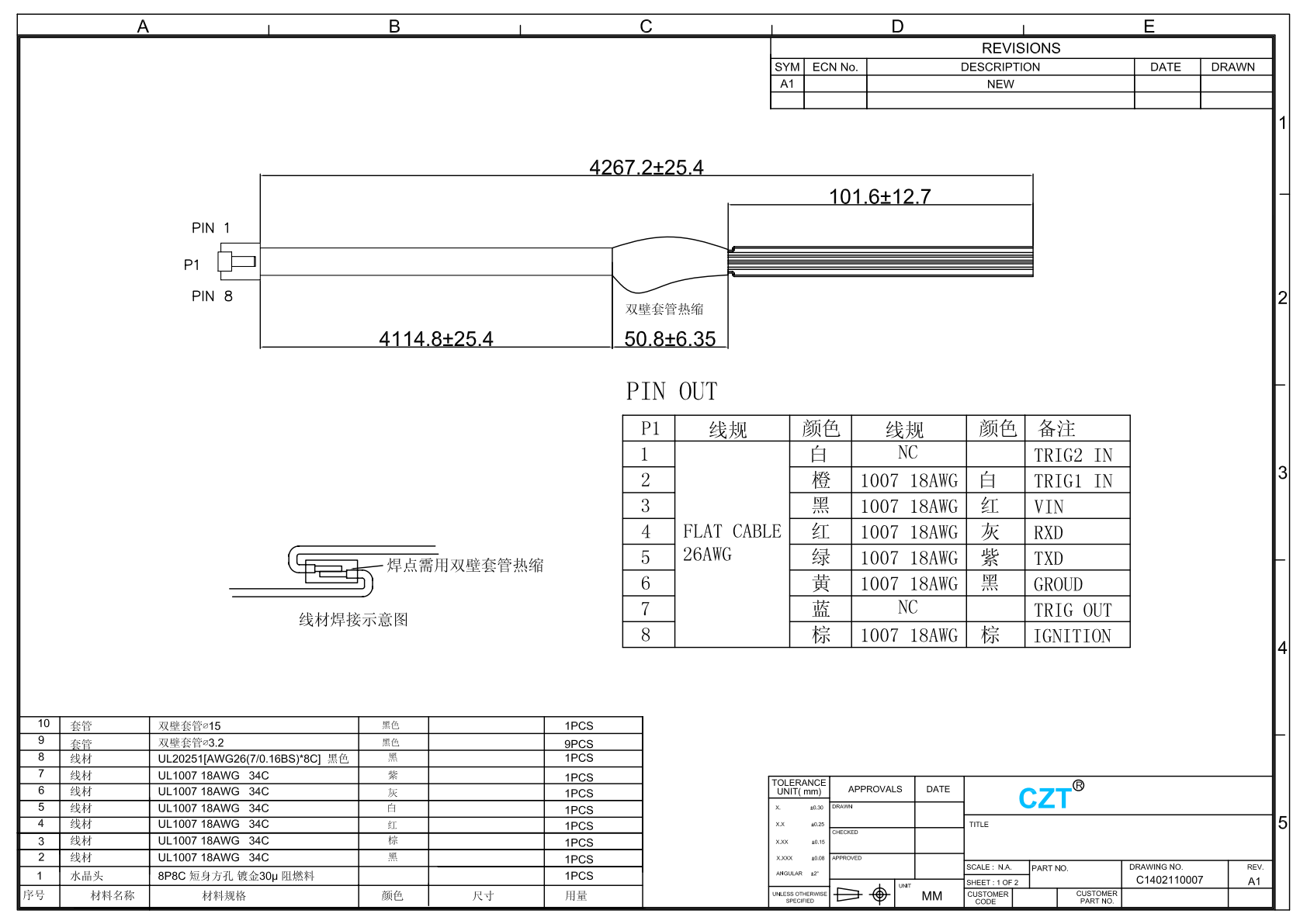
Figure 1. CZT drawing C1402110007, linked from the official 8P8C-to-open-cable page, shows length datums and a pin-out table. CZT source · Original PDF, page 1.
Detail the ends separately
Show the plug, boot, overmold or other strain-relief structure at each end. Identify the cable exit direction and the region that must remain free of nearby obstacles. Include labels or other features if their positions matter to installation.
A strain-relief feature should be reviewed for the actual cable and expected movement. Its presence in a photograph does not establish its allowable load or bending performance.
Use a drawing-input table
| Drawing item | Decision to specify |
|---|---|
| Overall length | Datums, tolerance and measurement condition |
| End A and end B | Connector identity and orientation |
| Exit structure | Boot or overmold envelope and cable direction |
| Flexible region | Relevant bend and movement requirements |
| Identification | Label position and orientation |
| Verification | Length, fit and mechanical test references |
The table helps purchasing request the same geometry that engineering expects to install. It also makes supplier questions more precise before samples are built.

Figure 2. Official QWY-1308-11 8P8C plug photograph, a separate catalog reference. CZT source · Original image.
Check the installed route
Review the cable through its real path, including enclosure entry, tie points and maintenance movement. Ensure the length does not require the cable to pull on a connector or force an abrupt bend at its exit.
For a hypothetical cabinet connection, an assembly measured between plug tips may be shorter in usable routing length than an engineer expected from a jacket-only interpretation. Defining the datums resolves the disagreement before production.
Verify strain relief with relevant conditions
Define any required pull, flex or movement checks using the actual installation and approved acceptance basis. Record the fixture and attachment points so the test evaluates the intended feature rather than a different part of the cable.
Retain the approved drawing and installed-fit observations together. Later changes to boot length, cable stiffness or routing hardware can affect fit even when the nominal overall length remains unchanged, so those changes deserve a focused interface review.
Connect this review to CZT product information
Catalog references to discuss are listed below. Use the identifiers to request the current drawing and confirm the configuration required by your application.
| Catalog reference | Product information | Drawing record | Reference inquiry |
|---|---|---|---|
| 8P8C TO OPEN CABLE | 8P8C-to-open-ended cable catalog record | Listed PDF | Ask about this reference |
A catalog drawing reference is a starting document, not a substitute for reviewing its revision, options and suitability for the complete assembly.
Browse the relevant product family · View catalog resources
Discuss a drawing, sample or quotation
Share the part or family reference, current drawing revision, operating conditions and quantities. Include the specific checks described in this article so the inquiry identifies both the component and the evidence needed for your decision. Confirm sample availability and the proposed scope with the supplier.
Request a technical review or quotation
For broader context, read the related selection guide.