Evaluate cooling in a multiport PoE switch with simultaneous port loading and the intended enclosure airflow. A successful temperature test on one isolated RJ45 port does not describe the thermal environment of a dense connector bank.
Use the exact candidate from the CZT integrated magnetics range in the thermal configuration being reviewed. Port count, spacing, PCB construction and neighboring heat sources all belong in the evaluation record.
Build a realistic load map
List which ports can operate together and the expected power conditions for each group. Include operating modes that change the distribution of heat, not only the largest nominal system total. A concentrated group of loaded neighboring ports can present a different local condition from the same load distributed across the panel.
Record controller settings, cable configurations and link activity. These details help another engineer reproduce the case rather than repeating an approximate full-load test.
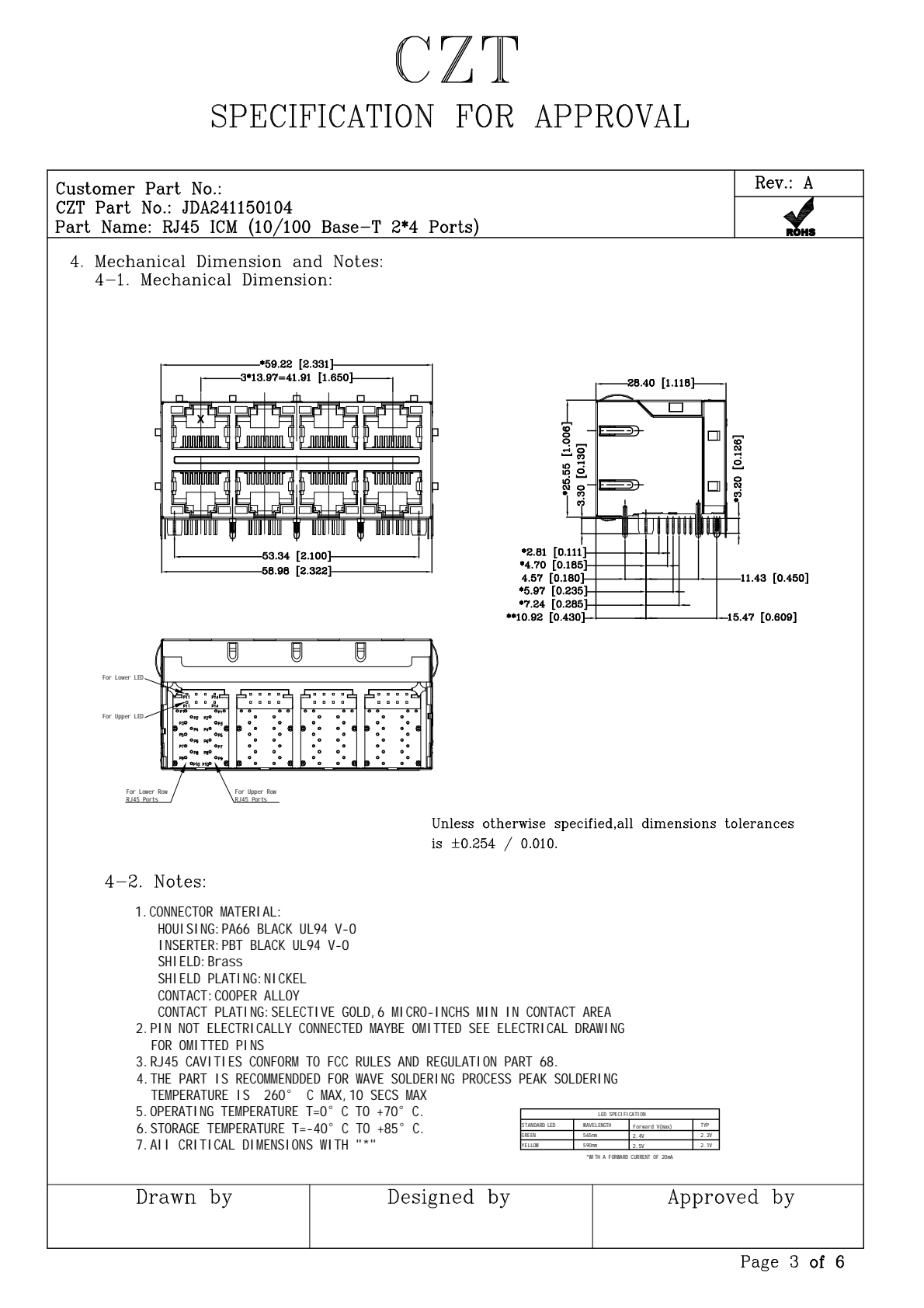
Figure 1. JDA241150104 2x4 module mechanical views from the official specification, PDF page 3. CZT source · Original PDF, page 3.
Identify the local cooling boundaries
Draw the airflow path through the connector area. Note nearby walls, baffles, cable congestion and components that preheat the incoming air. Measure local ambient where it represents the air around the connector bank, while preserving the system's separately defined ambient reference.
Sensor placement should distinguish contact-region heating from magnetic-section or neighboring-component heating. Photographs of the attachment locations make repeat measurements more credible than a list of channel names alone.
Compare a small set of deliberate cases
| Case | Purpose |
|---|---|
| Isolated loaded port | Establish a component-area baseline |
| Adjacent loaded ports | Examine local heat accumulation |
| Distributed loaded ports | Separate total load from concentration |
| Intended enclosure closed | Evaluate the production cooling path |
| Relevant reduced-airflow condition | Evaluate a project-defined operating boundary |
These cases are planning examples. The actual matrix should reflect the switch architecture and approved operating conditions; it is not permission to operate outside component limits.

Figure 2. Temperature/humidity chamber photographed on CZT's official technical-capability page. CZT source · Original image.
Interpret the temperature map
Look for repeatable patterns across port positions. If an end port remains cooler than a central port, investigate airflow and neighboring loads before assuming part-to-part variation. If one sample differs markedly from its neighbors under comparable conditions, investigate both its electrical path and measurement setup.
Compare absolute temperatures and rise values with the applicable requirements. Do not apply a general current reduction factor without a documented basis for the selected connector and system.
Retest one controlled improvement
Possible design investigations include changing port-load allocation, improving an obstructed airflow path or revising nearby heat-source placement. Change one factor at a time and preserve the baseline measurements.
The release record should identify the validated port configuration, enclosure and operating cases. That lets future enclosure, fan or connector changes trigger a focused review, rather than relying on a thermal conclusion from a different switch arrangement.
Connect this review to CZT product information
Start with the relevant CZT product family and provide the original interface reference or controlled drawing. Ask which configurations and supporting documents are available for the task described here. Confirm the mating arrangement, required features and project conditions before choosing an orderable part.
Browse the relevant product family · View catalog resources
Discuss a drawing, sample or quotation
Share the part or family reference, current drawing revision, operating conditions and quantities. Include the specific checks described in this article so the inquiry identifies both the component and the evidence needed for your decision. Confirm sample availability and the proposed scope with the supplier.
Request a technical review or quotation
For broader context, read the related selection guide.