Power over Ethernet (PoE) allows a single Ethernet cable to carry both data and electrical power to a connected device. Instead of running a separate power cable to every IP camera, wireless access point, or VoIP phone, PoE delivers power through the same RJ45 connection used for network data.
The technology has evolved through three major IEEE standards — 802.3af, 802.3at, and 802.3bt — each delivering more power than the last. Understanding the differences between PoE, PoE+, and PoE++ is essential for anyone specifying network infrastructure, selecting switches, or deploying powered devices.
How PoE Works
PoE uses the unused wire pairs or the data-carrying pairs in an Ethernet cable to deliver DC power. The power sourcing equipment (PSE) — typically a PoE switch or midspan injector — detects whether a connected device supports PoE before applying power. This detection process prevents damage to non-PoE equipment.
The powered device (PD) negotiates its power requirements with the PSE using a classification handshake. The PSE then allocates the appropriate power budget for that port.
PoE works over standard Cat5e, Cat6, and Cat6a cables using standard RJ45 connectors. No special connectors or cables are required for basic PoE and PoE+ deployments.
IEEE PoE Standards Compared
| Standard | Common Name | Max Power at PSE | Max Power at PD | Pairs Used | Min Cable |
|---|---|---|---|---|---|
| IEEE 802.3af (2003) | PoE | 15.4 W | 12.95 W | 2 pairs | Cat3 |
| IEEE 802.3at (2009) | PoE+ | 30 W | 25.5 W | 2 pairs | Cat5e |
| IEEE 802.3bt Type 3 (2018) | PoE++ / 4PPoE | 60 W | 51 W | 4 pairs | Cat5e |
| IEEE 802.3bt Type 4 (2018) | PoE++ / 4PPoE | 100 W | 71.3 W | 4 pairs | Cat5e |
The power difference between PSE output and PD input reflects cable losses. A longer cable run dissipates more power as heat, so the PD receives less than the PSE delivers.
IEEE 802.3af — Original PoE (15.4 W)
The original PoE standard, ratified in 2003, delivers up to 15.4 watts per port from the switch, with a guaranteed 12.95 watts available at the powered device.
This power budget is sufficient for:
- VoIP phones
- Basic IP cameras (fixed, non-PTZ)
- Simple wireless access points (802.11a/b/g era)
- Door access control readers
- IP intercoms
802.3af uses only two of the four wire pairs in the Ethernet cable. Power is delivered either on the data pairs (Mode A) or the spare pairs (Mode B), depending on the PSE implementation.
For most modern deployments, 802.3af is insufficient. Current-generation IP cameras with IR illumination, PTZ motors, and onboard analytics often require 15–25 watts. 802.11ac and 802.11ax access points typically require 25–30 watts. 802.3af devices are still common in legacy installations, but new deployments should plan for at least PoE+.
IEEE 802.3at — PoE+ (30 W)
PoE+ (802.3at), ratified in 2009, doubles the available power to 30 watts at the PSE and 25.5 watts at the PD.
This covers the majority of current PoE-powered devices:
- 802.11ac and 802.11ax wireless access points
- PTZ IP cameras with IR illumination
- Video conferencing endpoints
- Thin clients and small form-factor PCs
- Multi-line VoIP phones with displays
- Network-connected LED lighting
PoE+ remains the most widely deployed PoE standard. Most enterprise PoE switches sold today support 802.3at on all ports, and the vast majority of PoE-powered devices are designed to operate within the 25.5W PD budget.
Like 802.3af, PoE+ uses two wire pairs. Cat5e or better is recommended to minimize resistive losses over longer runs.
IEEE 802.3bt — PoE++ / 4PPoE (60 W and 100 W)
The 802.3bt standard, ratified in 2018, introduced four-pair power delivery — using all four wire pairs in the Ethernet cable simultaneously. This allows significantly higher power levels without exceeding the current limits of individual pairs.
802.3bt defines two types:
Type 3 (PoE++): Up to 60 watts at the PSE, 51 watts at the PD. Targets high-power access points, pan-tilt-zoom cameras with heaters, and digital signage displays.
Type 4 (PoE++): Up to 100 watts at the PSE, 71.3 watts at the PD. Targets laptops, thin clients, and high-power industrial devices.
Because 802.3bt uses all four pairs, it requires cables where all four pairs are connected end-to-end. This is standard for Cat5e and above, but some older Cat3 or non-standard patch cables may only connect two pairs. Always verify cable quality before deploying 802.3bt.

802.3bt Use Cases
- Wi-Fi 6 and Wi-Fi 6E access points: High-end APs from Cisco, Aruba, and Ubiquiti can draw 25–40 watts. 802.3bt Type 3 provides comfortable headroom.
- Outdoor PTZ cameras with heaters: Cameras in cold climates use heating elements that can push total power draw to 40–50 watts.
- Digital signage: Commercial displays with built-in media players can draw 40–60 watts.
- Laptop charging: 802.3bt Type 4 can charge a laptop over Ethernet, eliminating the need for a separate power adapter.
- Industrial IoT devices: Sensors, controllers, and edge computing nodes in factory environments increasingly use PoE for simplified installation.
Cable and Connector Requirements
Cable
For 802.3af and 802.3at, Cat5e is the minimum recommended cable. Cat5e supports 10/100/1000 Mbps and handles the current levels involved without excessive heating.
For 802.3bt, Cat5e or Cat6 is required. The higher currents flowing through all four pairs generate more heat in the cable bundle. In high-density installations with many 802.3bt cables bundled together, Cat6a is recommended because its larger conductor gauge (23 AWG vs 24 AWG for Cat5e) reduces resistive losses and heat generation.
The TIA-568 standard specifies derating guidelines for bundled PoE cables. A bundle of 24 Cat5e cables carrying 802.3bt power may need to be derated to 80% of its rated current capacity to stay within safe temperature limits.
RJ45 Connectors
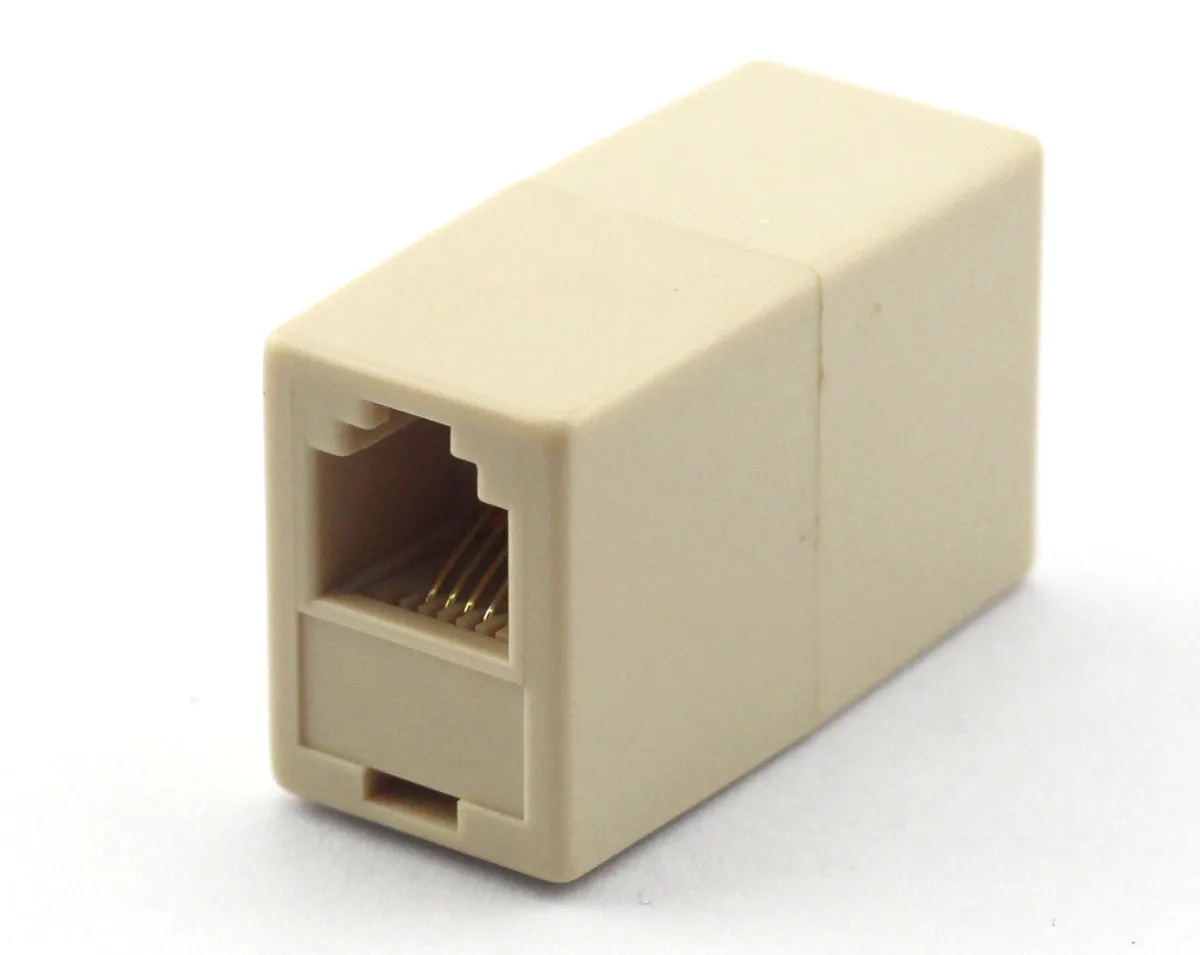
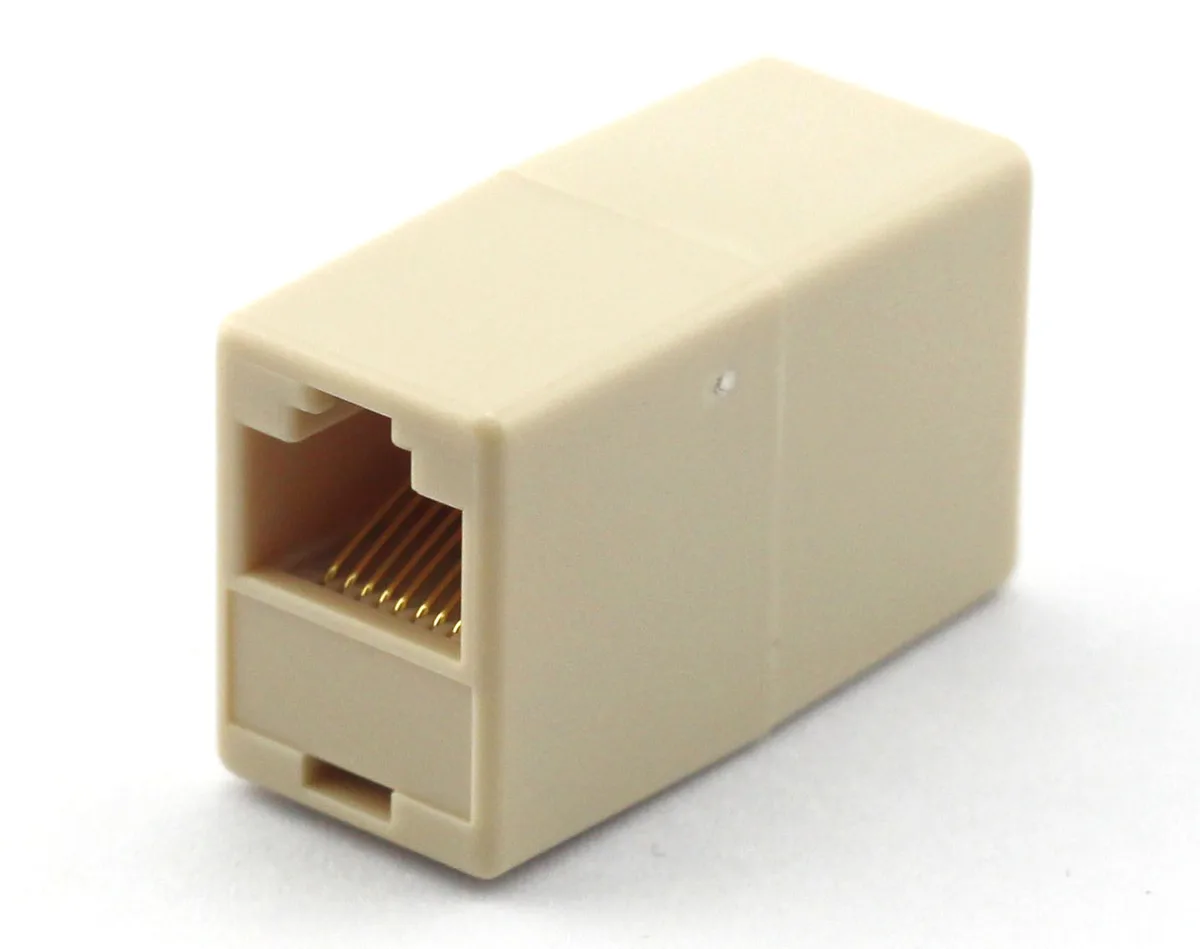
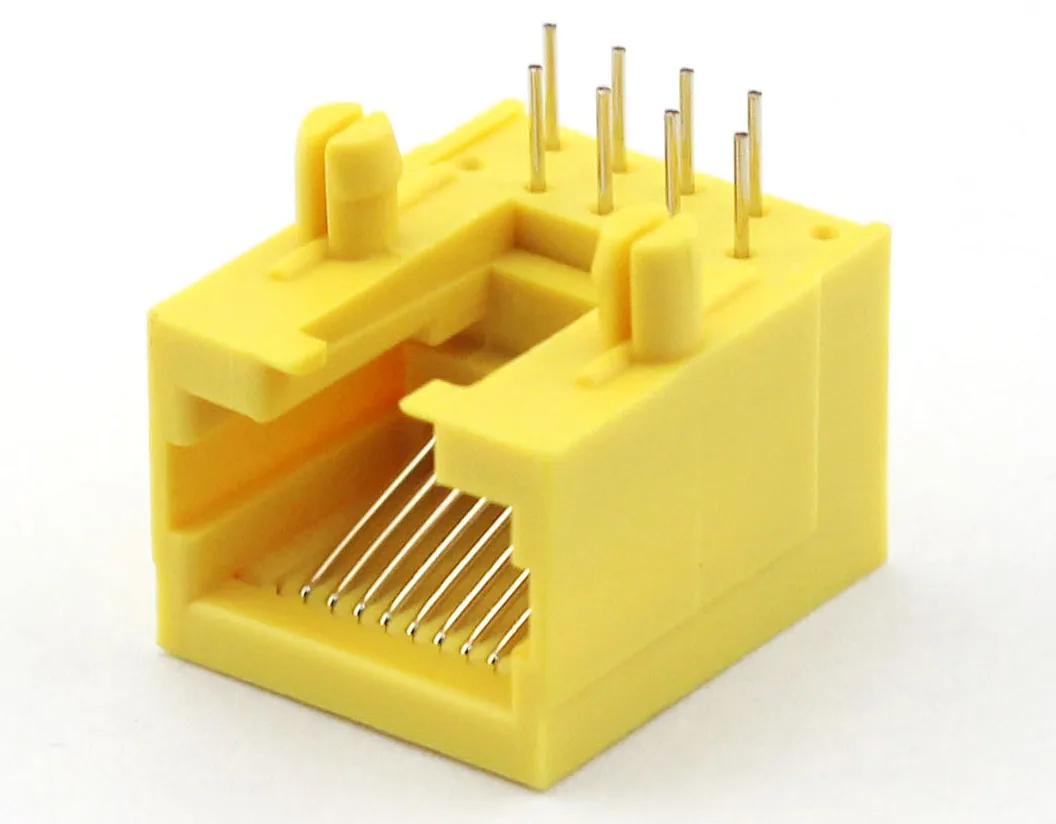
Standard RJ45 (8P8C) connectors are used for all PoE standards. However, connector quality matters more in PoE applications than in data-only installations.
PoE connectors must maintain low contact resistance over the life of the installation. High contact resistance increases power loss and generates heat at the termination point. For 802.3bt installations, use connectors rated for the higher current levels — typically connectors with gold-plated contacts and robust strain relief.
CZT's RJ45 and Ethernet connector range includes connectors suitable for PoE, PoE+, and PoE++ applications, with options for field termination and pre-terminated assemblies.
PSE Types: Switches vs Injectors vs Midspans
PoE Switches
A PoE switch integrates the power sourcing equipment directly into the switch hardware. Each port can deliver PoE power independently. PoE switches are the most common PSE type for new installations.
Key specifications to check:
- Per-port power budget: The maximum watts available on each port
- Total switch power budget: The maximum total watts the switch can deliver across all ports simultaneously. A 24-port PoE+ switch with a 370W total budget cannot power all 24 ports at 30W simultaneously (that would require 720W).
- PoE standard supported: 802.3af, 802.3at, or 802.3bt
PoE Injectors
A PoE injector (or midspan) adds PoE capability to a non-PoE switch port. The injector sits between the switch and the powered device, injecting power onto the cable. Injectors are useful for adding PoE to specific ports without replacing an entire switch.
Single-port injectors are common for adding PoE to a single device. Multi-port midspans (typically 8, 12, or 24 ports) are used for larger deployments.
PoE Splitters
A PoE splitter does the reverse — it separates the power from the data on a PoE cable, providing a separate DC power output. This allows non-PoE devices to be powered from a PoE switch by connecting the splitter's DC output to the device's power input.
Calculating Your PoE Power Budget
When designing a PoE installation, calculate the total power budget required:
- List all powered devices and their maximum power draw (check the device datasheet for the PD class)
- Add 20% headroom for future expansion
- Verify the switch's total PoE budget exceeds this figure
- Check per-port budgets for high-power devices
Example: 20 IP cameras at 15W each + 10 access points at 25W each = 300W + 250W = 550W. With 20% headroom: 660W total switch PoE budget required.
Backward Compatibility
PoE standards are backward compatible. A PoE++ (802.3bt) switch can power 802.3af and 802.3at devices — it simply negotiates the appropriate power level during the classification handshake. Similarly, a PoE+ device connected to an 802.3af switch will receive only 15.4W and may operate in a reduced-power mode or not function at all if it requires more than 12.95W.
Always check the minimum power requirement of your powered devices against the PSE's per-port budget.
Summary
| If you need... | Use... |
|---|---|
| Basic IP cameras, VoIP phones | PoE (802.3af, 15.4W) |
| Modern APs, PTZ cameras, thin clients | PoE+ (802.3at, 30W) |
| Wi-Fi 6E APs, high-power cameras, displays | PoE++ Type 3 (802.3bt, 60W) |
| Laptop charging, high-power industrial devices | PoE++ Type 4 (802.3bt, 100W) |
For most new enterprise deployments, specifying PoE+ (802.3at) as the baseline with PoE++ (802.3bt) on selected high-power ports provides the right balance of capability and cost. Use Cat6a cabling throughout to support current and future power levels without derating concerns.
CZT supplies RJ45 connectors, patch cables, and Ethernet components for PoE infrastructure. Browse our RJ45 and Ethernet connector catalog or contact us for project-specific requirements.