For coastal or agricultural PV projects, define the real environmental exposure before requesting a connector test report. A coastal location, a nearby farm and a generic “corrosion-resistant” label are not precise enough to establish the component requirements.
Use the CZT solar PV family to identify candidate constructions, then review material and environmental evidence against the actual installation. Any claim should remain tied to the tested product and stated conditions.
Describe the exposure rather than the industry label
For a coastal site, relevant project information can include how the connector is sheltered and the expected environmental contamination. For an agricultural installation, identify actual substances, contact mechanisms and operating or maintenance practices that could affect the interface.
Do not assume that every agricultural site creates the same chemical exposure. Use documented site inputs and manufacturer installation restrictions to determine what must be prevented and what requires further evaluation.
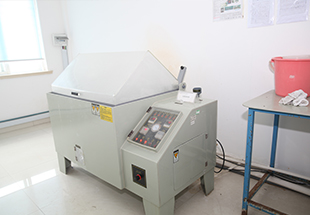
Figure 1. Salt-spray chamber shown in the manufacturer's published testing-equipment gallery. CZT source · Original image.
Separate test scope from application scope
A report may address a defined salt-mist or chemical-exposure procedure. Check whether it covers the complete connector, a material sample or another construction. A module-level report does not automatically establish the performance of a separate connector assembly.
Also review the evaluated mating and cable conditions. An exposed unmated part and an assembled connection can have different environmental boundaries.
Build an exposure-to-evidence table
| Project input | Engineering review |
|---|---|
| Site description | Actual location and exposure mechanism |
| Connector placement | Shelter, orientation and contamination paths |
| Substance or stress | Identified material or environmental condition |
| Manufacturer restrictions | Conditions to avoid and required protection |
| Available evidence | Tested construction, method and result |
| Remaining action | Design protection, clarification or targeted evaluation |
This table avoids requesting an unrelated standard merely because another solar product mentions it. The test selection needs a clear relationship to the connector and the project's exposure.
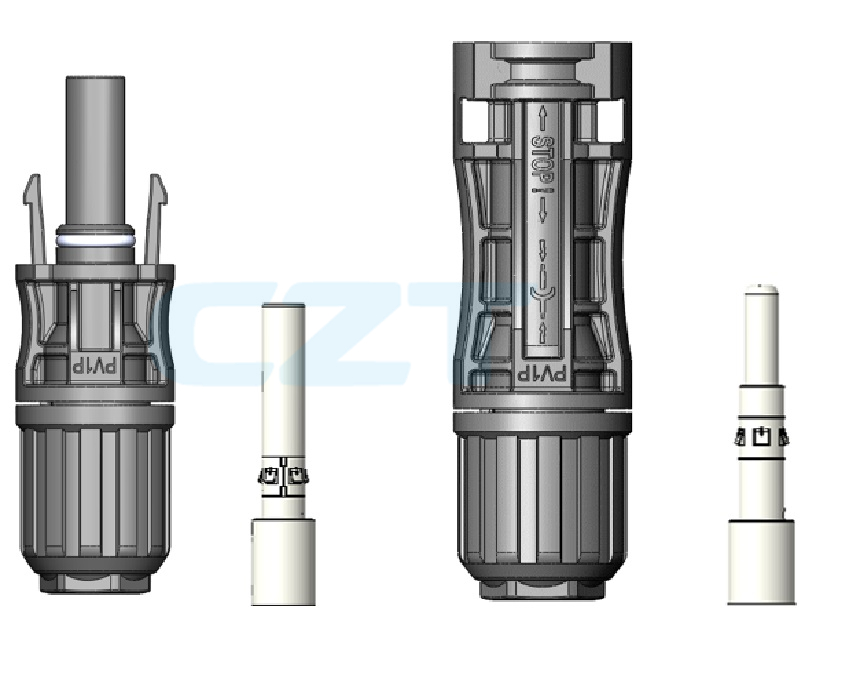
Figure 2. PV1P-A cable-end connector components in the official CZT catalog illustration. CZT source · Original image.
Evaluate function after the relevant stress
Appearance is one observation, but the project may also need electrical, mechanical or sealing checks. Decide those requirements before testing and preserve the actual results with the sample identities.
For a hypothetical coastal installation, a visible surface change and a change in electrical behavior would lead to different investigations. Neither should be dismissed or generalized without the appropriate acceptance reference.
Include handling and maintenance
Define protection during storage and installation as well as in service. Review any cleaning or maintenance method against the connector instructions; an improvised chemical treatment can introduce a new exposure rather than solve the original issue.
The final approval should explain which conditions were reviewed and what installation controls support the intended use. This produces an actionable specification and avoids promising universal marine or agricultural suitability from a short catalogue phrase or a report for a different assembly.
Connect this review to CZT product information
Start with the relevant CZT product family and provide the original interface reference or controlled drawing. Ask which configurations and supporting documents are available for the task described here. Confirm the mating arrangement, required features and project conditions before choosing an orderable part.
Browse the relevant product family · View catalog resources
Discuss a drawing, sample or quotation
Share the part or family reference, current drawing revision, operating conditions and quantities. Include the specific checks described in this article so the inquiry identifies both the component and the evidence needed for your decision. Confirm sample availability and the proposed scope with the supplier.
Request a technical review or quotation
For broader context, read the related selection guide.