Common-mode choke placement should be reviewed as part of the complete Ethernet magnetic circuit. The choke's location relative to the transformer changes the interface being implemented, so a designer should compare internal schematics before treating two RJ45 modules as equivalent.
A part in the CZT integrated magnetics family is a candidate for review, not an automatic remedy for a system emission problem. Noise evaluation should connect the internal topology to the actual board, enclosure and test configuration.
Identify differential and common-mode questions
The Ethernet data signal is differential, but the complete port can also carry unwanted common-mode energy. Imbalance in an interface can couple behavior between these modes. This is why a review that only considers whether packets pass can miss an EMC weakness.
Use the PHY vendor's approved topology as the starting point. Mark the transformer, common-mode choke, center taps, termination network and shield path. Ask which of these elements is internal to the connector and which is implemented on the PCB.
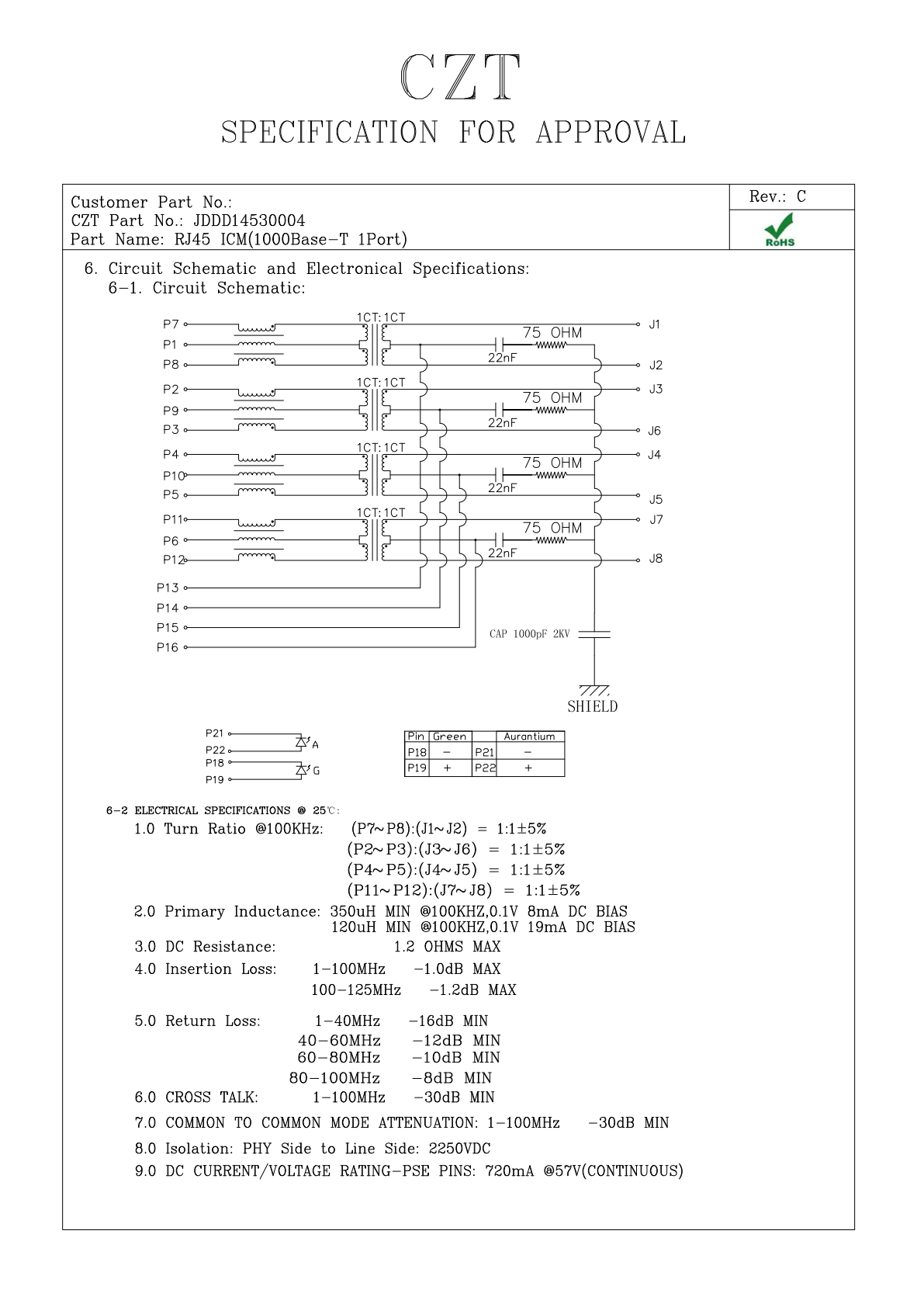
Figure 1. JDDD14530004: internal circuit and electrical specification fields from the official manufacturer specification, PDF page 6. CZT source · Original PDF, page 6.
Compare topology before comparing labels
Two modules can both be described as containing a transformer and choke while placing those elements differently. Record the sequence along the signal path and the accessible nodes. Do not interpret a simplified product description as a full internal schematic.
Then identify the electrical evidence relevant to that topology. A common-mode rejection result needs a stated measurement setup, frequency range and termination arrangement. Different conditions can make otherwise similar numbers unsuitable for direct comparison.
Build an experiment with controlled variables
For a board-level noise investigation, define one change at a time. If the ICM, grounding arrangement and protective components all change together, an improved result will be difficult to attribute.
| Experiment record | Why it matters |
|---|---|
| Connector drawing revision | Locks the internal topology |
| PCB and firmware revision | Prevents unrelated changes being hidden |
| Cable and link partner | Keeps the external path comparable |
| Enclosure and shield contact | Defines the common-mode return environment |
| Test mode and cable position | Makes the observation reproducible |
Retain unsuccessful results too. They narrow the explanation and prevent a later team from repeating the same uncontrolled trial.
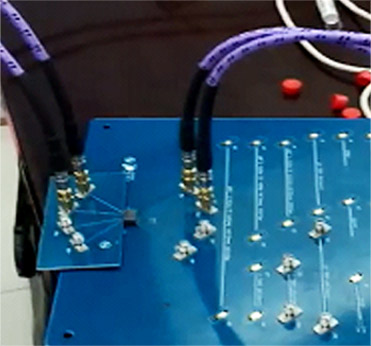
Figure 2. A high-frequency test fixture pictured in the manufacturer's technical-development gallery. CZT source · Original image.
Separate diagnosis from qualification
A diagnostic scan can help locate a sensitive frequency or operating mode. Qualification has a different purpose: demonstrating that the released configuration meets the project's approved requirements under the specified procedure.
For a hypothetical industrial controller, a topology change may shift one emission peak while leaving another unchanged. That does not justify a broad claim that one choke arrangement is universally quieter. It indicates which configuration deserves further investigation in that system.
Make the engineering request specific
Provide the PHY reference circuit, current ICM schematic and the observed noise conditions when requesting an alternative. Ask for the internal circuit and relevant electrical data. This creates a technically useful comparison and avoids selecting a component solely because its description includes “EMI suppression.”
Connect this review to CZT product information
Start with the relevant CZT product family and provide the original interface reference or controlled drawing. Ask which configurations and supporting documents are available for the task described here. Confirm the mating arrangement, required features and project conditions before choosing an orderable part.
Browse the relevant product family · View catalog resources
Discuss a drawing, sample or quotation
Share the part or family reference, current drawing revision, operating conditions and quantities. Include the specific checks described in this article so the inquiry identifies both the component and the evidence needed for your decision. Confirm sample availability and the proposed scope with the supplier.
Request a technical review or quotation
For broader context, read the related selection guide.