Insertion loss and return loss describe different behaviors of an RJ45 magnetic interface. Insertion loss concerns signal transmission through the path; return loss concerns reflected energy associated with mismatch. Neither curve is meaningful for a buying decision unless its ports, reference conditions and frequency range are clear.
For candidates in the CZT RJ45 integrated magnetics family, keep the drawing, electrical table and test plot together. Comparing a headline value from one document with a differently measured curve from another can produce a misleading ranking.
Identify exactly what was measured
Ask where the measurement planes are located. The result may include a bare magnetic device, an integrated connector, a fixture or a larger board assembly. A good report identifies the pair under test, unused-port terminations, calibration method and relevant environmental conditions.
Check the stated differential reference impedance and how the instrument represents the result. Return loss is often reported as a positive loss magnitude, while an S-parameter display may show negative decibel values. Read the axis and definition before deciding which trace is better.
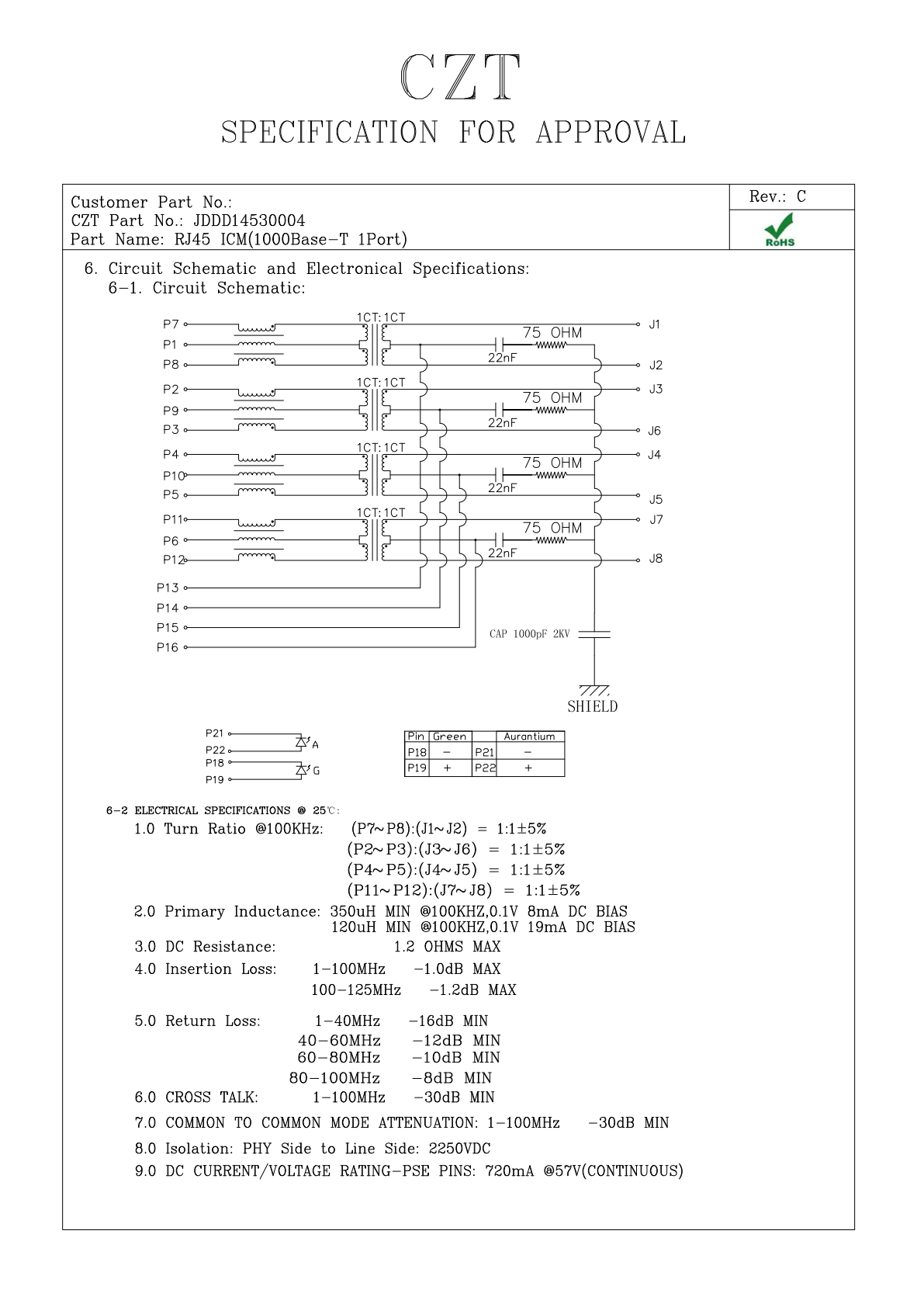
Figure 1. JDDD14530004: internal circuit and electrical specification fields from the official manufacturer specification, PDF page 6. CZT source · Original PDF, page 6.
Read across the required frequency range
A single frequency point can hide an unfavorable region elsewhere in the operating band. Overlay the applicable limit or transfer the measured values into a comparison sheet at the specified review frequencies. Use the requirements associated with the selected PHY and interface, rather than inventing a universal acceptance line.
For insertion loss, investigate unexpected changes in shape as well as the worst recorded value. For return loss, locate the frequency regions where mismatch is greatest. The purpose is to understand margin and measurement validity, not merely to find an attractive number.
Use a report-comparison worksheet
| Question | Candidate A | Candidate B |
|---|---|---|
| Same measurement planes? | Record fixture boundary | Record fixture boundary |
| Same port and pair setup? | Record connections | Record connections |
| Same frequency coverage? | Mark gaps | Mark gaps |
| Same reference conditions? | Record impedance and temperature | Record impedance and temperature |
| Compared with the same requirement? | Identify document | Identify document |
Resolve differences in setup before interpreting differences in performance. A blank or incompatible row means the reports do not yet support a fair comparison.

Figure 2. Network-analysis instrument pictured in CZT's official technical-development gallery. CZT source · Original image.
Investigate the fixture before rejecting the part
Cable launches, adapters and imperfect fixture calibration can influence a measurement. If a curve changes markedly when the setup changes, document that observation and review the measurement path. Do not automatically assign the variation to the ICM.
A hypothetical review might find that one report includes PCB traces while another ends at the component terminals. Both reports may be legitimate, but their curves cannot be directly ranked until the boundaries are reconciled.
Turn plots into a sourcing decision
Attach the comparable reports to the candidate evaluation, identify the controlling requirement and record any remaining board-level verification. A connector's component report supports its selection; operation on the actual PCB still depends on the complete interface, including layout, terminations and the PHY configuration.
Connect this review to CZT product information
Start with the relevant CZT product family and provide the original interface reference or controlled drawing. Ask which configurations and supporting documents are available for the task described here. Confirm the mating arrangement, required features and project conditions before choosing an orderable part.
Browse the relevant product family · View catalog resources
Discuss a drawing, sample or quotation
Share the part or family reference, current drawing revision, operating conditions and quantities. Include the specific checks described in this article so the inquiry identifies both the component and the evidence needed for your decision. Confirm sample availability and the proposed scope with the supplier.
Request a technical review or quotation
For broader context, read the related selection guide.