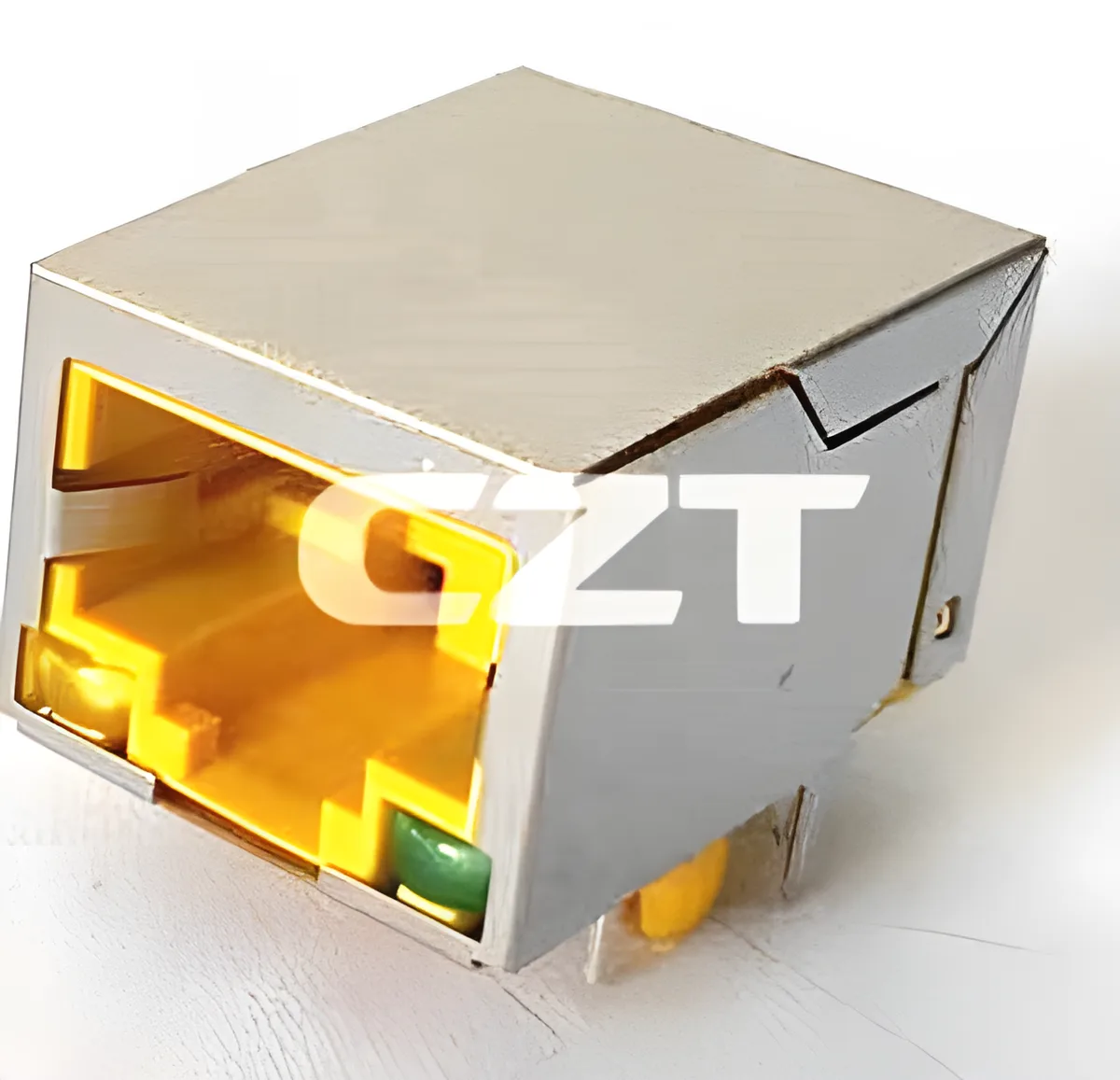
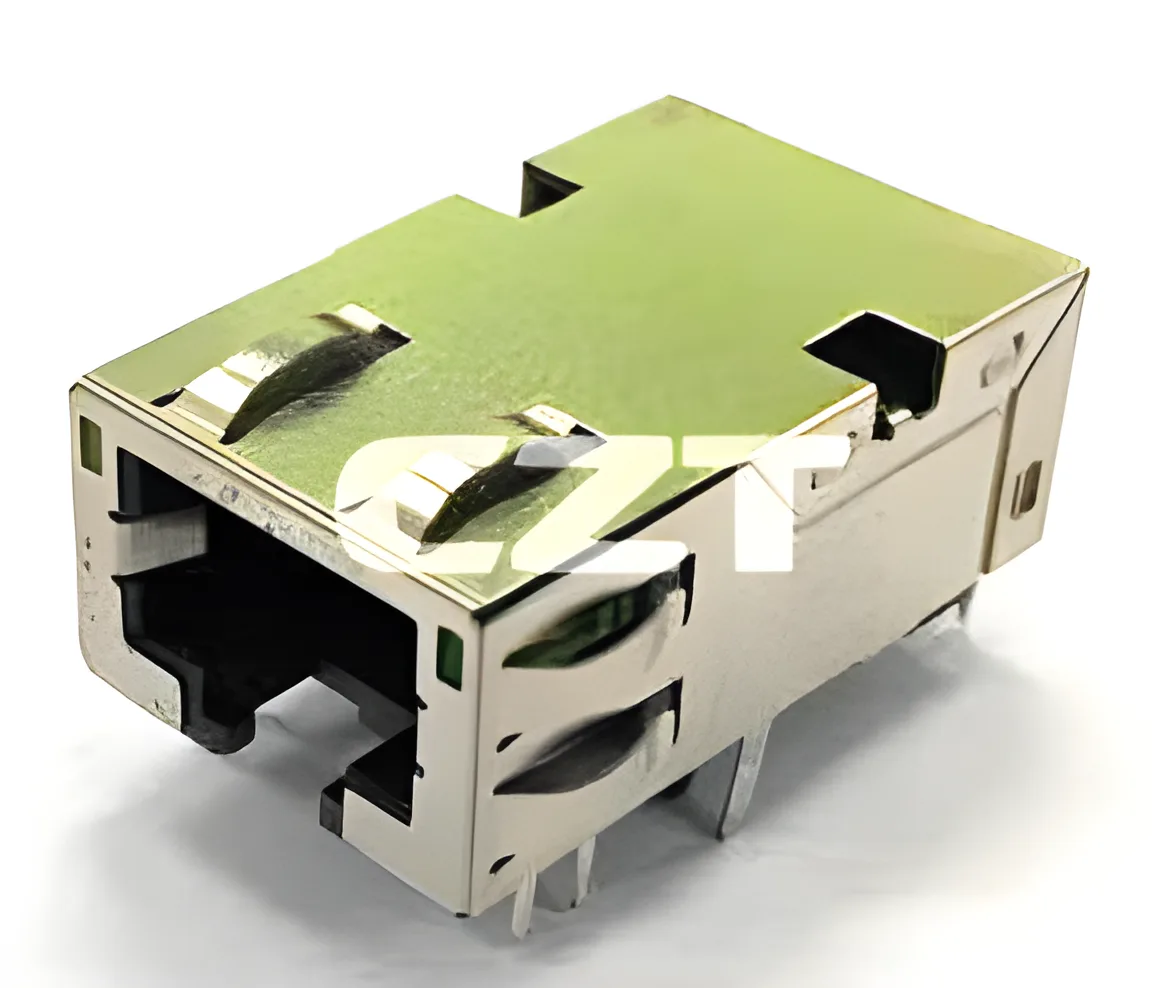
Review an RJ45 ICM's soldering limits against the actual thermal exposure on the production line. A housing material description or a general statement that a part is solderable does not establish compatibility with every reflow, wave or rework process.
For a candidate in the CZT integrated magnetics family, request the applicable process specification and connect it to the exact ordering code. The useful question is whether the planned assembly sequence remains within that specification.
Count the complete thermal history
List each planned exposure, including initial assembly, a second-side process where relevant and any approved rework. Record which portions of the connector experience heat and how the component is supported.
A maximum temperature without duration or measurement location is incomplete. Compare the supplier's stated profile and number of permitted exposures with the actual measured process, rather than comparing only the oven setpoint.
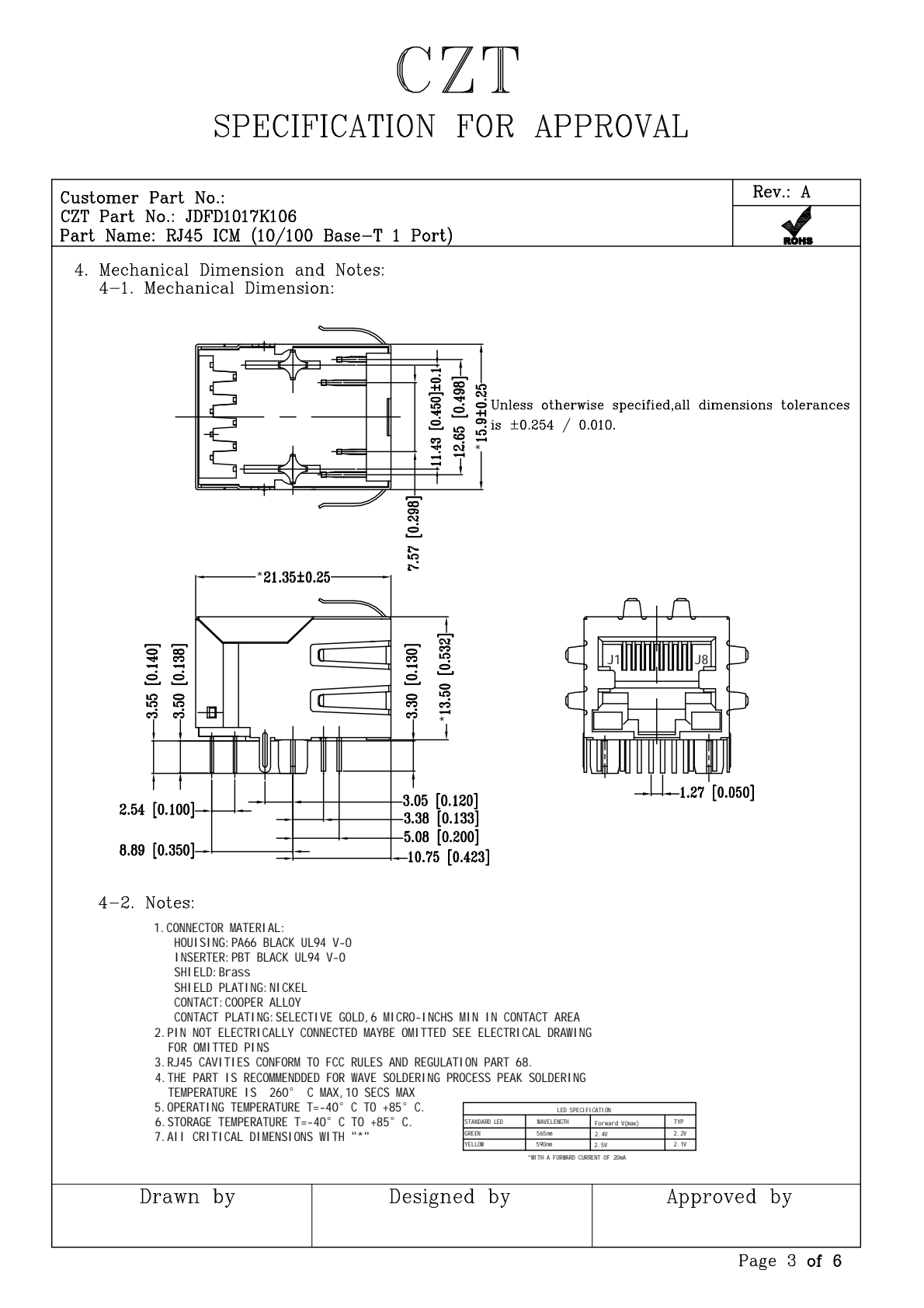
Figure 1. JDFD1017K106: mechanical views from the official manufacturer specification, PDF page 3. CZT source · Original PDF, page 3.
Review the material and construction context
Check the housing material identification and any handling or storage conditions in the component instructions. Then examine shell retention, terminal seating and internal construction features that may be affected by the process.
Do not infer a soldering approval from a resin's standalone material property. The connector is an assembly, and the product-level instruction is the relevant starting point for manufacturing qualification.
Use a thermal-process review sheet
| Field | Information to record |
|---|---|
| Component | Full model and process-specification revision |
| Assembly sequence | All soldering and approved rework exposures |
| Measured profile | Actual component-area thermal record |
| Support and orientation | Board position and connector restraint |
| Pre-process condition | Storage and handling relevant to the part |
| Post-process checks | Dimensions, seating, electrical behavior and appearance |
Attach the measured trace and sample identifiers. This makes the review useful when line settings or PCB thermal mass change later.

Figure 2. Infrared soldering equipment shown on the official manufacturer technical-capability page. CZT source · Original image.
Inspect more than visible melting
After a representative trial, check connector position, terminal coplanarity or seating, shell attachment and mating behavior. Look for subtle distortion or movement that can affect assembly even when the exterior remains visually acceptable.
Perform the applicable electrical checks after processing. A clean appearance is not a substitute for confirming that the assembled interface still performs as required.
Resolve process mismatches deliberately
If the planned exposure exceeds the documented condition, stop treating the part as already approved. Review alternative constructions, a different approved assembly route or a supplier-supported qualification with the responsible manufacturing team.
For a hypothetical board with multiple heat cycles, the first assembly may appear satisfactory while a later rework step changes alignment. Keeping the full thermal history helps locate the cause. It also prevents a purchasing substitution from silently invalidating a process that was qualified for a different housing or terminal construction.
Connect this review to CZT product information
Catalog references to discuss are listed below. Use the identifiers to request the current drawing and confirm the configuration required by your application.
| Catalog reference | Product information | Drawing record | Reference inquiry |
|---|---|---|---|
| JDGD14100001 | RJ45 ICM catalog-listed 1000BASE-T 1-port type, JDGD14100001 | Listed PDF | Ask about this reference |
| JDDD14530004 | RJ45 ICM catalog-listed 1000BASE-T 1-port type, JDDD14530004 | Listed PDF | Ask about this reference |
A catalog drawing reference is a starting document, not a substitute for reviewing its revision, options and suitability for the complete assembly.
Browse the relevant product family · View catalog resources
Discuss a drawing, sample or quotation
Share the part or family reference, current drawing revision, operating conditions and quantities. Include the specific checks described in this article so the inquiry identifies both the component and the evidence needed for your decision. Confirm sample availability and the proposed scope with the supplier.
Request a technical review or quotation
For broader context, read the related selection guide.