Connect an RJ45 shield to the intended chassis strategy by reviewing the full physical return path, including connector shell, PCB features and enclosure contacts. There is no universal instruction to join every ground symbol directly or leave every shield floating.
The CZT integrated magnetics family includes candidate connector structures for review. Selecting one requires understanding where its shield tabs and shell surfaces meet the board and the enclosure in the finished product.
Separate shield, chassis and circuit references
Name the relevant conductors explicitly on the schematic. A connector shell, protective earth, local chassis area and signal return may have different purposes in a product. A label that simply says “ground” can hide those distinctions from the PCB and mechanical teams.
Use the PHY and equipment design guidance to establish the intended network. Then carry those names into the layout and assembly drawing so that a shield tab is not accidentally connected to a different reference during footprint creation.

Figure 1. JDDD14530004 as pictured on its official manufacturer product page. CZT source · Original image.
Trace the physical connection
Follow the shell to its tabs, solder joints and any enclosure springs or conductive mounting features. Identify coatings, gaps and assembly tolerances that can interrupt contact. A schematic connection does not establish that a painted enclosure or loosely positioned spring makes the intended physical connection.
Review how service access and cable movement affect the assembly. A path that exists on a loose bench prototype may change when the PCB is screwed into its final housing.
Use a joint electrical-mechanical checklist
| Interface | Review question |
|---|---|
| Shield tab to PCB | Which named network receives it? |
| Shell to enclosure | What surface actually makes contact? |
| Conductive finish | Is the contact area obstructed by coating? |
| Mechanical tolerance | Is contact maintained at allowed positions? |
| External cable shield | What mating arrangement is evaluated? |
| Qualification setup | Are the production enclosure and fasteners used? |
Assign electrical and mechanical owners to the same sheet. This prevents each team from assuming the other has approved the connection.
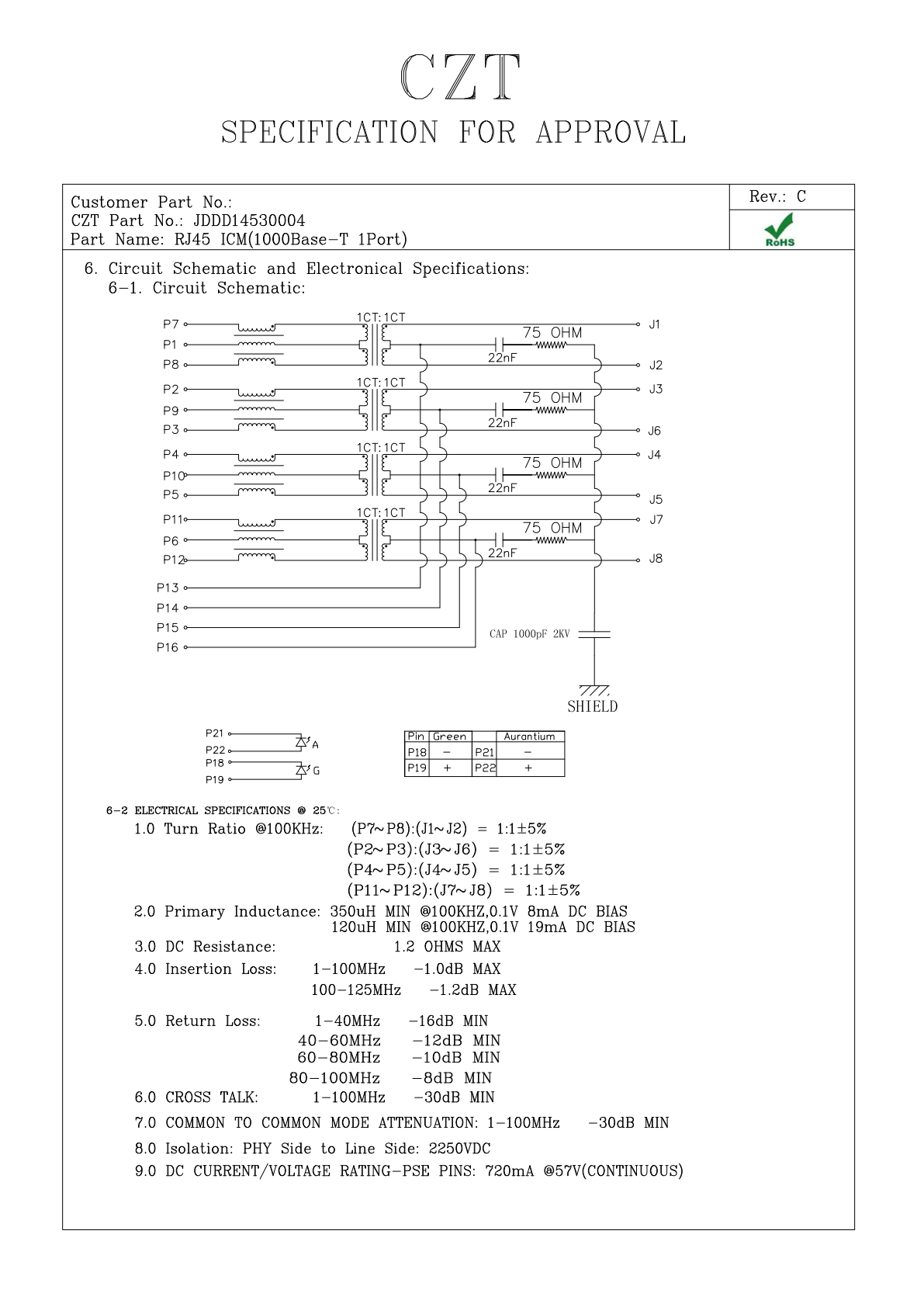
Figure 2. JDDD14530004: internal circuit and electrical specification fields from the official manufacturer specification, PDF page 6. CZT source · Original PDF, page 6.
Evaluate the assembled product
Changes to shielding can affect emissions and susceptibility differently. Use controlled comparisons with the same PCB, cable arrangement, operating mode and enclosure state. Record exactly what was changed instead of comparing two vaguely described prototypes.
In a hypothetical metal-enclosure gateway, the team might compare a deliberate shell-to-chassis contact with an unintended intermittent contact. The useful output is the measured behavior and assembly finding, not a claim that one grounding rule works for every gateway.
Preserve the release decision
Keep the approved contact detail, finish requirements and assembly conditions with the connector selection. If a future supplier changes tab geometry or shell dimensions, review the physical path again. This treats the shield connection as part of the product interface and gives purchasing a concrete reason to preserve the reviewed mechanical configuration.
Connect this review to CZT product information
Start with the relevant CZT product family and provide the original interface reference or controlled drawing. Ask which configurations and supporting documents are available for the task described here. Confirm the mating arrangement, required features and project conditions before choosing an orderable part.
Browse the relevant product family · View catalog resources
Discuss a drawing, sample or quotation
Share the part or family reference, current drawing revision, operating conditions and quantities. Include the specific checks described in this article so the inquiry identifies both the component and the evidence needed for your decision. Confirm sample availability and the proposed scope with the supplier.
Request a technical review or quotation
For broader context, read the related selection guide.