Select the RJ45 transformer turns ratio required by the chosen PHY implementation, then verify that the candidate connector specifies the same ratio in the same direction. A ratio is one part of a magnetic interface, not a shortcut for declaring two RJ45 modules equivalent.
Use the CZT integrated magnetics range to identify candidate drawings. The selection record should refer to the internal transformer circuit and the PHY documentation, rather than infer a ratio from the module's appearance.
Read the ratio with its endpoints attached
A label such as primary-to-secondary is incomplete if the drawing does not identify which side faces the PHY. Write the ratio as “PHY winding to cable winding” on the review sheet, preserving the manufacturer's original notation alongside it. Confirm whether the statement applies to every pair or only to a particular internal winding.
Also identify center taps and any auxiliary windings. Counting visible schematic sections or interpreting two half-windings as independent transformers can lead to an incorrect reading of the ratio.
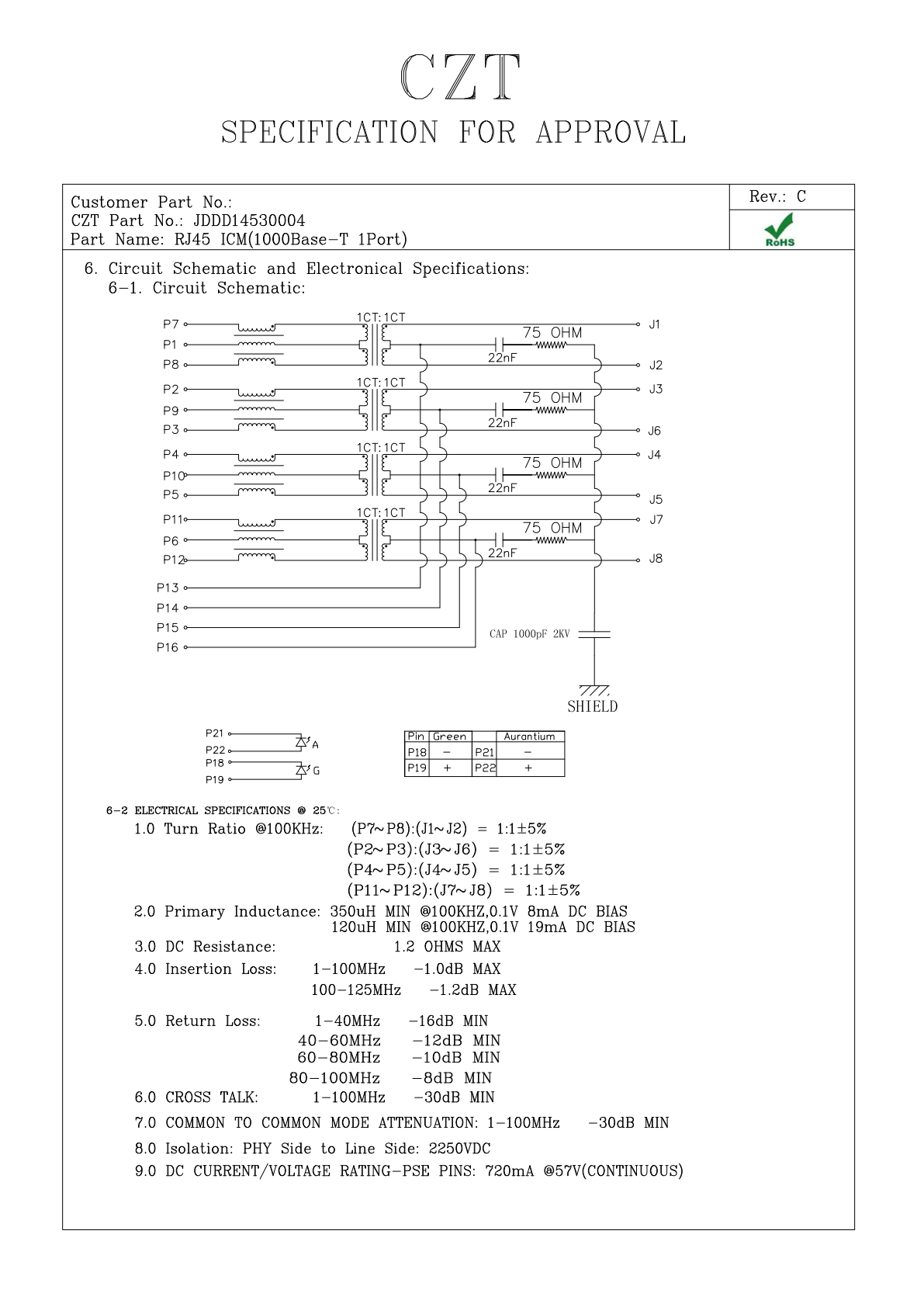
Figure 1. JDDD14530004: internal circuit and electrical specification fields from the official manufacturer specification, PDF page 6. CZT source · Original PDF, page 6.
Follow the PHY requirement before comparing alternatives
Look for a magnetic-interface requirement in the PHY data sheet, hardware checklist or approved reference design. Different device families can specify different interface arrangements. A ratio commonly used with one family should not become an unofficial rule for another.
If the available PHY document lists a recommended component, compare that component's internal circuit with the proposed alternative. Record all differences, including winding connections and choke placement. Escalate an unresolved circuit difference to the PHY or system designer rather than treating a similar part number as approval.
Build a compact selection table
| Field | What to enter |
|---|---|
| PHY reference | Exact device and document revision |
| Required ratio | Value, direction and applicable pairs |
| Candidate ratio | Drawing notation and corresponding pins |
| Supporting conditions | Frequency, temperature and other stated test conditions |
| Remaining differences | Center taps, termination and choke arrangement |
| Approval | Named reviewer and verification still required |
This table keeps a ratio comparison connected to its engineering context. It also gives purchasing an understandable reason why two otherwise similar modules may not be substitutes.
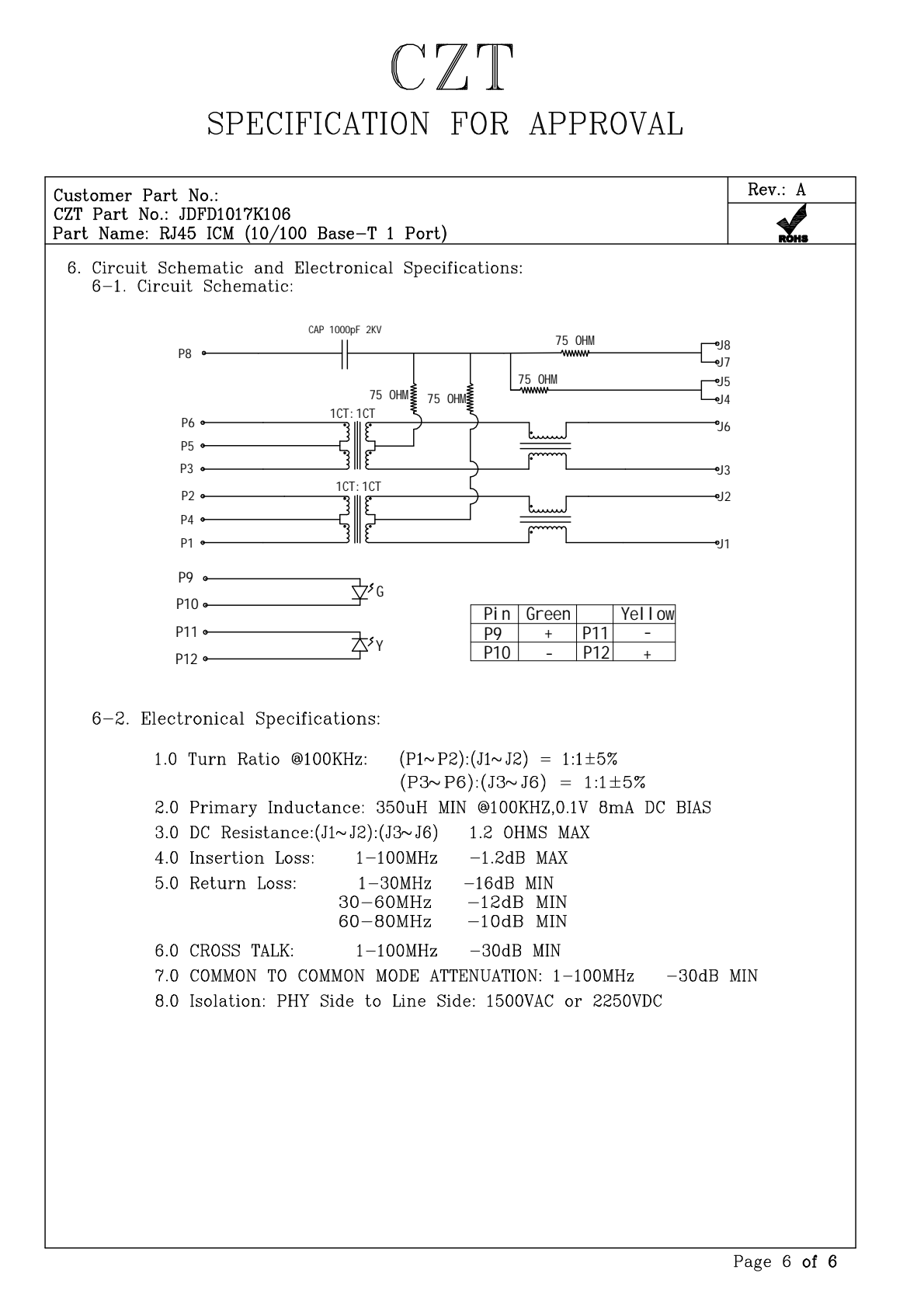
Figure 2. JDFD1017K106: internal circuit and electrical specification fields from the official manufacturer specification, PDF page 6. CZT source · Original PDF, page 6.
Separate an ideal relationship from actual behavior
Transformer ratios describe an ideal winding relationship. Real components also have frequency-dependent behavior and other electrical characteristics. Matching the nominal ratio therefore does not replace review of insertion loss, return loss, isolation or the rest of the PHY's requirements.
For a hypothetical prototype, two candidates could state the same ratio while exposing different center-tap connections. Their ratio rows would match, but the circuit review would remain open. That is a useful outcome: the worksheet has found the unresolved difference before PCB release.
Keep the approved circuit traceable
When the selection closes, retain the reviewed internal schematic and the resulting board configuration with the sample records. A later sourcing change should be checked against that approved circuit, including the ratio direction, rather than against a shortened purchasing description such as “Ethernet jack with transformer.”
Connect this review to CZT product information
Start with the relevant CZT product family and provide the original interface reference or controlled drawing. Ask which configurations and supporting documents are available for the task described here. Confirm the mating arrangement, required features and project conditions before choosing an orderable part.
Browse the relevant product family · View catalog resources
Discuss a drawing, sample or quotation
Share the part or family reference, current drawing revision, operating conditions and quantities. Include the specific checks described in this article so the inquiry identifies both the component and the evidence needed for your decision. Confirm sample availability and the proposed scope with the supplier.
Request a technical review or quotation
For broader context, read the related selection guide.