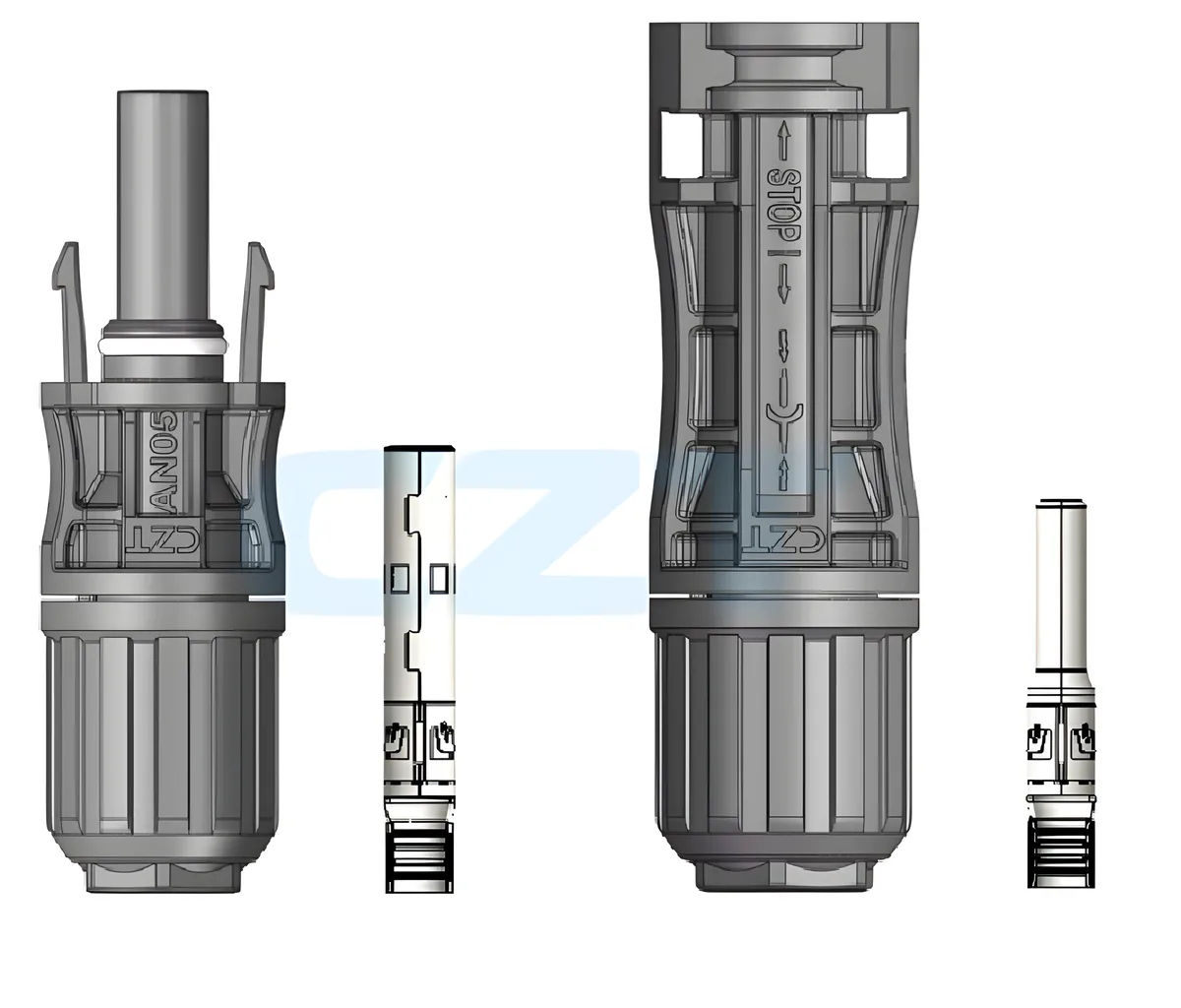
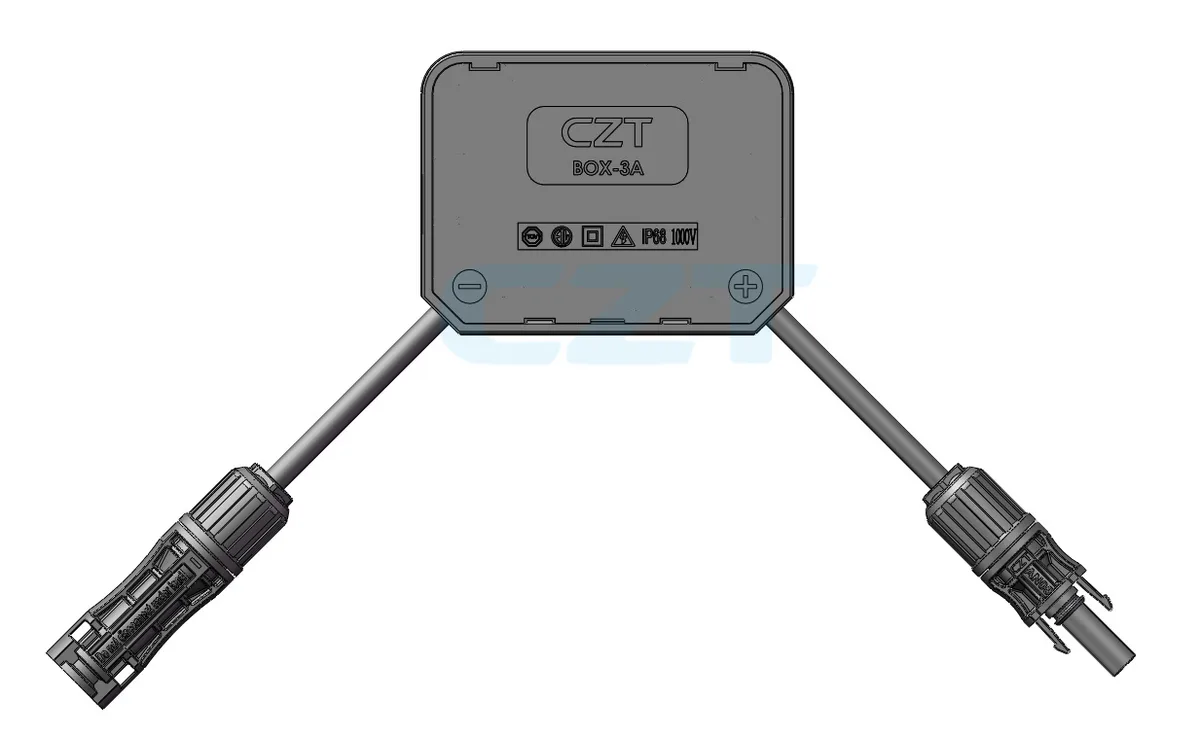
The SAE connector is one of the most common low-voltage connectors you'll encounter in automotive, motorcycle, marine, and solar applications. It's the small, polarized 2-pin connector used for battery tenders, solar trickle chargers, and portable power accessories — and its simplicity and reliability have made it a de facto standard for 12V maintenance charging worldwide.
This guide covers what SAE connectors are, their specifications, polarity conventions, and how to use them in solar and battery applications.
What Is an SAE Connector?
The SAE connector (named after the Society of Automotive Engineers, which standardized it) is a 2-pin polarized connector designed for low-voltage DC applications. It consists of:
- Male plug: Two flat blade terminals in a polarized housing
- Female socket: Matching receptacle with a protective flap cover
- Polarity: Keyed housing prevents reverse connection
The connector is designed for:
- Battery maintenance charging: Connect a battery tender/trickle charger to a vehicle without accessing the battery terminals directly
- Solar trickle charging: Connect a small solar panel to maintain battery charge
- Accessory power: Connect 12V accessories (air compressors, jump starters, lights)
SAE Connector Specifications
| Parameter | Value |
|---|---|
| Voltage rating | 12–24 V DC |
| Current rating | 7.5–15 A (varies by manufacturer) |
| Pin count | 2 (positive + negative) |
| Polarity | Keyed (polarized housing) |
| Contact material | Tin-plated copper |
| Housing material | Nylon (PA66) |
| IP rating | IP44 (basic), IP65 (weatherproof versions) |
| Wire gauge | 18–14 AWG (0.75–2.5 mm²) |
SAE Polarity Convention
SAE connectors are polarized — the housing is asymmetric so they can only mate one way. The standard polarity convention:
- Wider blade / larger slot: Positive (+)
- Narrower blade / smaller slot: Negative (−)
This matches the standard for North American AC plugs (wide neutral, narrow hot) — though the DC polarity is different. Always verify polarity with a multimeter before connecting to a battery or solar panel, as some aftermarket connectors may not follow the standard.
SAE Connector Types
Standard SAE Plug/Socket
The basic 2-pin connector. The socket has a protective rubber flap that covers the contacts when disconnected, preventing short circuits and moisture ingress.
SAE to Alligator Clips
A cable with an SAE plug on one end and alligator clips on the other. Used to connect a battery tender to a battery without a permanently installed socket.
SAE to Ring Terminals
A cable with an SAE plug on one end and ring terminals on the other. Permanently installed on the battery — the ring terminals bolt to the battery posts, and the SAE socket is routed to an accessible location.
SAE Extension Cable
Extends the reach of an SAE connection. Available in 1–6 m lengths. Useful when the battery is in an inaccessible location.
SAE to USB / SAE to 12V Socket
Adapters that convert an SAE connection to USB-A, USB-C, or a 12V cigarette lighter socket. Used for charging devices from a battery tender connection.
SAE Weatherproof (IP65)
Versions with rubber seals and locking collars for outdoor and marine applications. Used for solar panel connections on boats, RVs, and outdoor equipment.
SAE Connectors in Solar Applications
SAE connectors are widely used for small solar panel installations:
Solar Trickle Charger
A small solar panel (5–20W) with an SAE plug connects directly to a vehicle's SAE socket to maintain battery charge during storage. Common for:
- Motorcycles and ATVs stored over winter
- Boats and RVs in storage
- Classic cars and seasonal vehicles
- Agricultural equipment
Solar to Battery Tender
Many battery tenders (Optimate, CTEK, Battery Tender brand) include an SAE socket. A solar panel with an SAE plug can connect directly to the battery tender's input, or to the vehicle's SAE socket.
Limitations
SAE connectors are rated for 7.5–15 A, limiting them to small solar panels (up to ~180W at 12V). For larger solar installations, MC4 connectors are the standard choice.
SAE vs MC4: Which to Use?
| Factor | SAE | MC4 |
|---|---|---|
| Current rating | 7.5–15 A | 30 A |
| Max panel size | ~180W | ~360W+ |
| IP rating | IP44 (standard) | IP67 |
| Locking | No | Yes (twist-lock) |
| Polarity | Keyed housing | Separate male/female |
| Cost | Lower | Higher |
| Best for | Trickle charging, maintenance | Full solar installations |
Use SAE for small trickle charging applications. Use MC4 for any solar installation where panels are permanently mounted and exposed to weather.
SAE Connectors in Automotive Applications
Battery Tender Pigtail
The most common automotive SAE application. A short cable with ring terminals bolts to the battery posts, and the SAE socket is routed to an accessible location (under the seat, behind a panel). The battery tender plugs in without opening the hood.
Motorcycle and Powersports
SAE connectors are standard on most battery tenders and many motorcycles, ATVs, and snowmobiles. The socket is often factory-installed or added as an accessory.
Jump Starter Packs
Many portable jump starters include an SAE socket for recharging from a solar panel or battery tender.
Installing an SAE Socket
Installing a permanent SAE socket on a vehicle:
- Choose a location: Accessible but protected from direct water spray
- Route the cable: From battery to chosen location, avoiding heat sources and sharp edges
- Connect ring terminals: Red (+) to positive battery post, black (−) to negative
- Secure the cable: Use cable ties and grommets where passing through panels
- Mount the socket: Use the included bracket or route through a rubber grommet
- Test: Connect a battery tender and verify charging
SAE Connector Compatibility
SAE connectors from different manufacturers are generally intermateable — the 2-pin polarized design is standardized. However:
- Current ratings vary: A 7.5 A socket should not be used with a 15 A charger
- Weatherproofing varies: Standard SAE sockets are not waterproof — use IP65 versions for outdoor/marine
- Wire gauge matters: Undersized wire limits current capacity and can overheat
Always verify the current rating of both the connector and the cable before use.
Summary
SAE connectors are the standard for 12V battery maintenance and solar trickle charging applications. Their polarized design, protective cover, and wide availability make them the go-to choice for:
- Battery tender connections on motorcycles, boats, and stored vehicles
- Small solar trickle chargers (up to ~180W)
- 12V accessory connections
Key points:
- Rated for 7.5–15 A — suitable for small solar panels and battery tenders only
- Polarized housing prevents reverse connection
- Use IP65 weatherproof versions for outdoor and marine applications
- For larger solar installations, use MC4 connectors instead
CZT supplies solar connectors, battery connectors, and energy storage components for residential and commercial applications. Browse our solar PV connector range for MC4, SAE, and compatible accessories.