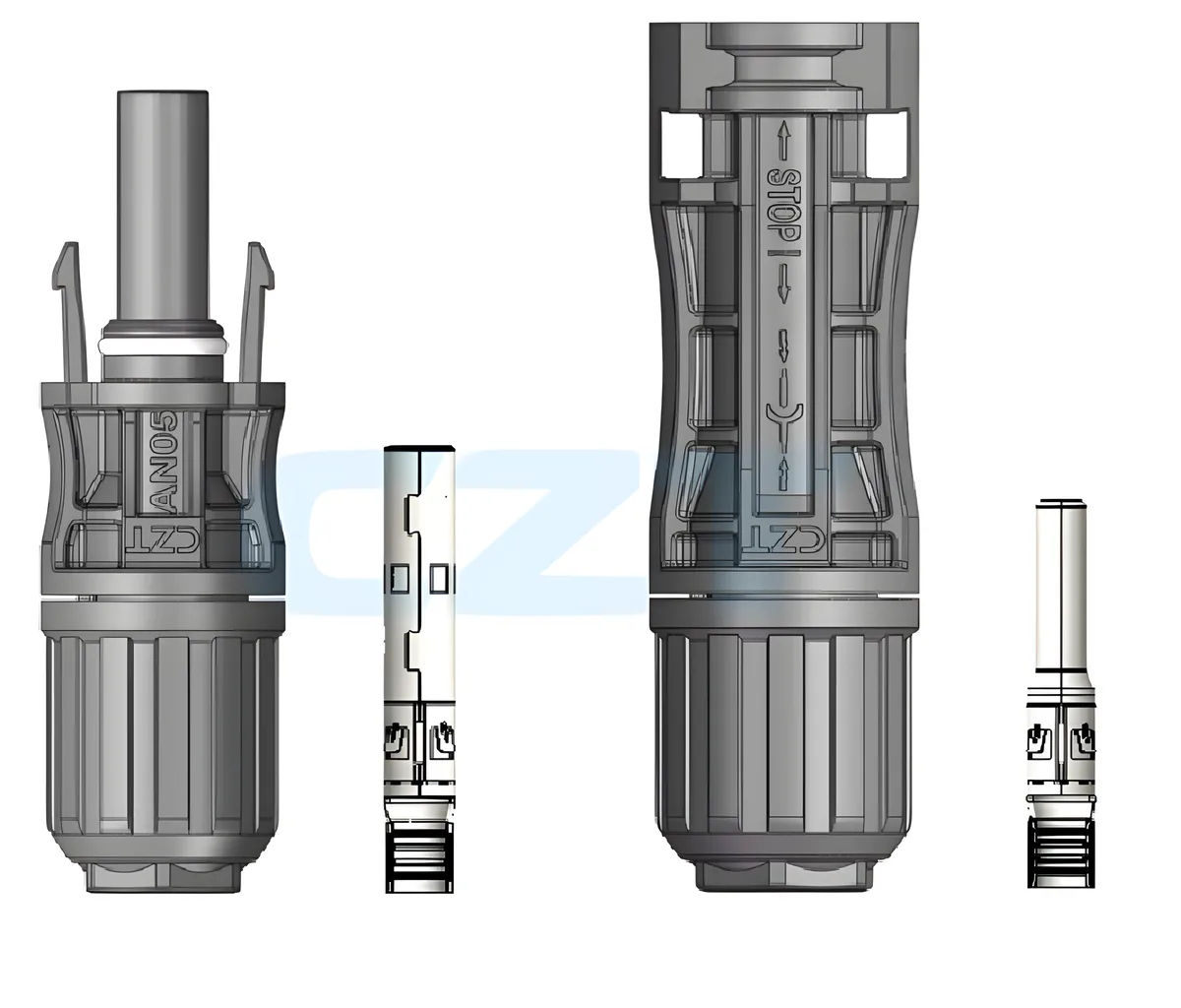
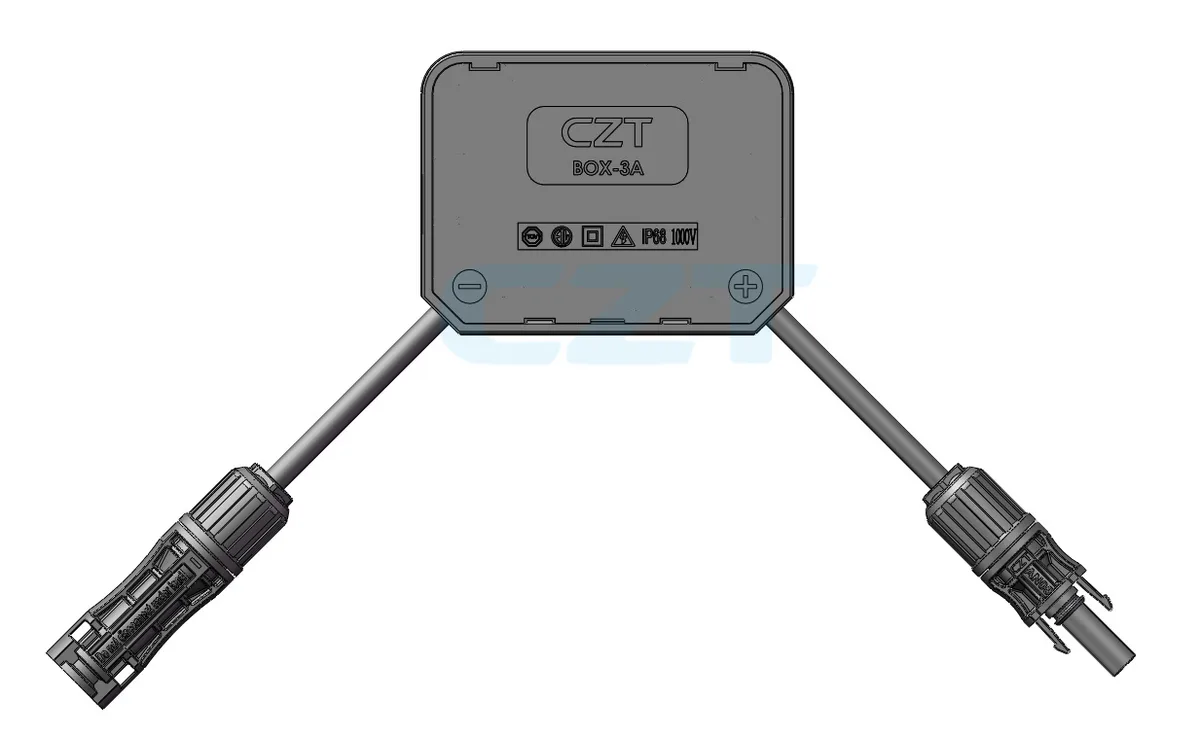
Modern solar systems often use 1500V DC string architecture to reduce current, lower cable losses, and improve system economics. That higher voltage class makes connector selection more important, not less. A PV connector or junction box must match the electrical, mechanical, environmental, and certification requirements of the system.
This guide explains how to select 1500V PV connectors and junction boxes using practical sourcing inputs: current rating, IP rating, cable size, contact resistance, impulse withstand, mating cycles, and system layer.
Quick Answer
Start by identifying which part of the PV system you are sourcing:
| System layer | Typical component | What to verify |
|---|---|---|
| PV module | Junction box and module leads | Voltage, current, diode layout, IP rating, flame rating |
| PV string | Inline DC connector | Current class, cable size, contact resistance, mating pair |
| Field wiring | Extension cable or branch connector | Cable cross-section, crimp, sealing, certification |
| Combiner/inverter | DC connector, terminal, busbar | Current path, enclosure interface, creepage/clearance |
| Sealed equipment | Circular waterproof connector | Pin count, sealing, cable assembly, panel mount |
Do not choose a PV connector by voltage rating alone. A 1500V label still needs the right current class, cable range, seal, contact design, and certification.
PV Junction Box Selection
A PV junction box sits on the back of the solar module. It connects the module's internal circuit to external leads and often contains bypass diodes. Selection is tied closely to module design and production process.
Key checks include:
- Rated voltage, commonly 1500V DC for modern utility-scale modules
- Current band, such as 25A, 30A, or 25A-35A families
- IP68 sealing requirement
- Class II / Class A references where applicable
- Flame rating such as UL94-V0 for housing materials
- Cable lead size and potting compatibility
- Diode configuration and heat management
The junction box is not interchangeable with an inline connector. It belongs to the module-level BOM and must be reviewed with module layout, lead length, potting process, and certification package.
PV DC Connector Selection
PV DC connectors handle field wiring between panels, strings, combiners, and inverters. Many are MC4-style or MC4-compatible, but the exact connector family matters.
Selection fields include:
| Parameter | Common review range |
|---|---|
| Voltage | 1000V DC or 1500V DC |
| Current | 36A, 41A, 50A, 60A, or 80A families |
| IP rating | IP68 when properly assembled and mated |
| Cable size | 2.5mm2, 4mm2, 6mm2, 10mm2, 16mm2 |
| Contact resistance | Often reviewed against a low-resistance target such as <=0.5mOhm |
| Mating cycles | Higher-cycle families may specify 500 or more cycles |
| Temperature | Common PV range is -40C to +85C |
For safety and field reliability, do not mix connector brands unless the pair has been tested and approved together. Physical mating does not prove electrical or environmental compatibility.
Why Cable Size Matters
Cable size affects current capacity, crimp quality, sealing, strain relief, and heat rise. A connector that works well on 4mm2 cable may not be suitable for 10mm2 or 16mm2 cable without a different seal, contact, or housing.
When requesting a quote, specify conductor cross-section in mm2 and, if possible, the exact cable standard. Also specify whether the connector will be installed in the factory or crimped in the field.
IP68 and Outdoor Reliability
Solar connectors work outdoors for years. IP68 performance depends on more than the catalog rating:
- Correct cable diameter for the sealing gland
- Correct crimp tooling and crimp height
- Fully seated O-rings and seals
- Proper torque or locking engagement
- No mixed-brand mating
- UV-resistant material
- Good strain relief and cable routing
An unmated connector is not automatically waterproof. The IP rating normally applies under defined conditions, often when the connector pair is fully assembled and mated.
Contact Resistance and Heat Rise
Low contact resistance matters because solar systems operate continuously at high current. A poor crimp, damaged contact, or mismatched pair increases resistance. Higher resistance produces heat, and heat accelerates degradation.
For higher-current PV connector families, ask for:
- Contact resistance target
- Temperature-rise test reference
- Cable size used in the test
- Matched connector pair details
- Crimp tooling recommendation
RFQ Checklist
Prepare these fields:
- Component type: junction box, inline connector, branch connector, extension lead, or circular connector.
- System voltage: 1000V DC or 1500V DC.
- Rated current.
- Cable size in mm2.
- IP rating target.
- Operating temperature range.
- Certification target: TUV, UL, IEC 62852, or project-specific.
- Mating interface or brand restrictions.
- Assembly method: factory crimped or field installed.
- Annual volume and sample schedule.
Summary
1500V PV connector selection is a system-level decision. Start with the component's location in the PV architecture, then match current, cable size, sealing, certification, and mating interface.
CZT supports PV junction boxes, solar DC connectors, cable assemblies, and renewable-energy connector programs. Browse Solar PV connectors or send a PV connector RFQ.