Choose SMT or through-hole RJ45 magnetics by matching the complete connector construction to the assembly process and mechanical load path. The signal-pin label alone does not describe how the shell, locating features and retention tabs are mounted.
Compare actual drawings from the CZT RJ45 integrated magnetics family. A process decision should include PCB requirements, soldering conditions, inspection access and repair needs as well as nominal component dimensions.
Separate electrical attachment from mechanical retention
Inspect the signal terminals, shield tabs and support features individually. A connector can combine surface-mount contacts with through-hole retention features. Another may require a separate process for the shell even though its signal pins suit the main assembly line.
Trace the insertion and cable loads into the board and enclosure. Neither mounting label alone guarantees adequate retention. The relevant evidence is the actual construction, assembly quality and mechanical verification for the intended product.
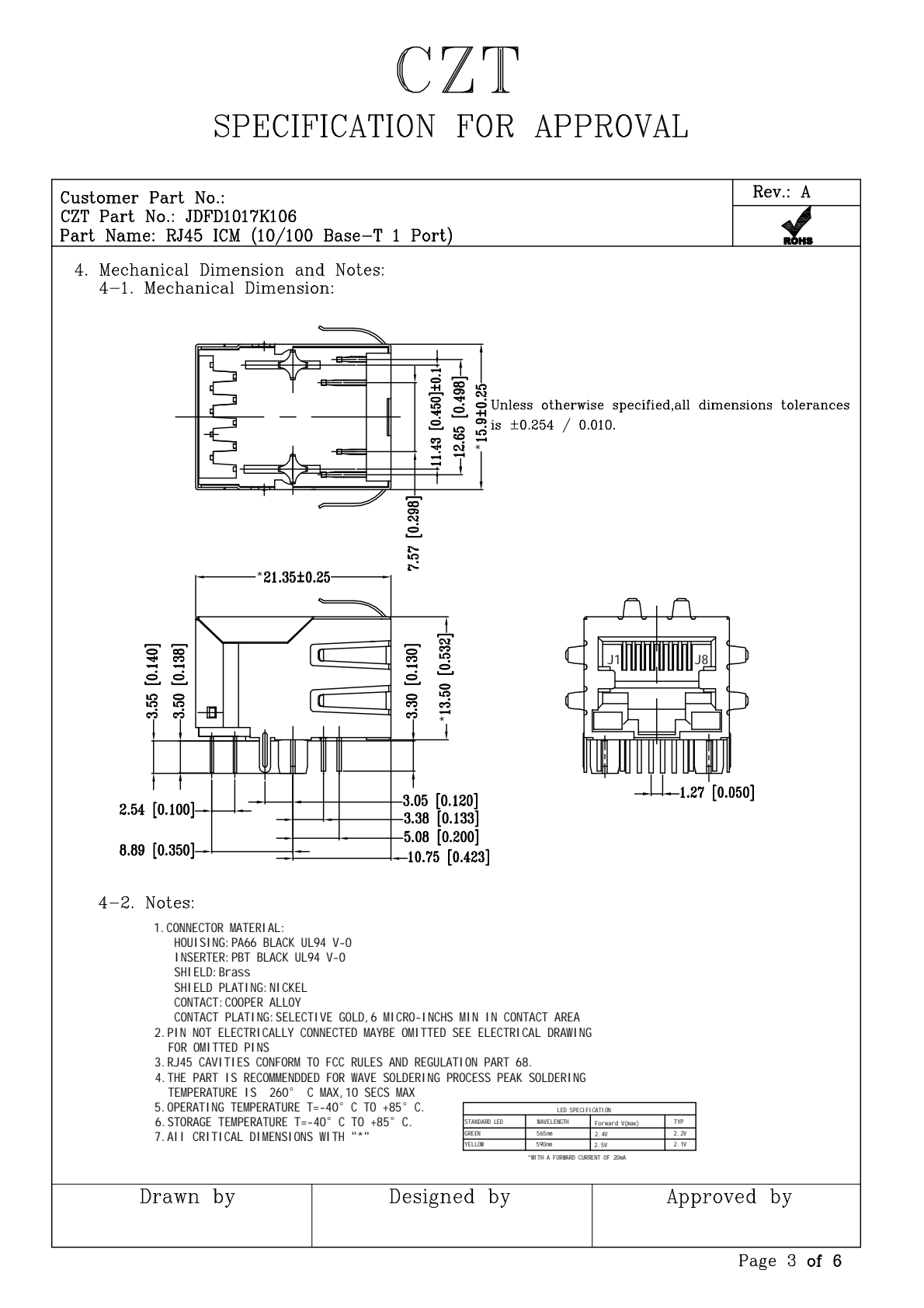
Figure 1. JDFD1017K106: mechanical views from the official manufacturer specification, PDF page 3. CZT source · Original PDF, page 3.
Compare the production requirements
| Review item | SMT-oriented candidate | Through-hole-oriented candidate |
|---|---|---|
| PCB preparation | Pads, coplanarity and placement references | Holes, annular areas and insertion references |
| Solder process | Approved profile and solder deposit | Approved wave or selective process |
| Retention | Separate shell and support assessment | Separate shell and support assessment |
| Inspection | Visible joints and hidden areas | Fill and access requirements |
| Rework | Heating and removal constraints | Desoldering and board-damage constraints |
Use the actual candidate specification in every row. Avoid assuming that all products within either category permit the same temperatures or handling method.
Examine line fit before price comparison
Confirm how the part arrives, how it is placed or inserted, and whether the equipment can handle its size and mass. Check the available pickup surface, insertion direction and support during soldering.
Include any additional process step in the cost review. A slightly lower component price can be outweighed by a separate soldering operation, difficult inspection or frequent handling. Conversely, a process already established on the line may make one construction practical despite a higher quoted part price.

Figure 2. Infrared soldering equipment shown on the official manufacturer technical-capability page. CZT source · Original image.
Run a representative assembly trial
Use production-intent PCB finish, solder materials and equipment settings. Inspect seating, solder quality, shell attachment and connector alignment after assembly. Then perform the required electrical and mechanical checks.
A hypothetical trial could find satisfactory signal joints but incomplete shell attachment. That is a reason to review the retention process, not to conclude that the entire mounting technology is unsuitable.
Approve the process-part combination
Release the connector together with its approved assembly instructions, inspection criteria and packaging configuration. If a replacement changes pin construction or housing material, revisit the process review even when the PCB footprint appears unchanged. The approved item is the component in a controlled manufacturing process, not a mounting acronym.
Connect this review to CZT product information
Start with the relevant CZT product family and provide the original interface reference or controlled drawing. Ask which configurations and supporting documents are available for the task described here. Confirm the mating arrangement, required features and project conditions before choosing an orderable part.
Browse the relevant product family · View catalog resources
Discuss a drawing, sample or quotation
Share the part or family reference, current drawing revision, operating conditions and quantities. Include the specific checks described in this article so the inquiry identifies both the component and the evidence needed for your decision. Confirm sample availability and the proposed scope with the supplier.
Request a technical review or quotation
For broader context, read the related selection guide.