Solar panel extension cables connect panels to each other and to the inverter or charge controller. Getting the wire gauge, length, and connector type right is critical for system efficiency and safety.
What Is a Solar Panel Extension Cable?
A solar panel extension cable is a pre-made cable with MC4 connectors on both ends, used to extend the wiring between solar panels and the rest of the system. They come in male-to-female configurations and are available in various lengths (3 ft to 50 ft) and wire gauges (10 AWG, 12 AWG, 14 AWG).
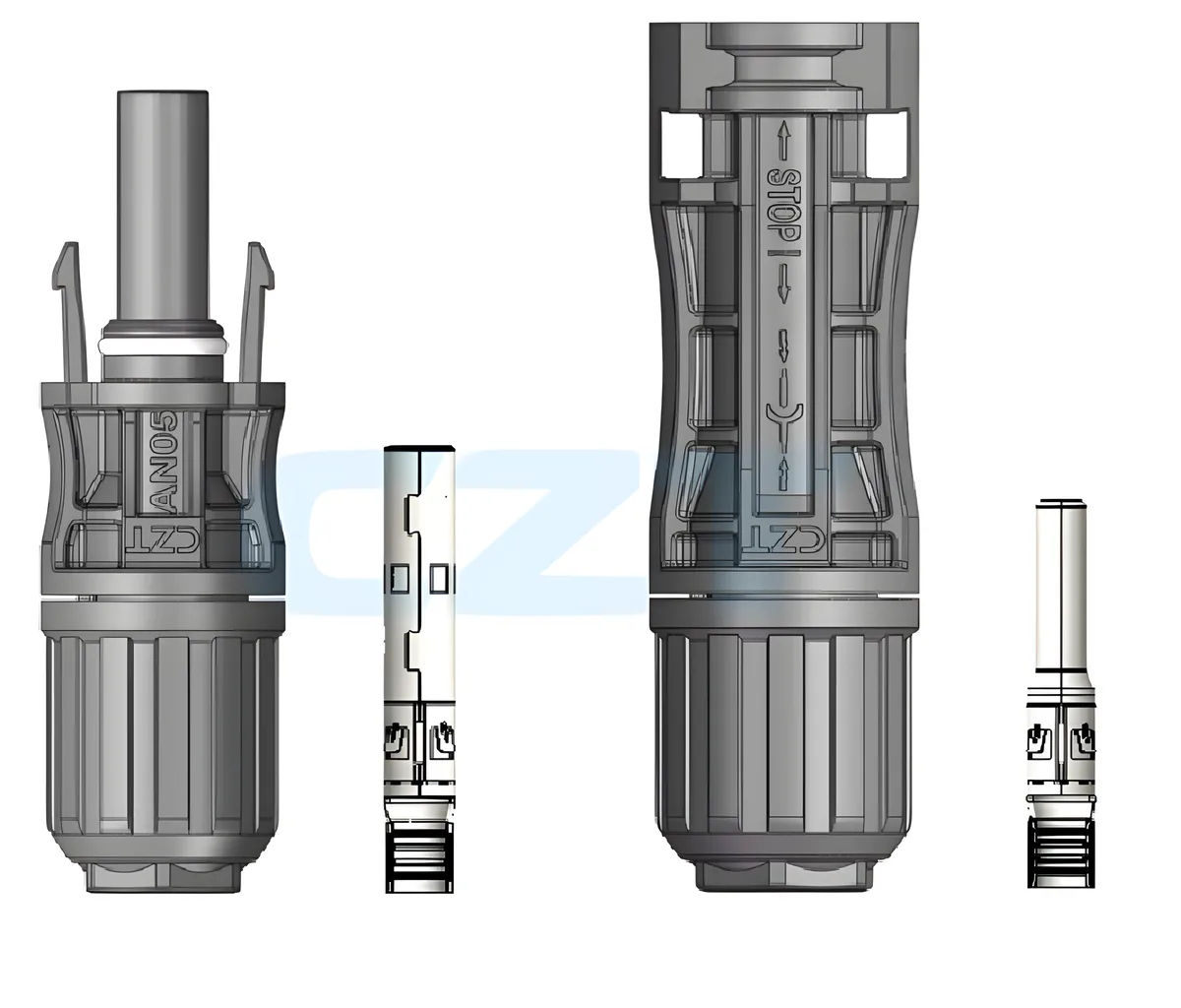
MC4 Connectors
MC4 (Multi-Contact 4 mm) is the universal connector standard for solar PV systems. The 4 mm refers to the contact pin diameter.
Key features:
- IP67 rated — weatherproof for outdoor use
- Rated for 1000V DC (standard) or 1500V DC (utility-scale)
- Current rating: 30A (10 AWG) or 20A (12 AWG)
- UV-resistant housing
- Tool-required disconnection (safety feature)
Polarity: MC4 connectors are polarized — male connectors have a pin, female connectors have a socket. The positive cable uses a male MC4 on the panel end and female on the load end; negative is reversed.
Wire Gauge Selection
The correct wire gauge depends on the current (amps) and cable length.
| Wire Gauge | Max Current | Typical Use |
|---|---|---|
| 10 AWG (6 mm²) | 30A | High-current strings, short runs |
| 12 AWG (4 mm²) | 20A | Most residential systems |
| 14 AWG (2.5 mm²) | 15A | Low-current, short runs only |
General rule: Use 10 AWG for most residential solar installations. The slightly higher cost is worth the reduced voltage drop and future-proofing.
Maximum Cable Length and Voltage Drop
Voltage drop in solar cables reduces system efficiency. Keep voltage drop below 2% for the DC wiring.
Voltage drop formula: Voltage drop (V) = (2 × Length × Current × Resistance per foot) / 1000
Maximum recommended lengths (2% voltage drop, 12V system):
| Wire Gauge | 10A | 15A | 20A |
|---|---|---|---|
| 10 AWG | 30 ft | 20 ft | 15 ft |
| 12 AWG | 19 ft | 13 ft | 9 ft |
| 14 AWG | 12 ft | 8 ft | 6 ft |
For 24V or 48V systems, maximum lengths are proportionally longer.
For longer runs: Use 10 AWG or larger, or increase system voltage (24V or 48V) to reduce current and voltage drop.
Types of Solar Extension Cables
Standard MC4 Extension Cable
Pre-made cable with MC4 male on one end and MC4 female on the other. Used to extend a single panel's positive or negative lead.
MC4 Y-Branch Connector (Parallel Connection)
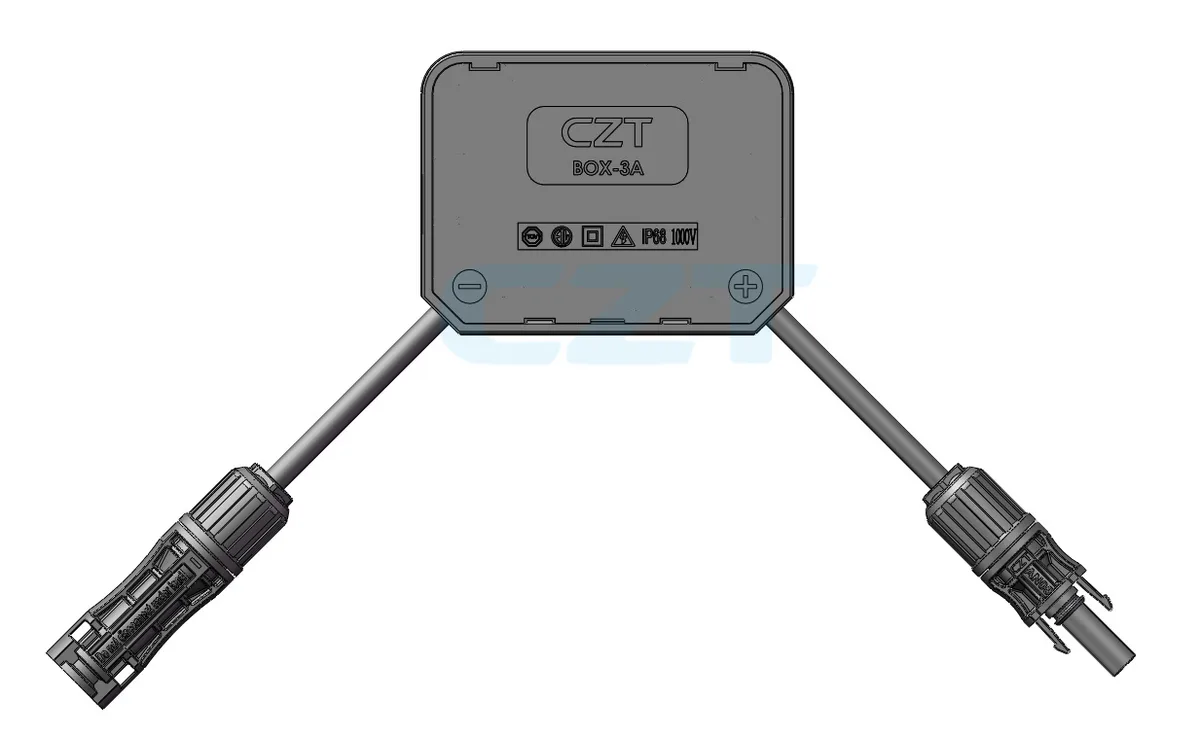
Y-branch connectors combine two panel strings into one cable. Used for parallel wiring of panels.
- 2-to-1 Y connector: Combines two strings
- 3-to-1 Y connector: Combines three strings
MC4 to Anderson Powerpole / MC4 to Ring Terminal
Adapter cables for connecting MC4 wiring to charge controllers, inverters, or battery terminals with different connector types.
Solar Cable vs Standard Wire
Solar-specific cable (PV wire or USE-2) is designed for outdoor, UV-exposed, direct-burial applications:
- UV resistance: Rated for 25+ years of UV exposure
- Temperature rating: -40°C to +90°C (or higher)
- Insulation: Cross-linked polyethylene (XLPE) — more durable than standard PVC
- Listing: UL 4703 (PV wire) or UL 854 (USE-2)
Standard electrical wire (THHN, NM-B) is not suitable for outdoor solar applications. Always use listed PV wire or USE-2 for solar DC wiring.
Installation Tips
- Route cables away from sharp edges: Use cable clips or conduit to prevent abrasion
- Avoid tight bends: Minimum bend radius is typically 6× the cable diameter
- Secure cables to the racking: Prevent wind-induced movement that fatigues connections
- Keep positive and negative cables together: Reduces electromagnetic interference
- Label cables: Mark positive (+) and negative (-) at both ends
- Use weatherproof junction boxes: For any splices or connections outside the panel junction box
- Don't exceed MC4 current ratings: 30A for 10 AWG, 20A for 12 AWG
Connecting Extension Cables
MC4 connectors require a special MC4 crimping tool and MC4 disconnect tool:
- Crimping: Use an MC4 crimping tool to crimp the contact pin onto the wire
- Assembly: Insert the crimped contact into the connector housing until it clicks
- Disconnection: Use an MC4 disconnect tool (spanner wrench) — do not pull by the cable
Safety note: Always disconnect the solar panels from the load before working on MC4 connections. Solar panels generate voltage whenever exposed to light — there is no "off" switch.
Summary
Solar panel extension cables are straightforward but require attention to wire gauge, length, and connector quality:
- Use 10 AWG (6 mm²) for most residential systems
- Keep voltage drop below 2%
- Use UV-rated PV wire or USE-2 cable
- Use genuine MC4 connectors rated for your system voltage
- Secure cables to prevent wind damage
CZT supplies MC4 connectors, solar extension cables, and PV wiring accessories for residential and commercial solar installations. Browse our solar PV connector range.