Harness dimensions need named physical datums and a repeatable measurement condition. An overall length is ambiguous if one person measures from the connector mouth and another measures from the wire exit. Resolve that definition on the drawing before comparing samples or quoting tolerances.
The wire-harness catalog family contains assembly references, but each custom design needs its own dimensional definition. Product labels and photographs do not establish measurement origins, branch locations or permissible variation.
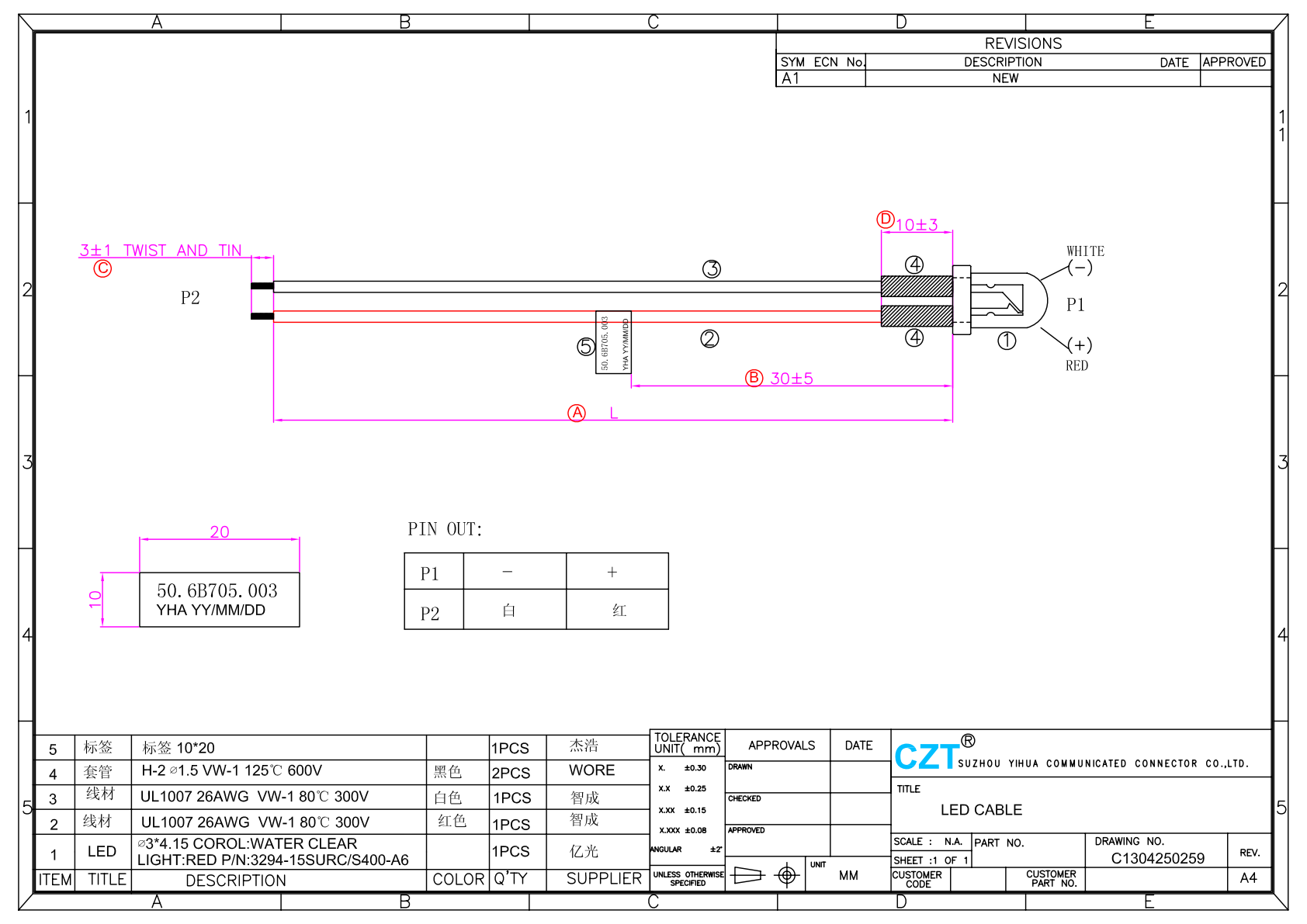
Figure 1. Official LED CABLE drawing. Separate dimension references show why harness length must specify its start point, endpoint and measurement condition. CZT source · Original PDF, page 1.
Choose datums that match installation
Identify the surfaces or points that matter in the equipment, such as a connector mating reference, a mounting clip or a branch restraint. Use them to define the overall route and branch dimensions.
Avoid dimensioning to a soft sleeve end if that end can move during normal handling and does not locate the installed harness. If such a feature must be controlled, state its measurement method and relationship to a stable reference.
Show connector orientation where it affects the endpoint. Rotating a right-angle exit can change how a nominally identical harness reaches its mating location.
Separate overall, branch and preparation dimensions
Define the main trunk, each branch and local preparation areas independently. Mark whether a dimension follows the wire path or represents a straight distance in a specified laid-out condition. Do not leave the supplier to decide between those interpretations.
| Dimension category | Definition to include |
|---|---|
| Overall reach | Named start and end references |
| Branch location | Datum to branching reference |
| Branch length | Branch reference to endpoint |
| Protective covering | Start, end and measurement condition |
| Wire preparation | Local termination detail and tolerance |
Use a tolerance scheme tied to functional requirements and verified manufacturing capability. An unnecessarily tight drawing can add cost without improving installation, while a loose critical branch position can make an otherwise correct harness unusable.
Agree how inspectors measure
Specify the laid-out shape, restraint and applied tension where relevant. Flexible assemblies can produce different readings when stretched, twisted or measured on different paths.
For a hypothetical equipment harness, a branch must reach a valve without pulling on its connector. The inspection method should establish that functional reach while controlling how the harness is laid out. Pulling the branch straight to achieve a passing number would answer a different question.
Photograph the measurement setup and identify the tools. If fixtures are used, keep their revisions associated with the drawing.
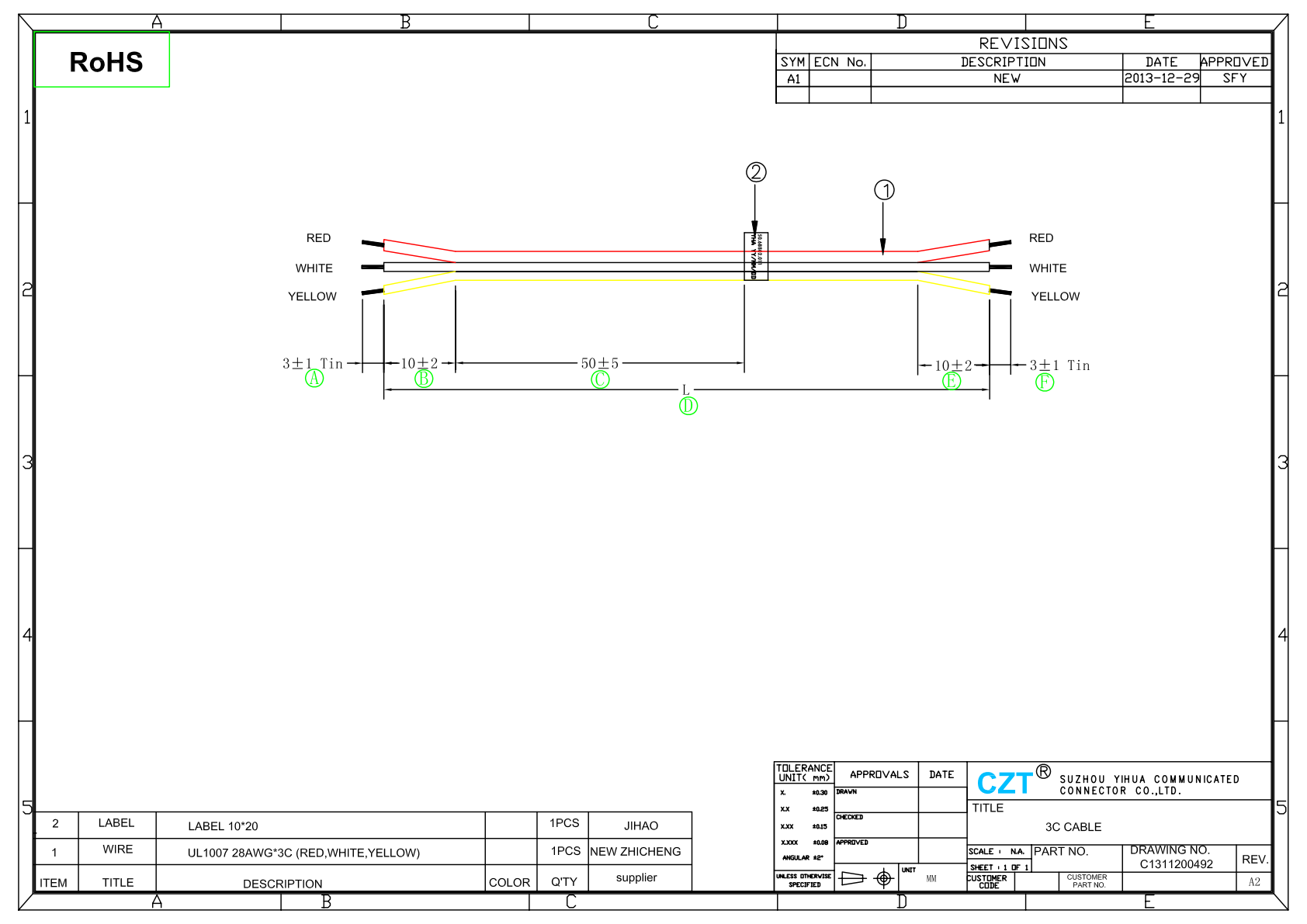
Figure 2. Official 3C CABLE drawing. A second real construction illustrates that overall length, prepared sections and label position need separate definitions. CZT source · Original PDF, page 1.
Validate dimensions through installation
Inspect the first samples on the agreed measurement setup and then fit them to the representative equipment. Compare any installation concern with the dimensional record before changing a length.
A routing or connector-orientation problem can resemble a short harness. Increasing overall length without locating the actual issue may create excess slack elsewhere. Close the review by approving the datums, tolerance interpretation, measurement method and installed fit together. That package gives purchasing and production a shared definition of what the ordered length actually means.
Connect this review to CZT product information
Start with the relevant CZT product family and provide the original interface reference or controlled drawing. Ask which configurations and supporting documents are available for the task described here. Confirm the mating arrangement, required features and project conditions before choosing an orderable part.
Browse the relevant product family · View catalog resources
Discuss a drawing, sample or quotation
Share the part or family reference, current drawing revision, operating conditions and quantities. Include the specific checks described in this article so the inquiry identifies both the component and the evidence needed for your decision. Confirm sample availability and the proposed scope with the supplier.
Request a technical review or quotation
For broader context, read the related selection guide.