Moving-equipment harness support should control where the cable flexes and keep unintended loads away from terminations. The correct arrangement depends on travel, cable construction, routing and the equipment's supports. A generic instruction to add a cable tie does not define that behavior.
Use the wire-harness family to identify related assembly records, then obtain the actual cable's installation requirements. For energy-chain applications, igus provides cable arrangement and strain-relief guidance. Its product-specific conditions should not be copied as universal dimensions for unrelated cables.
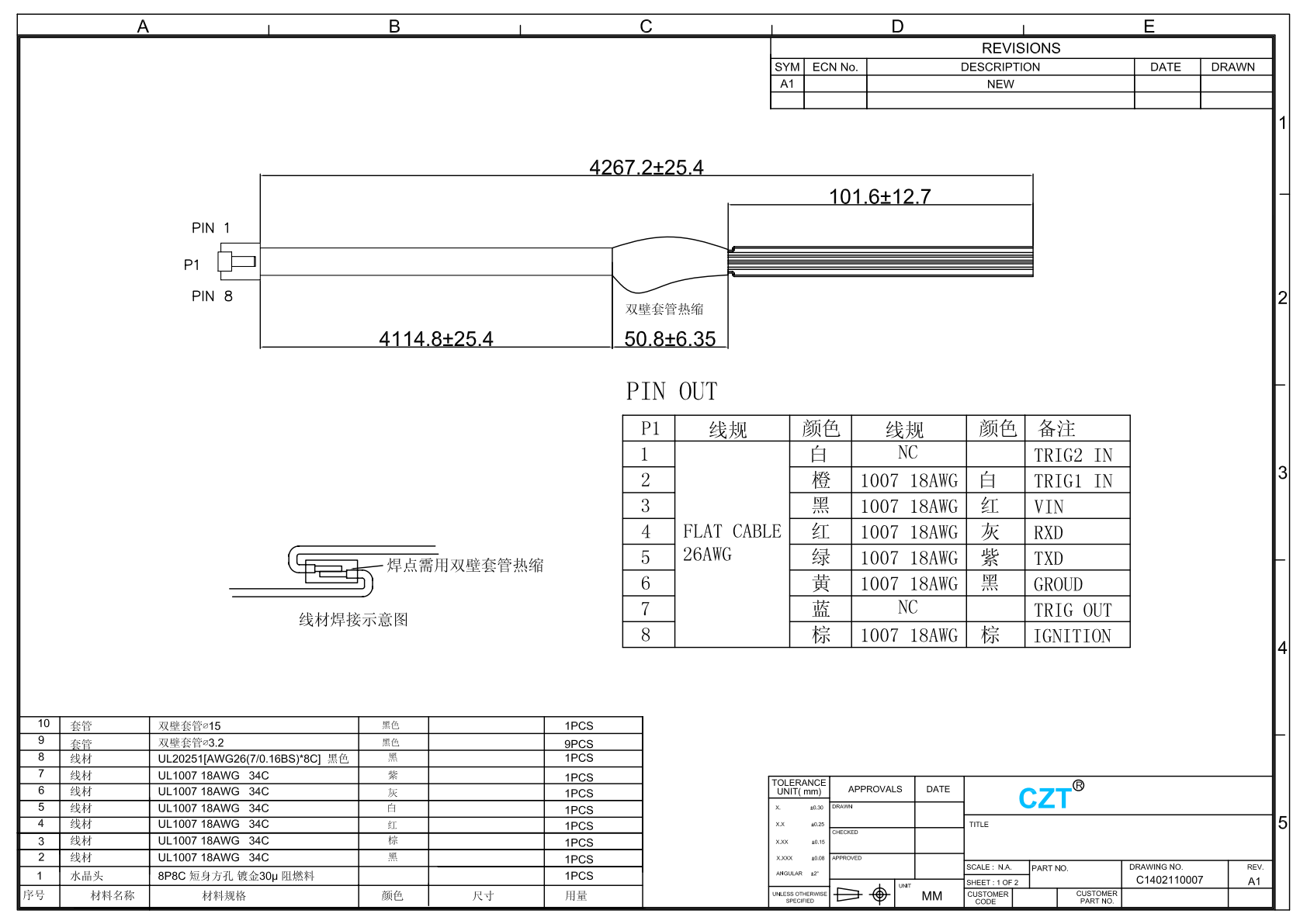
Figure 1. Official cable drawing. Terminations and cable geometry require a defined support arrangement; this catalog record does not establish dynamic-motion suitability. CZT source · Original PDF, page 1.
Describe the motion envelope
Record travel, motion direction, speed profile and the required operating positions. Include transitions, stops and service positions. Mark the fixed end, moving end and intended flexing region on the equipment drawing.
Identify whether the application involves bending, torsion or a combination. A cable selected for one motion should not be assumed suitable for another without evidence.
Define the expected routing and separation from neighboring cables or hoses. Contact between them can change as the equipment moves, so a single static photograph is insufficient to establish clearance.
Locate restraints deliberately
Choose supports and strain-relief features using the cable and carrier requirements. Define their locations and installation method, including any settings or hardware controlled by the design.
| Location | Question to resolve |
|---|---|
| Connector exit | Is the termination protected from unintended pull? |
| Fixed support | Does it locate the harness consistently? |
| Flexing region | Can the cable move as intended? |
| Neighboring structure | Is clearance maintained through travel? |
| Moving end | Is the exit arrangement controlled? |
Avoid moving a clamp solely to make the harness look tidier. That change can alter the active flexing length and should be reviewed against the intended motion.
Observe the whole travel
Use representative equipment or a justified fixture. Record video or staged observations at relevant positions, then inspect the supports, jacket and terminations. Monitor the electrical functions required by the product plan.
For a hypothetical inspection carriage, a harness may remain loose at one end of travel but become taut at the opposite end. Adding length could solve tension while creating an uncontrolled loop elsewhere. Evaluate the complete route and restraint arrangement before deciding on that change.
Check whether the installed supports shift during motion. A successful initial placement does not establish that the same geometry remains after operation.

Figure 2. CZT tensile-test equipment. Mechanical-evaluation equipment is shown as context, not proof of dynamic life or a tested strain-relief design. CZT source · Original image.
Define acceptance and maintenance evidence
Use actual cable and equipment requirements to select test conditions and limits. Record movement, visible damage, electrical changes and support displacement separately.
Release the harness length, routing, support locations and installed condition as one configuration. Review changes to travel or neighboring equipment against that record. This gives production and service a reproducible arrangement and avoids turning a catalog cable description into an unsupported promise about dynamic life in every machine.
Connect this review to CZT product information
Start with the relevant CZT product family and provide the original interface reference or controlled drawing. Ask which configurations and supporting documents are available for the task described here. Confirm the mating arrangement, required features and project conditions before choosing an orderable part.
Browse the relevant product family · View catalog resources
Discuss a drawing, sample or quotation
Share the part or family reference, current drawing revision, operating conditions and quantities. Include the specific checks described in this article so the inquiry identifies both the component and the evidence needed for your decision. Confirm sample availability and the proposed scope with the supplier.
Request a technical review or quotation
For broader context, read the related selection guide.