Introduction
Every busbar design starts with one decision that shapes everything downstream: copper or aluminum? The material you choose determines the busbar's current-carrying capacity, physical size, weight, cost, and long-term reliability. Get it wrong, and you end up with an oversized assembly that wastes space, an undersized one that overheats, or a connection point that corrodes within years.
If you are new to busbars, our guide on what is a busbar covers the fundamentals. This article goes deeper into the material science behind the two dominant busbar conductor materials and gives you a practical framework for choosing between them.
Both copper and aluminum have legitimate roles in modern power distribution. The right choice depends on your application's specific requirements for current density, weight budget, operating environment, and total cost of ownership. There is no universal winner — only the right material for the right job.
Copper Busbars
Copper has been the default busbar material for over a century, and for good reason. Its electrical and thermal properties are second only to silver among commercially available metals. When space is tight and current demands are high, copper is usually the answer.
Electrical and Thermal Properties
Copper's electrical conductivity sits at 100% IACS (International Annealed Copper Standard) — the benchmark against which all other conductor materials are measured. This means a copper busbar carries more current per unit of cross-sectional area than any other practical conductor material.
Thermal conductivity is equally impressive at 401 W/m-K. High thermal conductivity means heat generated at connection points and along the conductor length dissipates quickly, reducing hot spots and improving system reliability.
Copper also has a relatively low coefficient of thermal expansion (16.5 ppm/degree-C), which helps maintain tight bolted connections through thermal cycling. This matters in applications like energy storage systems where busbars experience repeated charge-discharge thermal cycles.
Common Copper Grades for Busbars
Not all copper is the same. The grade you specify affects conductivity, formability, and cost.
| Grade | IACS Conductivity | Oxygen Content | Key Characteristics | Typical Use |
|---|---|---|---|---|
| C110 (ETP) | 101% | 0.04% max | Most common, excellent conductivity, good formability | General-purpose busbars, switchgear |
| C101 (OFE) | 101% | 0.0005% max | Oxygen-free electronic grade, highest purity | High-reliability, vacuum, and semiconductor applications |
| C102 (OF) | 100% | 0.001% max | Oxygen-free, good for brazing and welding | Busbars requiring welded joints, hydrogen atmospheres |
C110 Electrolytic Tough Pitch (ETP) copper covers roughly 85% of busbar applications. It offers the best balance of conductivity, formability, and cost. The small oxygen content does not affect performance in standard bolted assemblies.
C101 and C102 oxygen-free grades become necessary when busbars will be brazed, welded, or used in reducing atmospheres. Oxygen in standard ETP copper can cause hydrogen embrittlement during high-temperature joining processes.
Advantages of Copper Busbars
Copper busbars deliver clear benefits in the right applications:
- Highest current density per cross-section, enabling compact designs
- Superior thermal conductivity for better heat dissipation
- Excellent corrosion resistance, especially when plated
- Well-established joining methods (bolting, brazing, soldering, welding, ultrasonic welding)
- Lower contact resistance at connection points
- Long track record in safety-critical applications
Limitations of Copper Busbars
Copper is not without drawbacks:
- Higher material cost — roughly 3 to 4 times the price of aluminum per kilogram
- Higher density (8.96 g/cm3) adds significant weight in large assemblies
- Subject to price volatility on commodity markets
- Theft risk in outdoor or unsecured installations due to scrap value
Aluminum Busbars
Aluminum is the lighter, more affordable alternative. While it cannot match copper's conductivity on a per-area basis, it often wins on a per-weight or per-cost basis. In applications where weight or budget constraints dominate, aluminum is a strong contender.
Electrical and Thermal Properties
Aluminum's electrical conductivity is approximately 61% IACS — about 61% of copper's. That means an aluminum busbar needs roughly 60% more cross-sectional area to carry the same current as a copper busbar. However, because aluminum is only one-third the density of copper, the larger aluminum busbar still weighs about half as much.
Thermal conductivity is 237 W/m-K — lower than copper but still excellent among engineering metals. Aluminum busbars dissipate heat effectively, though they run slightly warmer than equivalently rated copper busbars under the same load.
The coefficient of thermal expansion is higher at 23.1 ppm/degree-C. This means aluminum busbars expand and contract more during thermal cycling, which requires careful attention to bolted joint design. Belleville washers or spring-loaded hardware are often specified to maintain clamping force.
Common Aluminum Grades for Busbars
| Grade | IACS Conductivity | Tensile Strength | Key Characteristics | Typical Use |
|---|---|---|---|---|
| 6101-T6 | 56% | 200 MPa | High conductivity alloy, good strength | Power distribution busbars, switchgear |
| 6063-T6 | 53% | 215 MPa | Excellent extrudability, good surface finish | Extruded busbar profiles, enclosures |
| 1350-H12 | 61.8% | 85 MPa | Highest conductivity, low strength | High-current busbars where strength is not critical |
6101-T6 is the workhorse grade for aluminum busbars. It balances conductivity with enough mechanical strength for bolted assemblies and structural mounting. The T6 temper provides good hardness, which helps maintain contact pressure at bolted joints.
1350 (also called EC grade) offers the highest conductivity but is soft. It is used in high-current applications where the busbar is fully supported and not subject to mechanical stress.
Advantages of Aluminum Busbars
Aluminum busbars make sense in many scenarios:
- 65-70% lighter than equivalent copper busbars
- Material cost roughly 3-4 times lower than copper per kilogram
- Excellent strength-to-weight ratio in 6000-series alloys
- Good corrosion resistance due to natural oxide layer
- Readily available in large extrusion profiles
- Lower scrap value reduces theft risk
Limitations of Aluminum Busbars
Engineers must account for these challenges:
- Lower conductivity requires larger cross-sections for the same current rating
- Native oxide layer is insulating and must be removed before making connections
- Higher thermal expansion complicates bolted joint design
- Susceptible to galvanic corrosion when in direct contact with copper
- Creep under sustained mechanical load can loosen bolted connections over time
- Fewer compatible joining methods compared to copper

Copper vs Aluminum: Head-to-Head Comparison
The following table summarizes the key differences between copper and aluminum as busbar materials. These values represent typical properties for the most common busbar grades (C110 copper and 6101-T6 aluminum).
| Property | Copper (C110) | Aluminum (6101-T6) | Notes |
|---|---|---|---|
| Electrical conductivity (% IACS) | 101% | 56% | Copper carries ~1.8x more current per unit area |
| Electrical resistivity (micro-ohm-cm) | 1.72 | 3.25 | Lower is better |
| Thermal conductivity (W/m-K) | 401 | 210 | Copper dissipates heat faster |
| Density (g/cm3) | 8.96 | 2.70 | Aluminum is ~3.3x lighter |
| Coefficient of thermal expansion (ppm/degree-C) | 16.5 | 23.1 | Aluminum expands ~40% more |
| Tensile strength (MPa) | 220-250 | 195-215 | Comparable in busbar grades |
| Melting point (degree-C) | 1,085 | 655 | Relevant for fault current withstand |
| Relative cost per kg | 1.0x (baseline) | 0.25-0.30x | Aluminum is significantly cheaper per kg |
| Relative cost per amp-meter | 1.0x (baseline) | 0.45-0.55x | Aluminum still cheaper on a per-performance basis |
| Current capacity for equal cross-section | 1.0x (baseline) | 0.56x | Aluminum needs ~1.6x the area for equal current |
| Weight for equal current rating | 1.0x (baseline) | 0.48x | Aluminum is lighter even with larger cross-section |
| Corrosion resistance | Excellent (with plating) | Good (natural oxide) | Both benefit from surface treatment |
| Common joining methods | Bolt, braze, solder, weld, ultrasonic | Bolt, weld (TIG/MIG), friction stir | Aluminum cannot be easily soldered |
The comparison reveals a nuanced picture. Copper wins on conductivity, thermal performance, and connection reliability. Aluminum wins on weight, cost, and availability in large profiles. For a broader comparison of busbars against cables, see our busbar vs cable analysis.
When to Choose Copper
Copper is the right busbar material when one or more of the following conditions apply.
High Current Density Requirements
When cabinet space is limited and current demands are high, copper's superior conductivity allows smaller cross-sections. This is common in EV battery packs where every millimeter counts. A copper busbar carrying 500 A might measure 40 mm x 5 mm, while an equivalent aluminum busbar would need 40 mm x 8 mm — a 60% increase in thickness that may not fit the available envelope.
Compact Enclosures
Switchgear, motor control centers, and power distribution units (PDUs) in data centers are designed around tight clearances. Copper busbars keep the assembly compact, leaving room for insulation, airflow, and maintenance access.
Critical and Safety-Rated Connections
In applications where connection failure has severe consequences — battery energy storage, medical power systems, nuclear facilities — copper's lower contact resistance and proven long-term reliability make it the conservative choice. Copper bolted joints maintain stable resistance over decades with minimal maintenance.
High-Frequency Applications
In laminated busbar assemblies used for inverter DC links, copper's lower skin-effect losses at switching frequencies (10-100 kHz) provide measurable efficiency gains. The difference is small at power frequencies (50/60 Hz) but becomes significant in power electronics.
Environments with Thermal Cycling
Copper's lower thermal expansion coefficient means bolted joints stay tighter through repeated heating and cooling cycles. This is particularly important in energy storage systems that cycle daily.
When to Choose Aluminum
Aluminum is the right busbar material when these conditions dominate.
Weight-Sensitive Applications
Rooftop solar inverters, mobile power units, aerospace power distribution, and any application where structural load matters. An aluminum busbar system weighing 50 kg would weigh over 100 kg in copper — a difference that affects mounting hardware, structural supports, and installation labor.
Cost-Sensitive, High-Volume Production
When material cost is a primary driver and the design can accommodate larger cross-sections, aluminum delivers substantial savings. A busbar assembly costing $500 in copper might cost $200-$250 in aluminum, even after accounting for the larger size.
Large Cross-Section Busbars
For very high current applications (above 3,000 A) where busbars are already large, the weight penalty of copper becomes extreme. Aluminum busbars in utility switchgear and large industrial distribution boards are standard practice.
Outdoor and Exposed Installations
Aluminum's natural oxide layer provides baseline corrosion protection without plating. Combined with its lower scrap value (reducing theft incentive), aluminum is often preferred for outdoor substations and overhead busbar runs.
Applications with Adequate Space
When the enclosure can accommodate the larger aluminum cross-section without compromising clearances or creepage distances, there is no technical reason to pay the copper premium.
Surface Treatment Options
Raw copper and aluminum busbars are rarely used in production assemblies. Surface treatments protect against corrosion, reduce contact resistance, and improve long-term reliability. The choice of plating interacts directly with the base material selection.
| Surface Treatment | Compatible Base | Thickness (typical) | Contact Resistance | Corrosion Protection | Cost | Best For |
|---|---|---|---|---|---|---|
| Tin plating | Copper, Aluminum | 5-10 micrometers | Good | Good | Low | General-purpose, cost-sensitive |
| Silver plating | Copper | 5-15 micrometers | Excellent | Moderate | High | High-current connections, low loss |
| Nickel plating | Copper, Aluminum | 5-25 micrometers | Good | Excellent | Medium | Harsh environments, high temperature |
| Bare copper | Copper | N/A | Good (initially) | Poor (tarnishes) | Lowest | Indoor, controlled environments only |
| Bare aluminum | Aluminum | N/A | Moderate (oxide layer) | Moderate | Lowest | Not recommended for bolted joints |
| Anodizing | Aluminum | 5-25 micrometers | Poor (insulating) | Excellent | Low | Insulation, not for contact surfaces |
Tin plating is the most common treatment for both copper and aluminum busbars. It provides a solderable, corrosion-resistant surface at low cost. For copper busbars in high-performance applications, silver plating reduces contact resistance by 20-30% compared to tin.
Nickel plating is specified when busbars operate above 150 degree-C or in chemically aggressive environments. Nickel withstands higher temperatures than tin before softening and resists most industrial chemicals.
For aluminum busbars, surface preparation before plating is critical. The native oxide must be removed and a zincate or nickel strike layer applied before the final plating. Skipping this step leads to adhesion failure and accelerated corrosion.
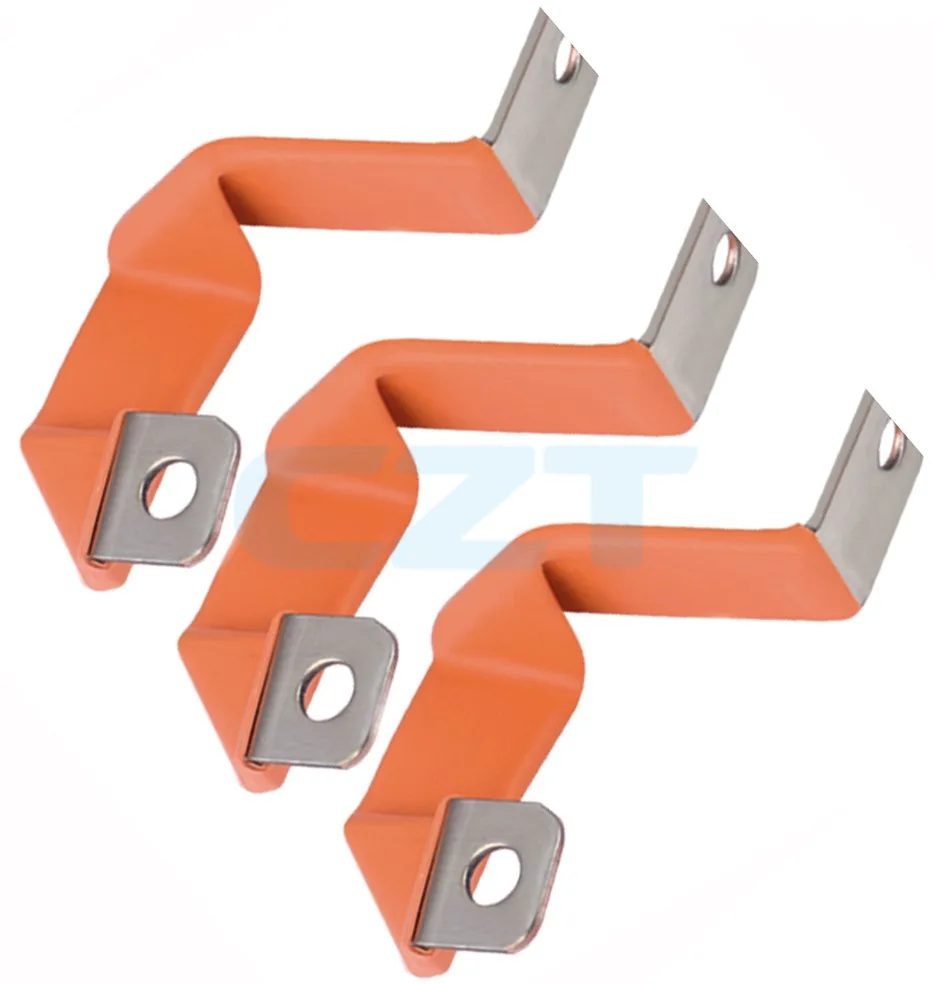
Bimetallic Connections: Joining Copper to Aluminum
In many real-world systems, copper and aluminum busbars coexist. A battery module may use copper busbars internally while the main distribution bus is aluminum. Connecting these dissimilar metals introduces galvanic corrosion risk that must be managed.
The Galvanic Corrosion Problem
When copper and aluminum are in direct contact in the presence of moisture, a galvanic cell forms. Aluminum is the anode (it corrodes), and copper is the cathode (it is protected). The aluminum contact surface degrades, increasing resistance and eventually causing joint failure.
The galvanic potential difference between copper and aluminum is approximately 2.0 V in seawater and 0.5-1.0 V in typical industrial environments. This is large enough to cause measurable corrosion within months in humid conditions.
Solutions for Bimetallic Joints
Several proven methods prevent galvanic corrosion at copper-to-aluminum transitions:
Bimetallic transition washers. These are factory-bonded copper-aluminum washers placed between the two busbars. The copper side contacts the copper busbar, and the aluminum side contacts the aluminum busbar. The factory bond (typically explosion-welded or friction-welded) creates a gas-tight interface that excludes moisture.
Tin or nickel plating both surfaces. When both the copper and aluminum contact surfaces are plated with the same material (usually tin), the galvanic potential difference drops to near zero. This is the most common approach in enclosed switchgear.
Bolted joints with sealant. Applying a conductive joint compound (such as Penetrox or equivalent) to the contact surfaces excludes moisture and fills micro-voids. Combined with proper torque and Belleville washers, this creates a reliable joint.
Welded transition pieces. For permanent connections, friction-stir-welded or explosion-welded bimetallic transition plates provide the most reliable long-term solution. These are common in utility-scale installations.
Regardless of the method chosen, bimetallic joints should be inspected periodically with infrared thermography to detect resistance increases before they cause failures.
Application-Specific Recommendations
The copper-versus-aluminum decision varies by industry. Here are CZT's recommendations based on our manufacturing experience across thousands of busbar projects.
EV Battery Packs
Recommended: Copper (C110, tin or nickel plated)
EV battery packs demand maximum current density in minimum space. Pack voltages of 400-800 V and continuous currents of 200-500 A must be carried through busbars that fit between tightly packed cell modules. Copper's compact cross-section is essential here.
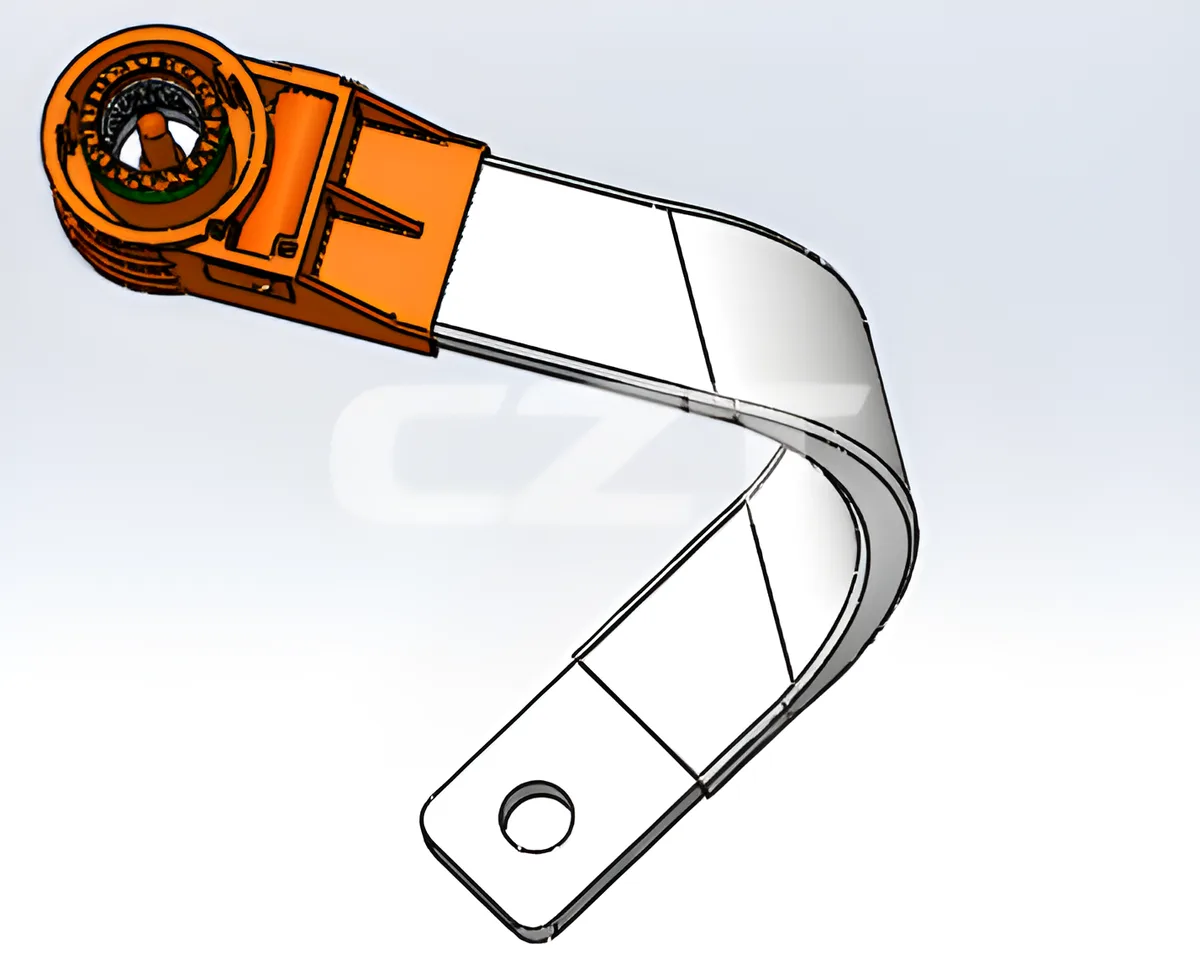
Weight is a concern in EVs, but the busbar mass is typically less than 2% of total pack weight. The space savings from copper outweigh the weight penalty. CZT manufactures custom busbars for energy storage and EV applications in both rigid and flexible configurations.
Battery Energy Storage Systems (BESS)
Recommended: Copper for module-level, aluminum acceptable for rack-level distribution
Inside battery modules, copper busbars provide the compact, reliable connections needed between cells and BMS components. At the rack or system level, where busbars run longer distances between modules and inverters, aluminum can reduce cost and weight without compromising performance. For detailed design guidance, see our article on energy storage busbar design.
Switchgear and Distribution Panels
Recommended: Copper for ratings up to 3,000 A; aluminum for higher ratings
Low- and medium-voltage switchgear up to 3,000 A typically uses copper busbars for their compact size and proven reliability. Above 3,000 A, the weight and cost of copper become prohibitive, and aluminum busbars are standard practice. Most switchgear manufacturers offer both options.
Data Centers
Recommended: Copper for PDUs and busway; aluminum for overhead busbar trunking
Data center power distribution units (PDUs) use copper busbars almost exclusively due to space constraints in server racks. Overhead busbar trunking systems that distribute power across the data center floor often use aluminum to reduce structural load on ceiling supports.
Solar Inverters and Combiner Boxes
Recommended: Copper for inverter internals; aluminum for DC combiner busbars
Inside string and central inverters, copper laminated busbars handle high-frequency switching currents with minimal losses. DC combiner boxes, which aggregate strings at lower frequencies, can use aluminum busbars to reduce cost in large solar farms.
Frequently Asked Questions
Is copper always better than aluminum for busbars?
No. Copper has higher conductivity and lower contact resistance, but aluminum is lighter, cheaper, and perfectly adequate for many applications. The best busbar material depends on your specific requirements for current density, space, weight, and budget. In applications above 3,000 A, aluminum is often the preferred choice due to weight and cost advantages.
How much larger does an aluminum busbar need to be compared to copper?
An aluminum busbar needs approximately 60% more cross-sectional area to carry the same current as a copper busbar. For example, if a copper busbar rated at 1,000 A measures 80 mm x 10 mm (800 mm2), the equivalent aluminum busbar would need approximately 1,280 mm2 — perhaps 100 mm x 13 mm. Despite the larger size, the aluminum busbar weighs about half as much.
Can I bolt copper and aluminum busbars together directly?
Direct copper-to-aluminum bolted joints are not recommended without corrosion mitigation. Use bimetallic transition washers, plate both contact surfaces with tin or nickel, or apply conductive joint compound to prevent galvanic corrosion. Without these measures, the aluminum surface will corrode and the joint resistance will increase over time.
What surface treatment should I specify for my busbars?
Tin plating is the default choice for most applications — it is cost-effective, provides good corrosion protection, and works on both copper and aluminum. Specify silver plating for high-current connections where minimizing contact resistance is critical. Use nickel plating for high-temperature applications (above 150 degree-C) or chemically harsh environments.
Does CZT manufacture both copper and aluminum busbars?
Yes. CZT manufactures custom busbars in copper (C110, C101, C102) and aluminum (6101-T6, 6063-T6, 1350) with a full range of surface treatments including tin, silver, and nickel plating. Our engineering team can help you select the optimal material and design for your application. Contact us to discuss your project requirements.
Choose the Right Busbar Material for Your Application
The copper-versus-aluminum decision is not about which material is better in absolute terms. It is about which material best serves your application's unique combination of electrical, mechanical, thermal, and economic requirements.
Start with the current rating and available space. If copper fits the envelope and the budget, it is the safer default. If weight, cost, or cross-section size pushes you toward aluminum, it is a proven alternative with decades of field history — just pay extra attention to joint design and surface treatment.
CZT's engineering team has designed and manufactured busbars for EV battery packs, energy storage systems, switchgear, and data centers across six continents. Whether you need copper, aluminum, or a bimetallic solution, we can help you get the material selection right from the start.
Explore our busbar product line or contact our engineering team to discuss your busbar material requirements.