An HDMI reflow first article should be checked for position and seating as well as solder appearance. A receptacle can have visible joints and still be tilted, displaced or too high for the enclosure opening. Treat those dimensions as measurable assembly characteristics.
For any candidate in the USB and HDMI family, use the approved drawing and its recommended attachment information. Do not assume that a visually similar socket shares the same locating posts, shell tails or board standoff.

Figure 1. CZT HDMI receptacle example shows shell and seating geometry to inspect when a first article appears raised or misaligned after assembly. CZT source · Original image.
Confirm footprint and placement inputs
Overlay the connector drawing with the PCB lands and holes. Check the locating features and mechanical anchors before reviewing paste deposition. A mismatch in either can stop the body from reaching its intended seating position.
Compare the stencil and placement program revisions with the released board. Identify the datum used by the placement machine and how its position relates to the mating mouth. If prototype operators manually align parts, document that intervention instead of presenting the trial as a validated automated process.
Retain the measured reflow profile and relevant process references for the first article. The connector's approved processing conditions must come from its actual documentation.
Measure the reflowed position
Choose accessible board references and measure mouth height, forward projection and lateral position. Inspect several locations if necessary to distinguish overall offset from tilt. Define the method clearly enough for another inspector to repeat it.
| Check | Evidence to retain |
|---|---|
| Seating height | Measurements from named PCB references |
| Lateral alignment | Relationship to lands and board edge |
| Shell anchors | Joining condition and seating |
| Signal terminals | Visible joining and bridge inspection |
| Enclosure fit | Actual mating and panel-clearance result |
A nominal body dimension on the component drawing is not a substitute for checking the soldered position on the board.
Investigate patterns before adjusting the process
For a hypothetical first build, suppose every receptacle tilts toward one shell attachment. Check for hole interference, board distortion, component coplanarity and uneven paste or thermal effects. Record what changes between trials.
Increasing pressure during placement might temporarily mask a mechanical mismatch. A better experiment isolates the suspected input and compares the resulting seating and joints. Keep unsuccessful trial boards when they provide useful evidence of the mechanism.
Electrical continuity and an operating check should accompany visual inspection, but neither makes an inaccessible joint automatically acceptable. Agree the inspection method for features that the normal view cannot reveal.
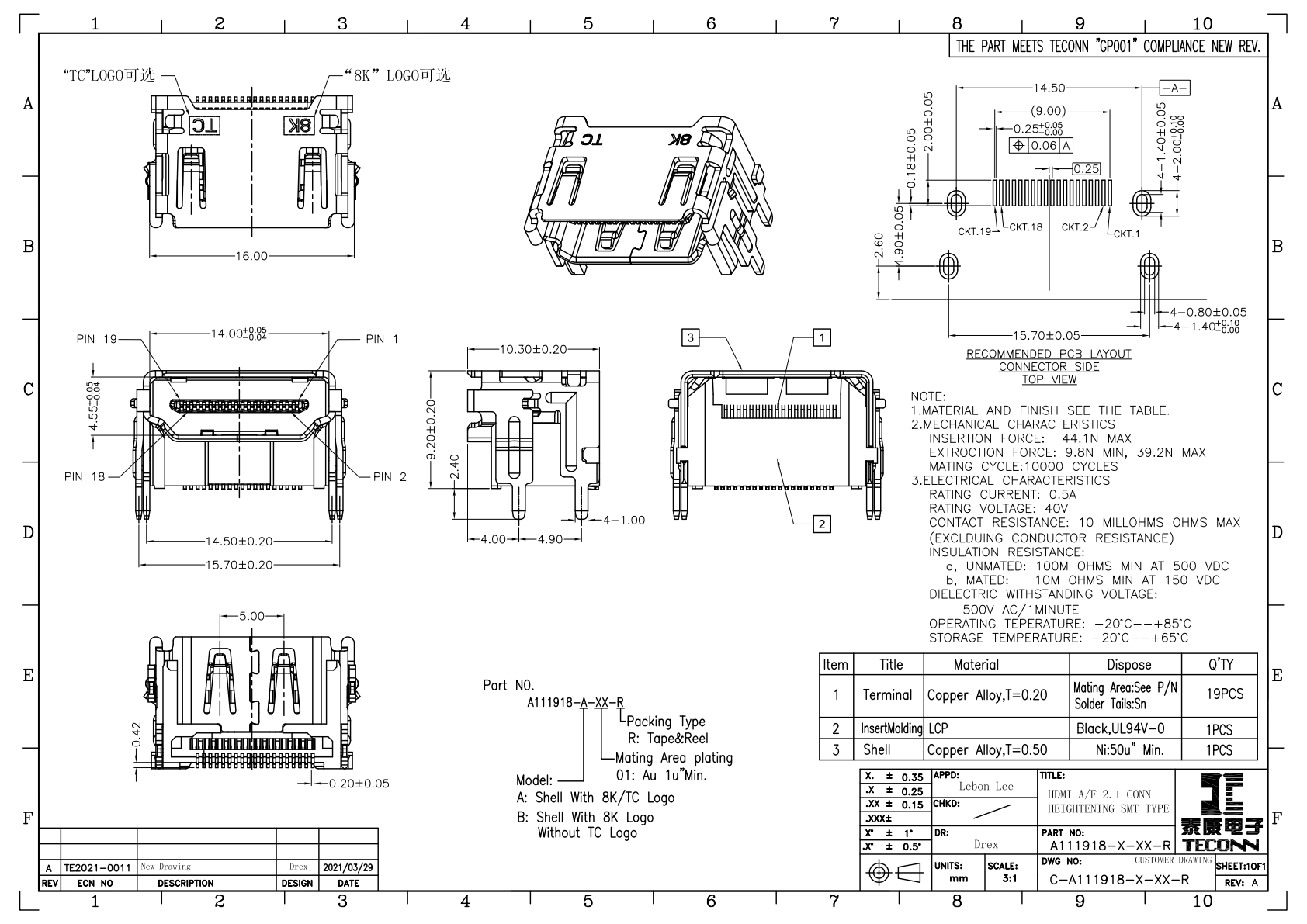
Figure 2. Official HDMI drawing provides a controlled geometric reference for checking seating, locating features and the proposed board footprint. CZT source · Original PDF, page 1.
Finish with an installed mating check
Fit the board into a representative enclosure and use the intended plug envelope. Check full engagement and removal without forcing the cable against the panel. Record the actual connector, board and enclosure revisions.
Release the process only after the positional and joining findings have been resolved against the agreed requirements. Store the footprint, stencil, placement and process references together. When a later connector alternate changes a locating post or shell feature, that record identifies the assembly checks that must be revisited.
Connect this review to CZT product information
Start with the relevant CZT product family and provide the original interface reference or controlled drawing. Ask which configurations and supporting documents are available for the task described here. Confirm the mating arrangement, required features and project conditions before choosing an orderable part.
Browse the relevant product family · View catalog resources
Discuss a drawing, sample or quotation
Share the part or family reference, current drawing revision, operating conditions and quantities. Include the specific checks described in this article so the inquiry identifies both the component and the evidence needed for your decision. Confirm sample availability and the proposed scope with the supplier.
Request a technical review or quotation
For broader context, read the related selection guide.