A PV connector certificate is useful only when its scope can be matched to the parts on the purchased BOM. A logo, supplier name or certificate number by itself does not establish that the ordered connector pair, cable and assembled configuration are covered. Map the evidence item by item before treating certification as a procurement requirement that has been satisfied.
Start with the purchasing identity
List the exact supplier, manufacturer, model and revision for each connector half. Include the cable and any separately controlled contact or seal. If the purchased item is a finished lead or harness, identify that assembly as well as its constituent connector parts.
Ask the supplier to explain any difference between the commercial ordering code and the model named in the certificate or supporting schedule. Similar family names should not be joined by assumption. Keep a written cross-reference approved by the party responsible for the certification evidence.
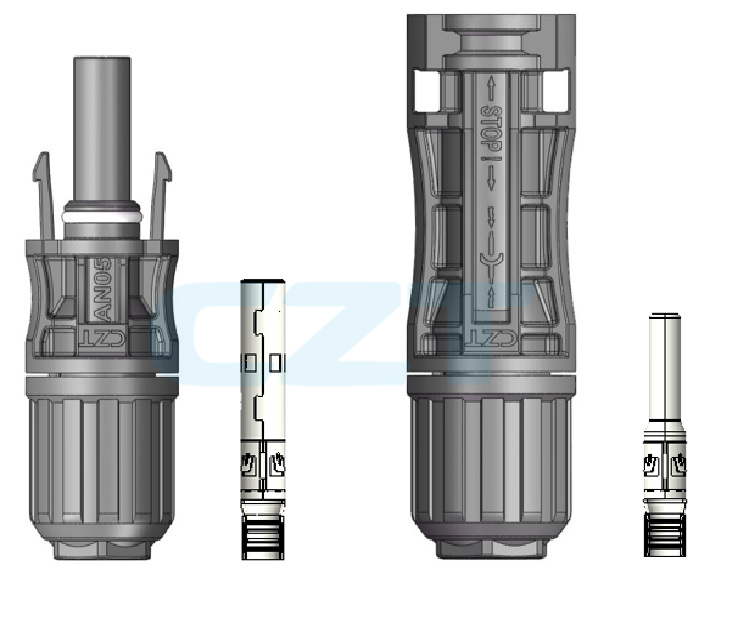
Figure 1. AN05 cable-end connector bodies and separate contact components in CZT's official product illustration. CZT source · Original image.
Read the scope, not just the cover
Check the certification body, product category, standard designation and document status. Read conditions and schedules that define permitted components or use. UL's solar materials and components service information distinguishes junction boxes and PV connectors as separate assessment areas. That distinction is a reason to identify the relevant evidence for each purchased item, not to infer that one document covers the complete system.
Confirm current record status through the issuing body's official channel. Where an entry is unclear, ask for clarification rather than treating an inaccessible or ambiguous record as a pass.
Build a BOM-to-evidence map
| Purchased item | Evidence field to compare | Open issue example |
|---|---|---|
| Connector half A | Manufacturer and exact model | Ordering suffix absent from schedule |
| Connector half B | Permitted mating identity | Pairing not demonstrated |
| Cable | Defined construction and scope | Different insulation or size ordered |
| Finished assembly | Applicable assembly coverage | Component evidence only |
| Installation | Conditions of use | Site configuration outside reviewed scope |
The map makes gaps actionable. It does not create certification where the underlying documentation is absent.
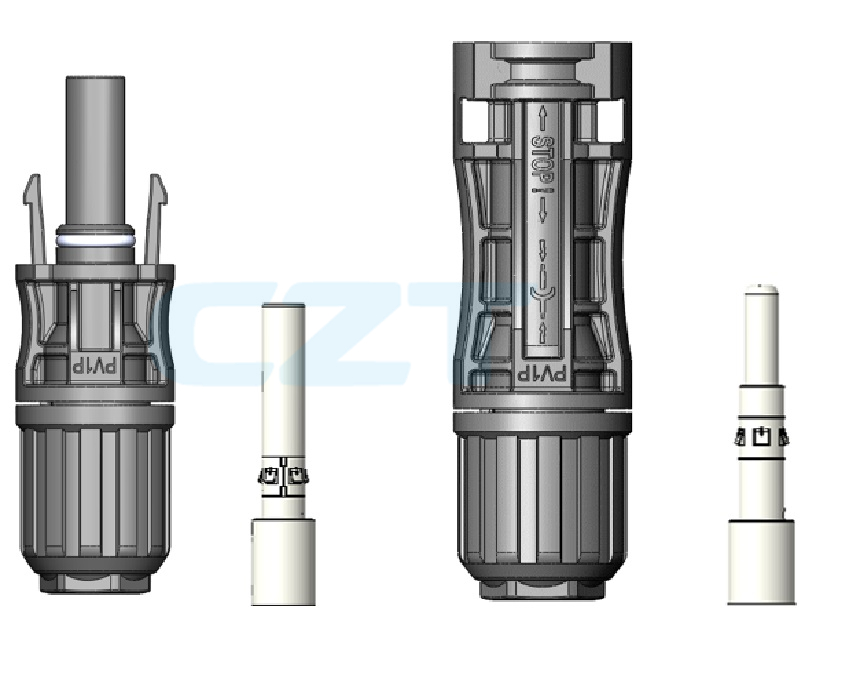
Figure 2. PV1P-A cable-end connector components in the official CZT catalog illustration. CZT source · Original image.
Keep approval claims bounded
CZT's solar PV connector catalog supplies product-family and naming references for an inquiry. Its labels are not certificate evidence. Ask for documents tied to the exact proposed construction and intended market before placing approval language on a drawing, purchase order or customer-facing page.
If a supplier changes a contact, cable or factory identity, revisit the mapping even when the visible connector shape remains unchanged. The design authority should decide what updated documentation or verification is necessary.
Where the order permits multiple cable or contact variants, map each permitted combination rather than approving the list collectively. This prevents an optional item from inheriting coverage demonstrated only for the original quoted configuration.
Retain the checked record, its access date and any scope clarification with the purchase approval. This creates a reviewable basis for the procurement decision and prevents a certificate for one model from silently spreading to every product that shares a catalog page.
Connect this review to CZT product information
Start with the relevant CZT product family and provide the original interface reference or controlled drawing. Ask which configurations and supporting documents are available for the task described here. Confirm the mating arrangement, required features and project conditions before choosing an orderable part.
Browse the relevant product family · View catalog resources
Discuss a drawing, sample or quotation
Share the part or family reference, current drawing revision, operating conditions and quantities. Include the specific checks described in this article so the inquiry identifies both the component and the evidence needed for your decision. Confirm sample availability and the proposed scope with the supplier.
Request a technical review or quotation
For broader context, read the related selection guide.