Read a PV connector's IP evidence as a statement about a specified assembled condition and test procedure. The mating state, cable seal, accessories and exact product combination can determine whether a report applies to the purchased assembly.
For a candidate in the CZT solar PV family, request the actual report scope and installation instructions. A protection label on a category page is not enough to reconstruct the tested configuration.
Identify the state of the sample
Check whether the report applies to a mated connection, an unmated interface with a specified cap, a panel-mounted part or another arrangement. Do not assume that a result for a closed, mated assembly also describes an exposed contact face.
Record the mating component's complete identity. A test associated with one connector system should not be extended to an unreviewed combination simply because the parts can be pushed together.
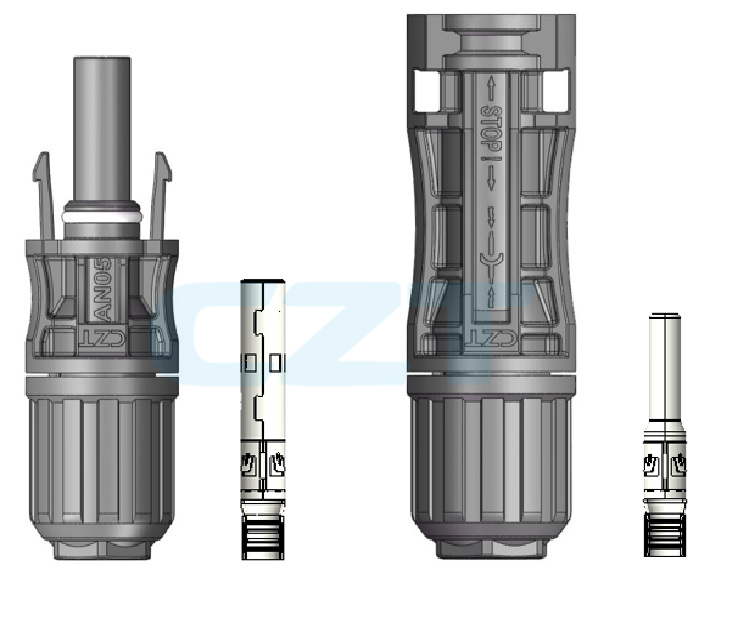
Figure 1. AN05 cable-end connector bodies and separate contact components in CZT's official product illustration. CZT source · Original image.
Review the cable and assembly details
Identify cable diameter, seal selection, fastening method and relevant preparation instructions. The protected boundary may depend on these features. A different cable jacket or missing accessory can create a construction that the report did not evaluate.
For panel-mounted parts, inspect the panel material, opening, thickness and mounting conditions included in the scope. The connector-to-panel interface can be a separate path requiring attention.
Use a scope-verification table
| Report question | Required match |
|---|---|
| Product identity | Exact model and relevant options |
| Mating state | Mated, capped or other defined condition |
| Cable interface | Cable and seal configuration |
| Mounting interface | Panel or enclosure details where applicable |
| Procedure | Stated test conditions and acceptance basis |
| Report coverage | Samples, revisions and authorized scope |
Ask for clarification when a field is missing. An unsupported inference should remain an open issue rather than becoming a confident protection claim in a purchasing specification.
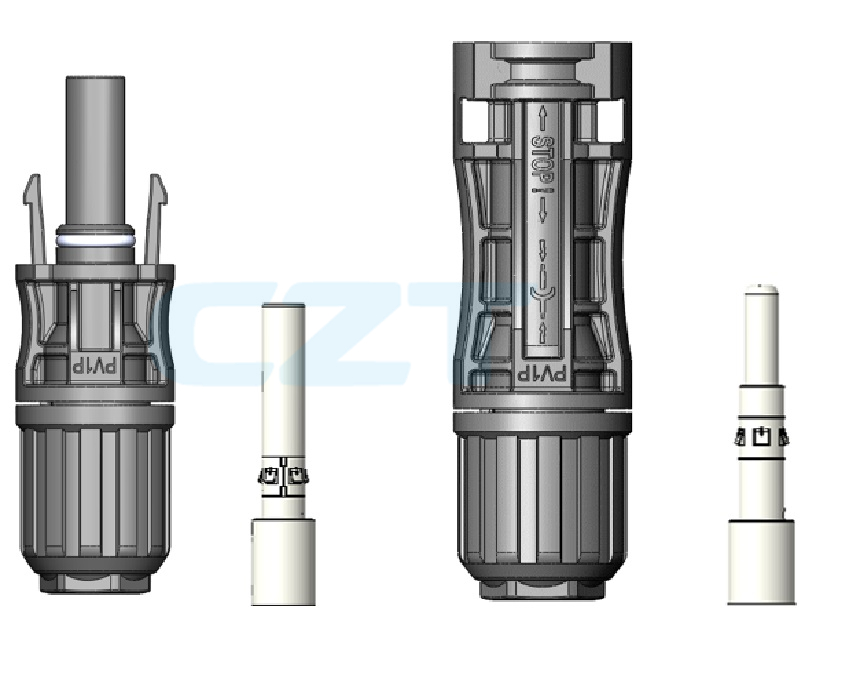
Figure 2. PV1P-A cable-end connector components in the official CZT catalog illustration. CZT source · Original image.
Separate a test result from every outdoor exposure
An IP procedure addresses its stated ingress conditions. It does not, by itself, establish resistance to every chemical, UV exposure, temperature history or mechanical load encountered outdoors. Those are separate application questions.
For a hypothetical review, a fully assembled cable pair may have relevant ingress evidence while the same connector left unmated during storage has a different protection condition. The installation and handling plan must address both stages intentionally.
Preserve the approved assembly
Keep the relevant instructions, report and bill of materials together. If the cable, seal, mating part or mounting arrangement changes, assess whether the existing evidence still applies.
This makes protection review practical rather than argumentative. Both engineering and purchasing can see the assembly that was evaluated and the conditions under which its evidence supports the intended use, without turning a short IP label into a promise covering every possible installation.
Connect this review to CZT product information
Start with the relevant CZT product family and provide the original interface reference or controlled drawing. Ask which configurations and supporting documents are available for the task described here. Confirm the mating arrangement, required features and project conditions before choosing an orderable part.
Browse the relevant product family · View catalog resources
Discuss a drawing, sample or quotation
Share the part or family reference, current drawing revision, operating conditions and quantities. Include the specific checks described in this article so the inquiry identifies both the component and the evidence needed for your decision. Confirm sample availability and the proposed scope with the supplier.
Request a technical review or quotation
For broader context, read the related selection guide.