Select a PV Y-branch connector by the current and voltage conditions at every branch and at the shared outlet. Matching the individual string connector is only one part of the decision. The combined path, its terminations and its protection arrangement must also be reviewed against the actual parallel-string design.
Draw the complete current path
Start with a single-line diagram identifying each string, branch junction, outgoing cable and protective device. Put the engineering design current beside each segment. The shared outlet can carry the contribution of multiple branches, so copying an individual string value into every component row conceals the principal selection risk.
Also identify the possible reverse-current paths under the system's fault cases. Protective-device selection depends on the module and system design. A branch housing does not, by itself, demonstrate suitable fault protection.
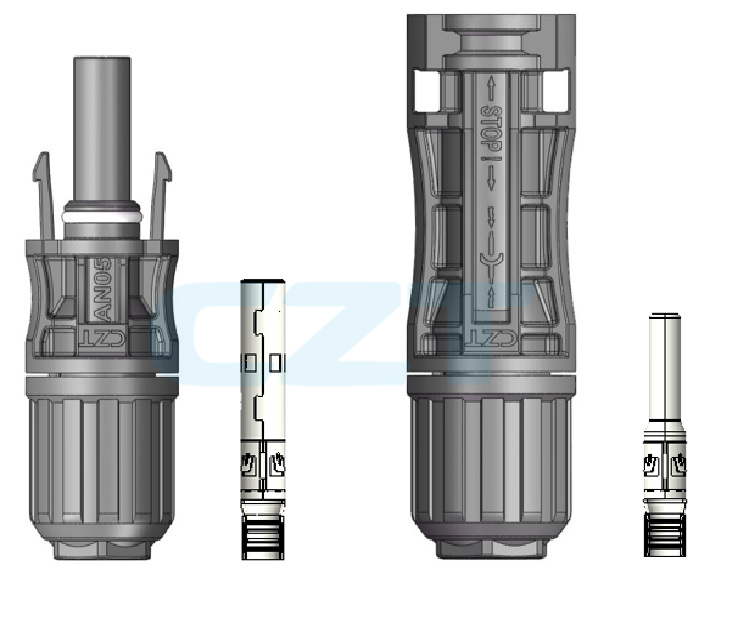
Figure 1. AN05 cable-end PV components, shown as family and terminal context. This is not a Y-branch connector illustration. CZT source · Original image.
Review the complete assembly
Ask for a drawing that identifies the internal conductive path, connector pairs, cable sizes and assembly configuration. Request the applicable rating conditions, including installation temperature and any restrictions on adjacent components. A collection of separately rated parts is not automatically a verified branch assembly.
CZT's solar PV connector range provides a starting point for discussing cable-end and panel-side interfaces. The available catalog labels do not establish that a particular Y-branch construction is offered. Confirm that construction and its supporting documentation explicitly instead of assigning a standard connector's data to an unverified branch product.
A hypothetical current-path worksheet
The following numbers illustrate bookkeeping only, not sizing rules or CZT ratings.
| Segment | Hypothetical design input | Review action |
|---|---|---|
| String A branch | 12 A | Check its full connector and cable path |
| String B branch | 12 A | Check its full connector and cable path |
| Common outlet | 24 A | Assess combined-current conditions separately |
| Fault path | Determined by system study | Review protection coordination |
Actual design currents must come from the approved system calculation, with the applicable temperature and regulatory factors. Do not adopt these example values for an installation.
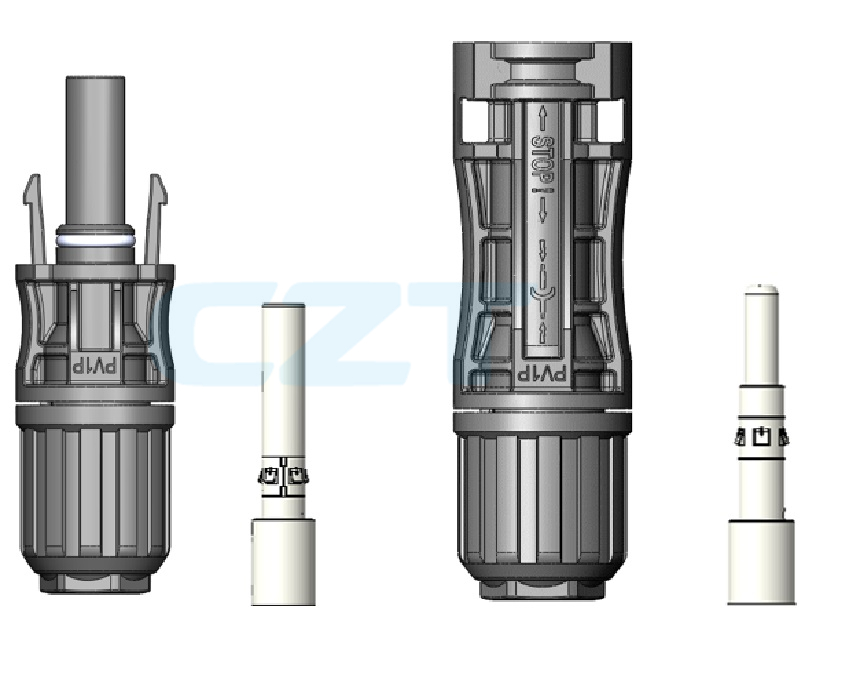
Figure 2. PV1P-A cable-end PV components, a separate family reference. A Y-branch construction is not depicted. CZT source · Original image.
Close the mating and installation questions
Identify the manufacturer and exact series on both sides of every connection. Similar appearance is insufficient evidence for cross-manufacturer mating. Stäubli's cross-connection guidance explains why the specified connector combination matters. Verify the pairing permitted for the actual products and target market.
Check branch support, bend space and cable tension in the intended position. A branch hanging from its cables introduces a different mechanical condition from a supported test sample. Document whether installation keeps the junction away from locations that collect water or impose repeated movement.
Before purchase approval, obtain an assembly drawing, the identified mating combination, combined-path evidence and the system protection review. Keep unresolved items out of a released BOM. That creates a defensible selection even when two candidate branch products look identical in photographs.
Connect this review to CZT product information
Start with the relevant CZT product family and provide the original interface reference or controlled drawing. Ask which configurations and supporting documents are available for the task described here. Confirm the mating arrangement, required features and project conditions before choosing an orderable part.
Browse the relevant product family · View catalog resources
Discuss a drawing, sample or quotation
Share the part or family reference, current drawing revision, operating conditions and quantities. Include the specific checks described in this article so the inquiry identifies both the component and the evidence needed for your decision. Confirm sample availability and the proposed scope with the supplier.
Request a technical review or quotation
For broader context, read the related selection guide.