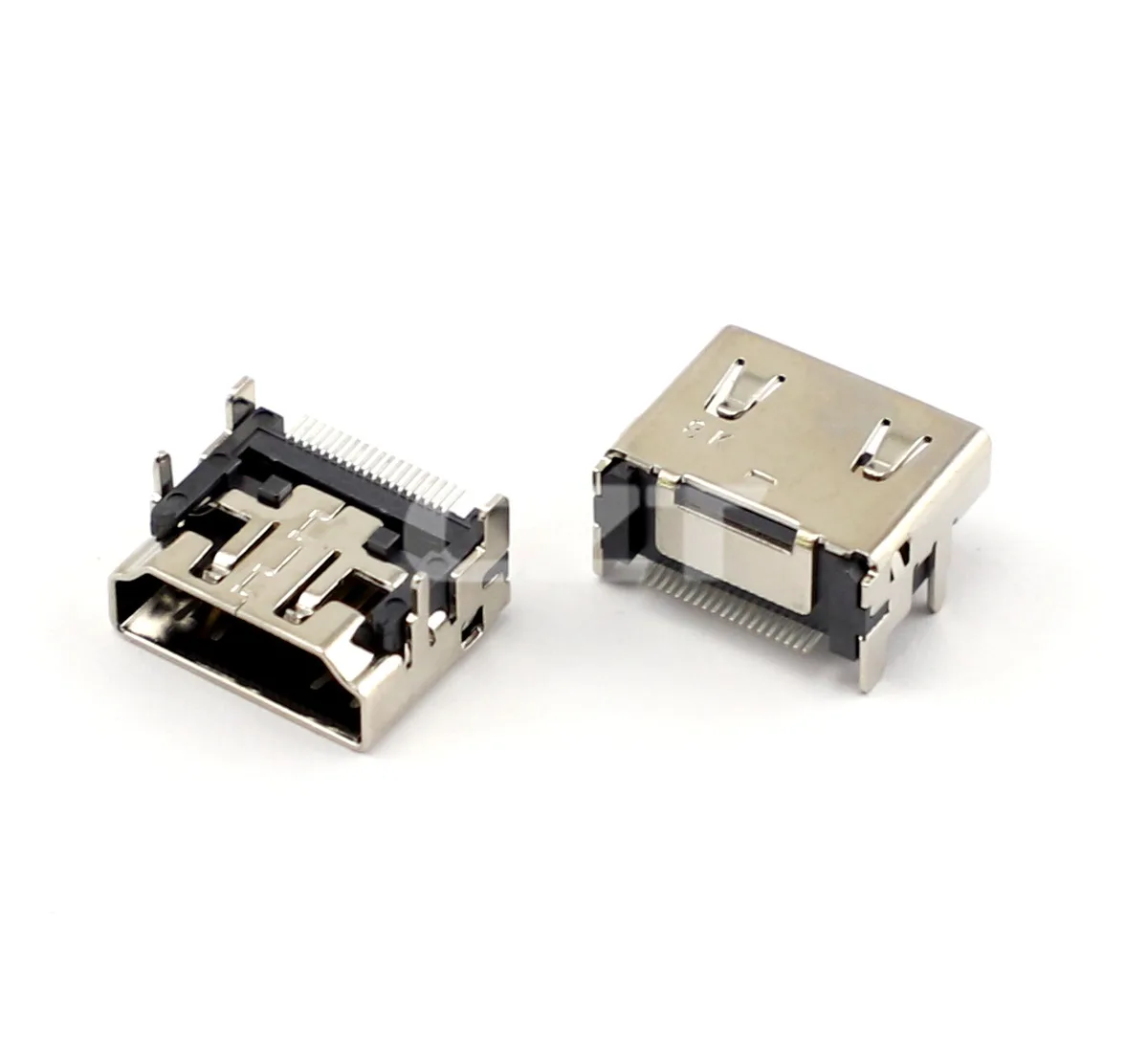
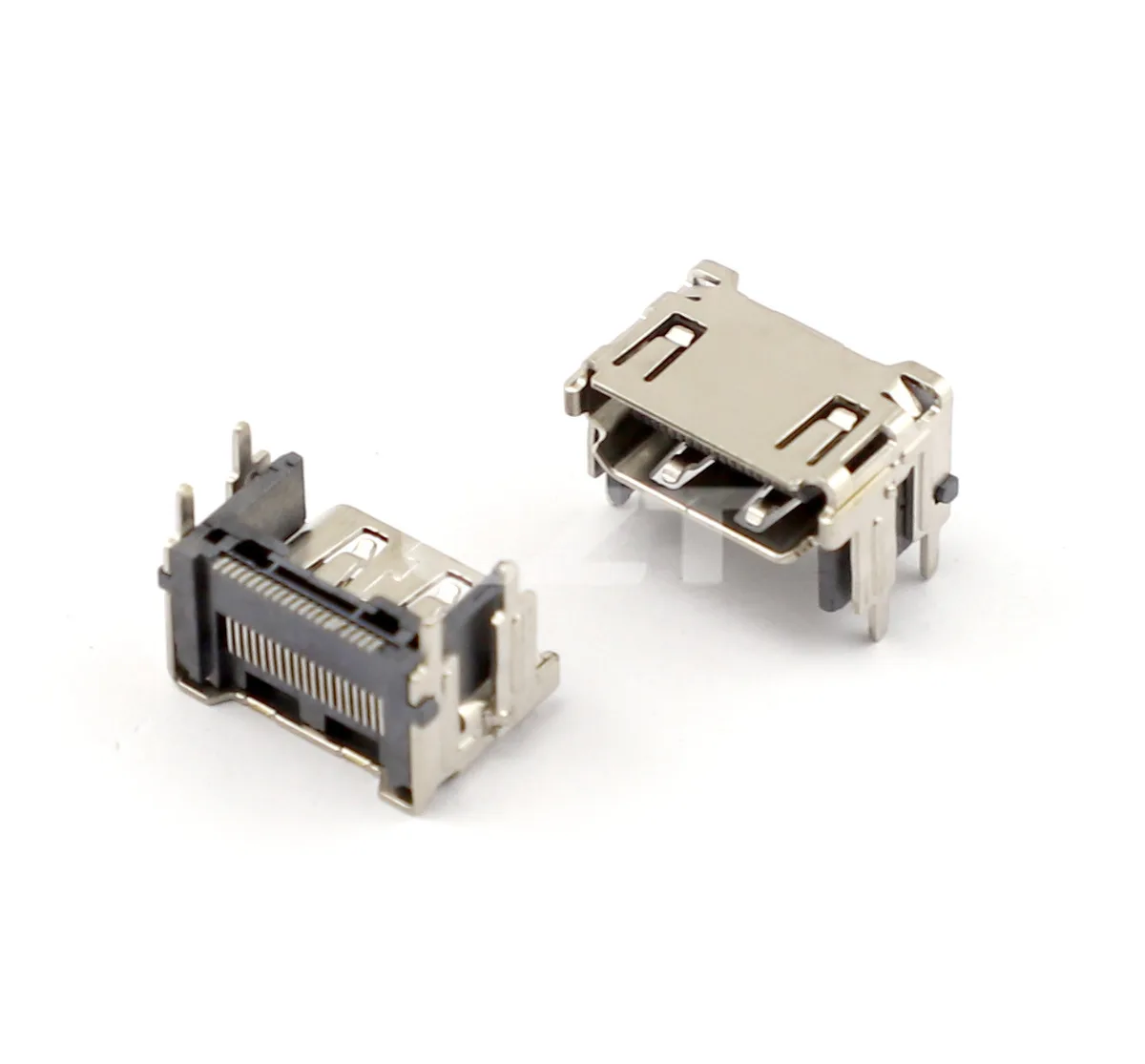
An HDMI second-source review must compare board attachment and installed position in addition to the mating interface. A cable fitting into two loose receptacles does not establish that either part can be substituted on the same PCB. The approval needs to cover the exact alternative and its implementation.
Start the search in the USB and HDMI connector family, then obtain controlled drawings for the existing and proposed parts. Catalog records help identify models but do not establish equivalence or qualified signal performance.
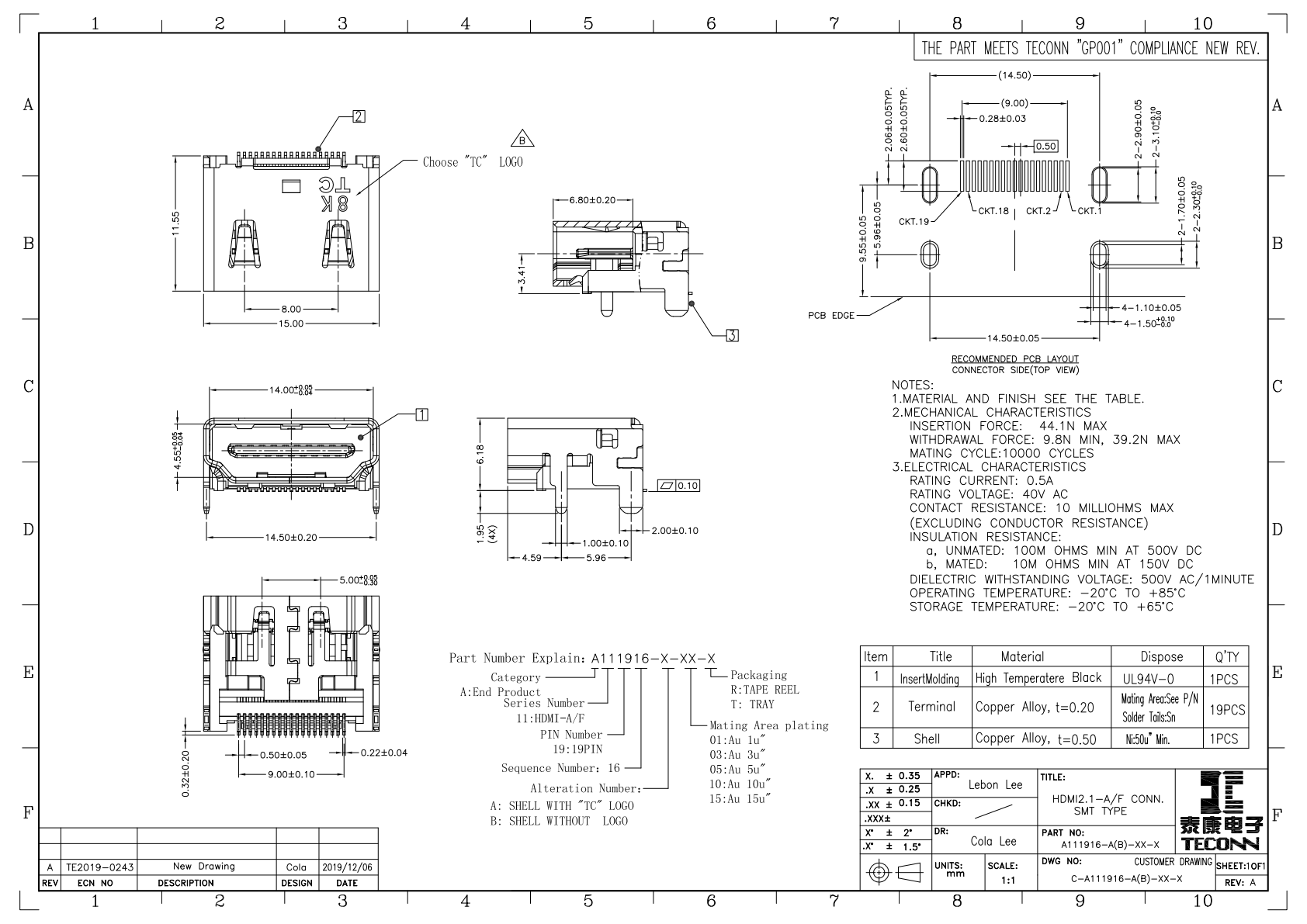
Figure 1. Official CZT A111916-family HDMI drawing illustrates one mechanical construction to compare during an alternative-part review. CZT source · Original PDF, page 1.
Compare the complete footprint
Place both drawings on a common datum. Check every signal tail, shell anchor and locating post. Compare tolerance limits and intended joining methods as well as nominal positions.
Pay particular attention to mechanical features outside the visible mating outline. A slightly different shell tail can require another hole or alter the paste process. A changed locating post may force the component above its intended board position.
Do not solve the comparison by stretching a library footprint until both illustrations overlap. Record the actual dimensional differences and obtain an engineering decision for each one.
Review the installed envelope
Check mouth height, forward projection and the maximum body dimensions. Overlay the existing enclosure and representative plug, including its overmold. The candidate must allow full engagement at the permitted assembly extremes.
| Review area | Evidence needed for the alternative |
|---|---|
| Mating interface | Exact connector drawing and representative plug |
| PCB attachment | Land, hole and shell-feature comparison |
| Enclosure relationship | Positional stack and installed fit |
| Production process | Approved conditions and first-article results |
| Required signal modes | Defined channel and system evaluation |
Mark unresolved items openly. An unanswered question about a concealed attachment is not evidence that the feature matches.
Validate the changed assembly
Use production-intent boards and the intended soldering process. Inspect seating and joints before evaluating the product's required functions. If the footprint or routing changes, identify that change in the signal-validation plan.
For a hypothetical media appliance, an alternate may fit the original pads but move the mouth backward enough to conflict with the bezel. That alternative could still be usable after a mechanical change, but it is not approved for unchanged stock substitution.
Keep the source, sink, cables and operating modes identified in the system report. A broad label on the receptacle does not replace evidence for the actual channel.
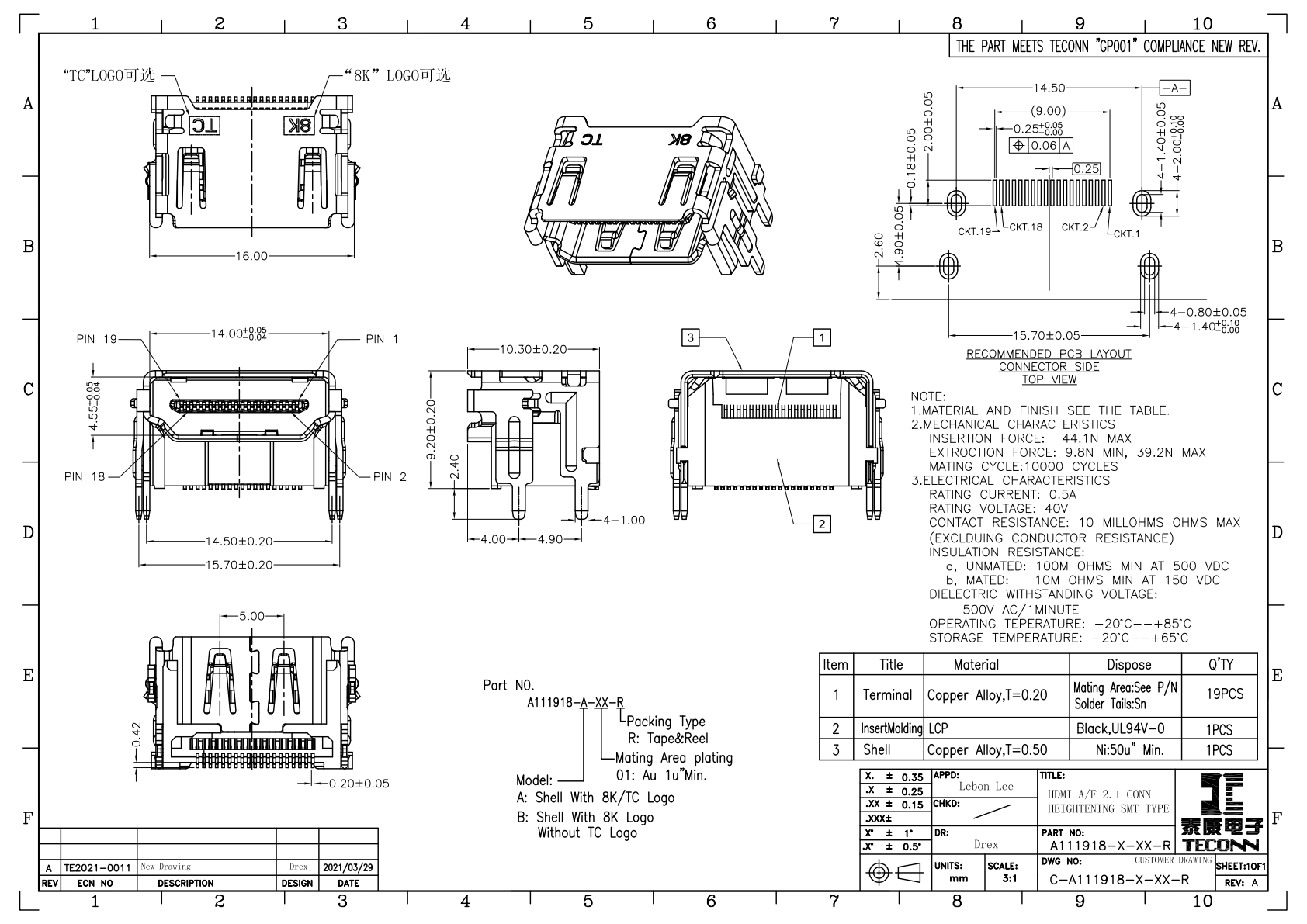
Figure 2. Official CZT A111918-family HDMI drawing illustrates a separate construction; compare footprint, locating and installed dimensions before approving a substitute. CZT source · Original PDF, page 1.
Define the purchasing rule
Approval should specify the full orderable part, drawing revision, board revision and any process restrictions. State whether the alternative may be mixed under the same internal number or must be separately tracked.
Maintain the approved differences as part of the change record. If either supplier later changes a shell feature, material or manufacturing process, use that record to assess the impact. A second-source strategy works when equivalence is demonstrated within an explicit boundary, not when purchasing has only a photograph and an approximate part description.
Connect this review to CZT product information
Catalog references to discuss are listed below. Use the identifiers to request the current drawing and confirm the configuration required by your application.
| Catalog reference | Product information | Drawing record | Reference inquiry |
|---|---|---|---|
| A111916 | HDMI Type-A receptacle, A111916 | Listed PDF | Ask about this reference |
| A111918 | HDMI Type-A receptacle, A111918 | Listed PDF | Ask about this reference |
A catalog drawing reference is a starting document, not a substitute for reviewing its revision, options and suitability for the complete assembly.
Browse the relevant product family · View catalog resources
Discuss a drawing, sample or quotation
Share the part or family reference, current drawing revision, operating conditions and quantities. Include the specific checks described in this article so the inquiry identifies both the component and the evidence needed for your decision. Confirm sample availability and the proposed scope with the supplier.
Request a technical review or quotation
For broader context, read the related selection guide.