All (297)I/O Connectors (21)Automotive & EV (56)Industrial (37)Fiber Optics (35)Solar & Energy (57)Engineering Guides (36)Networking (45)Networking & Fiber (4)Case Studies (3)Product Comparisons (3)
Fiber Optics
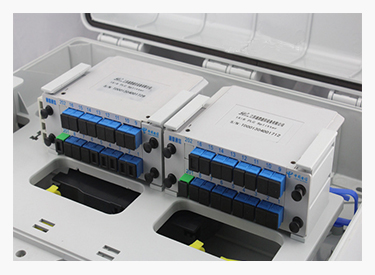
APC and UPC Procurement Error-Proofing Beyond Connector Color
Prevent APC/UPC procurement errors by specifying the actual end-face polish at every mating interface. Connector color is a useful visual aid, but it is...
Read more
Fiber Optics
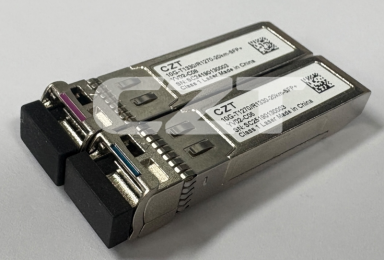
Preventing Pairing Errors When Procuring BiDi Optical Modules
Procure single-fiber BiDi optical modules as an identified complementary pair, not as two units selected only by reach or connector shape. The transmit...
Read more
Fiber Optics
High-Density Fiber Panel Cutouts: Adapter Latches and Panel Thickness
A high-density fiber-panel cutout must be reviewed against the selected adapter's mounting and service geometry. Matching a connector-family name does...
Read more
Fiber Optics
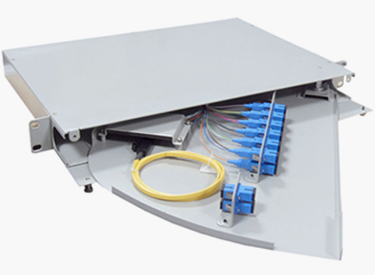
Reading Fiber Connector Batch Reports: Insertion and Return Loss Conditions
Read a fiber-connector batch report by checking its measurement boundary and conditions before comparing the numbers. Insertion loss and return loss...
Read more
Fiber Optics
Optical Link Budget Worksheet for Connectors, Splices and Margin
An optical-link budget should account for the complete path between transmitter and receiver, including fiber, connections, splices and a justified...
Read more
Fiber Optics
Unstable Fiber Loss After Cleaning: End-Face Damage or Test Repeatability
Unstable fiber insertion loss after cleaning calls for a controlled measurement investigation, not repeated cleaning without a record. Separate end-face...
Read more
Fiber Optics
Fiber Pigtail Procurement Drawings: Lengths, Jackets and Traceability
A fiber-pigtail procurement drawing should define the optical end, free-fiber geometry and measurement datums separately. A description such as...
Read more
Fiber Optics
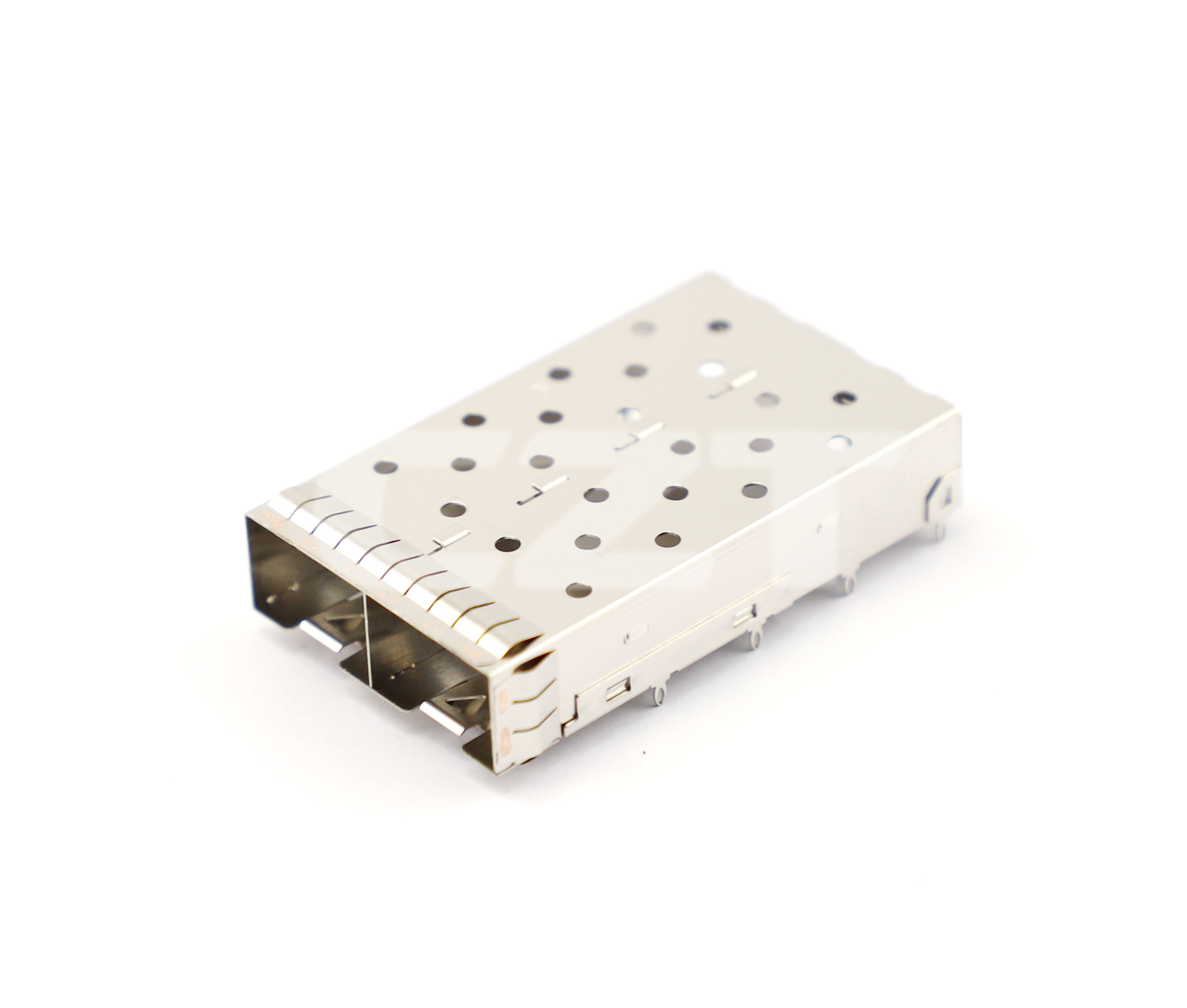
Vibration Qualification for Industrial Optical Ports as an Assembly
Qualify an industrial optical port under vibration as an installed assembly, including the module, cage, receptacle, PCB support and connected cable....
Read more
Fiber Optics
Verifying LC Duplex Polarity in Production and Incoming Inspection
Verify LC duplex polarity by documenting which transmit path reaches which receive path through the complete installed connection. Connector color and...
Read more
Fiber Optics
MPO System Polarity Acceptance Across Trunks, Cassettes and Patch Cords
Accept MPO system polarity by checking the complete channel map across trunks, cassettes and patch cords. A label describing one cable's polarity does...
Read more
Fiber Optics
Planning Service Access for Multiport SFP Cage Assemblies
Reserve service space for a multiport SFP assembly using fully populated ports and the intended cables. Port pitch alone does not show whether a...
Read more
Fiber Optics
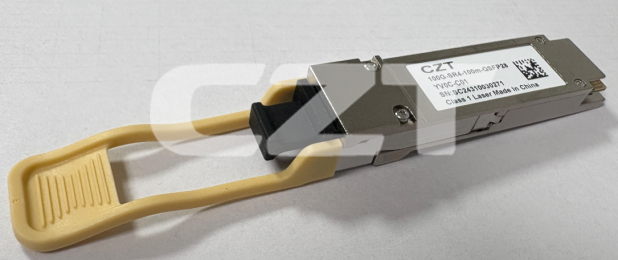
Optical Transceiver Compatibility Test Matrix for OEM Qualification
An optical-transceiver compatibility matrix should identify the host, software, module and operating conditions behind every result. Compatible with a...
Read more
Fiber Optics
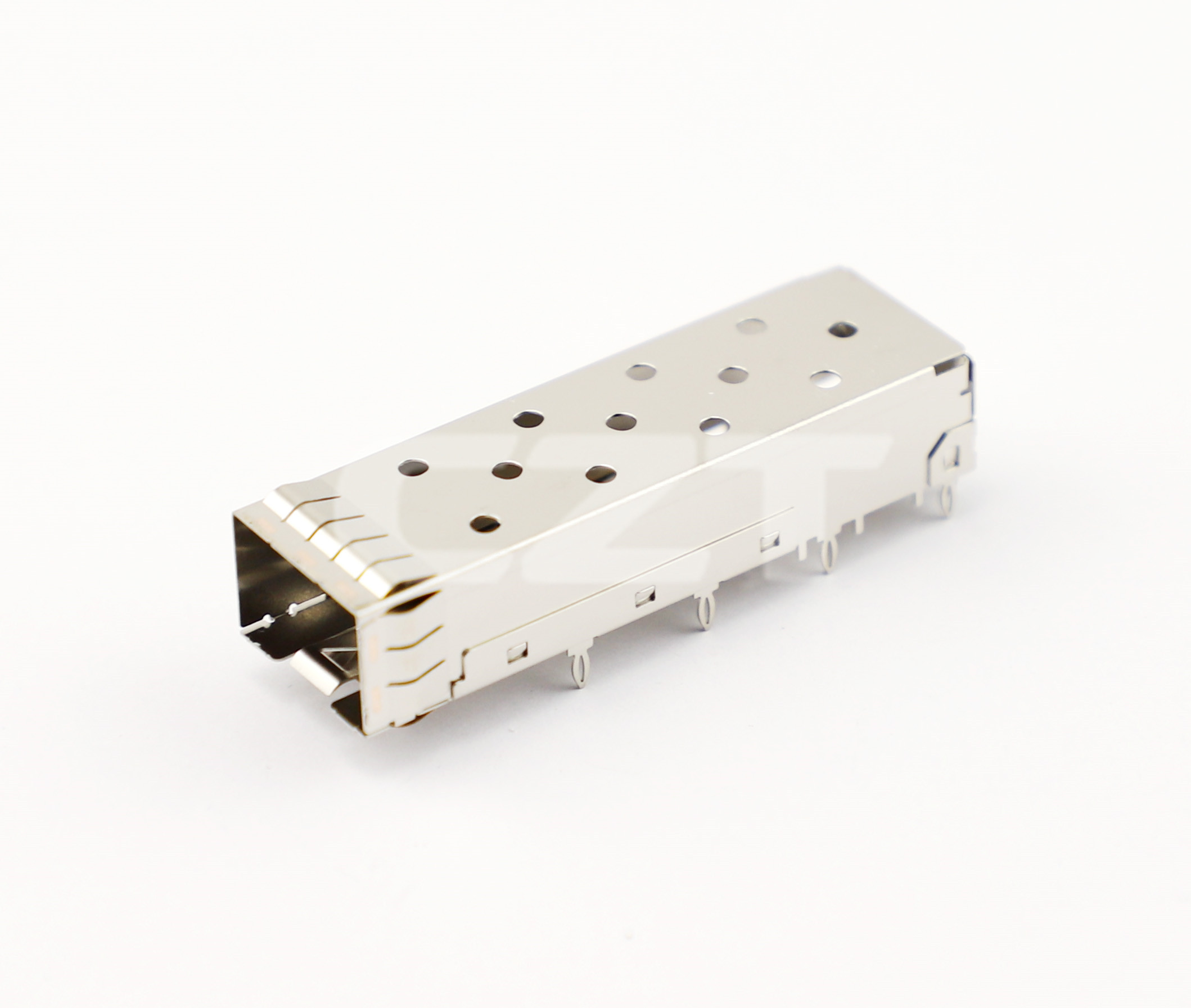
Troubleshooting EMI Leakage Around SFP Cage Openings
Investigate EMI leakage around an SFP opening by linking measured emissions to the cage, panel and PCB grounding geometry. A metal cage is one part of...
Read more
Fiber Optics
SFP Cage Mechanical Stack-Up: PCB, Panel and Module Alignment
Review an SFP cage as a mechanical stack joining the module, electrical receptacle, PCB and front panel. A cage footprint alone does not define the...
Read more
Fiber Optics
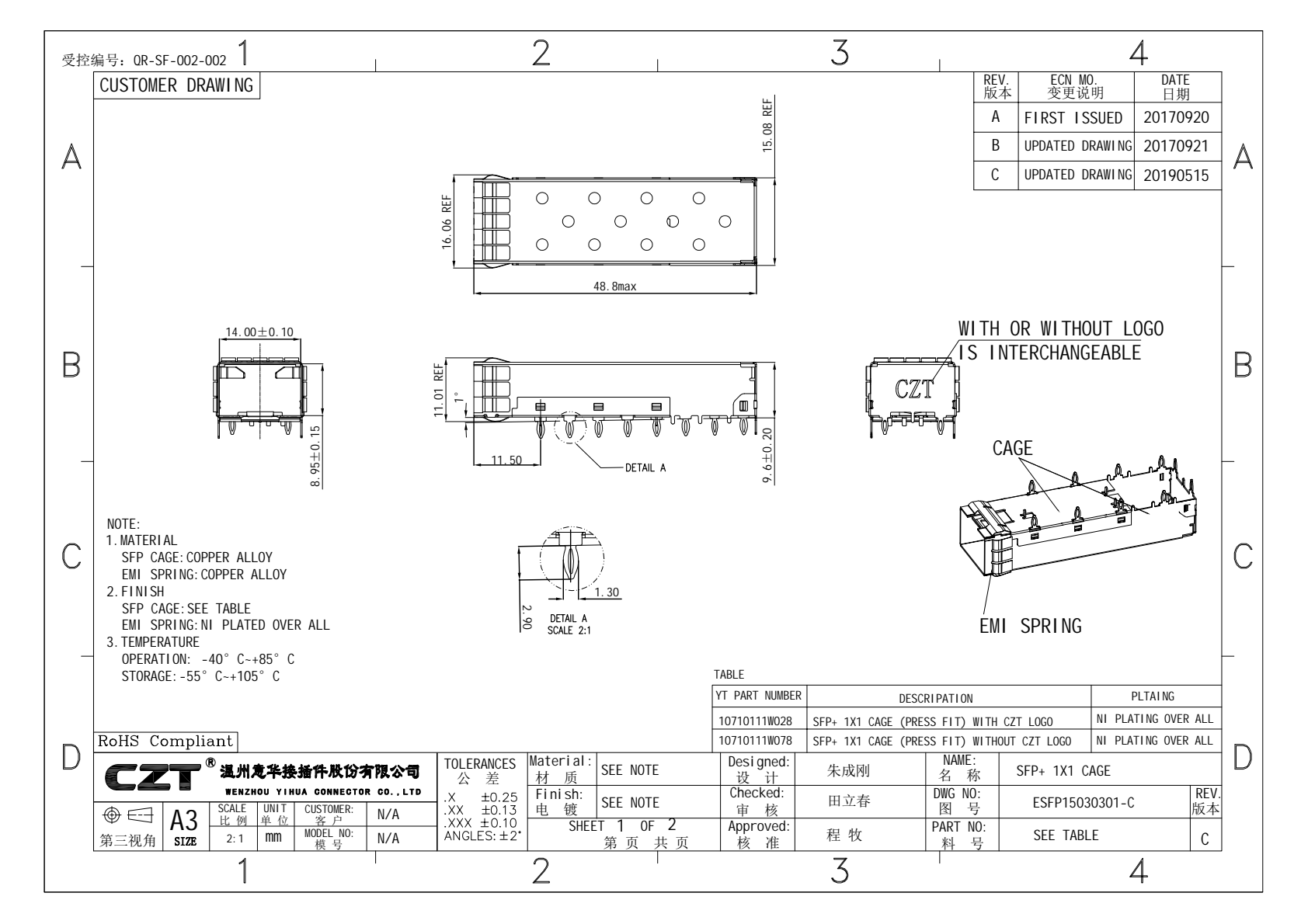
Press-Fit vs Soldered SFP Cages: PCB Assembly Selection
Choose press-fit or soldered SFP cage installation from the actual PCB fabrication and assembly capability. The method affects hole or pad requirements,...
Read more
Fiber Optics
SFP Cage and Receptacle RFQ Checklist for Hardware Buyers
An SFP cage and receptacle RFQ should define the board-level hardware being purchased separately from the pluggable optical module. A requested module...
Read more
Fiber Optics
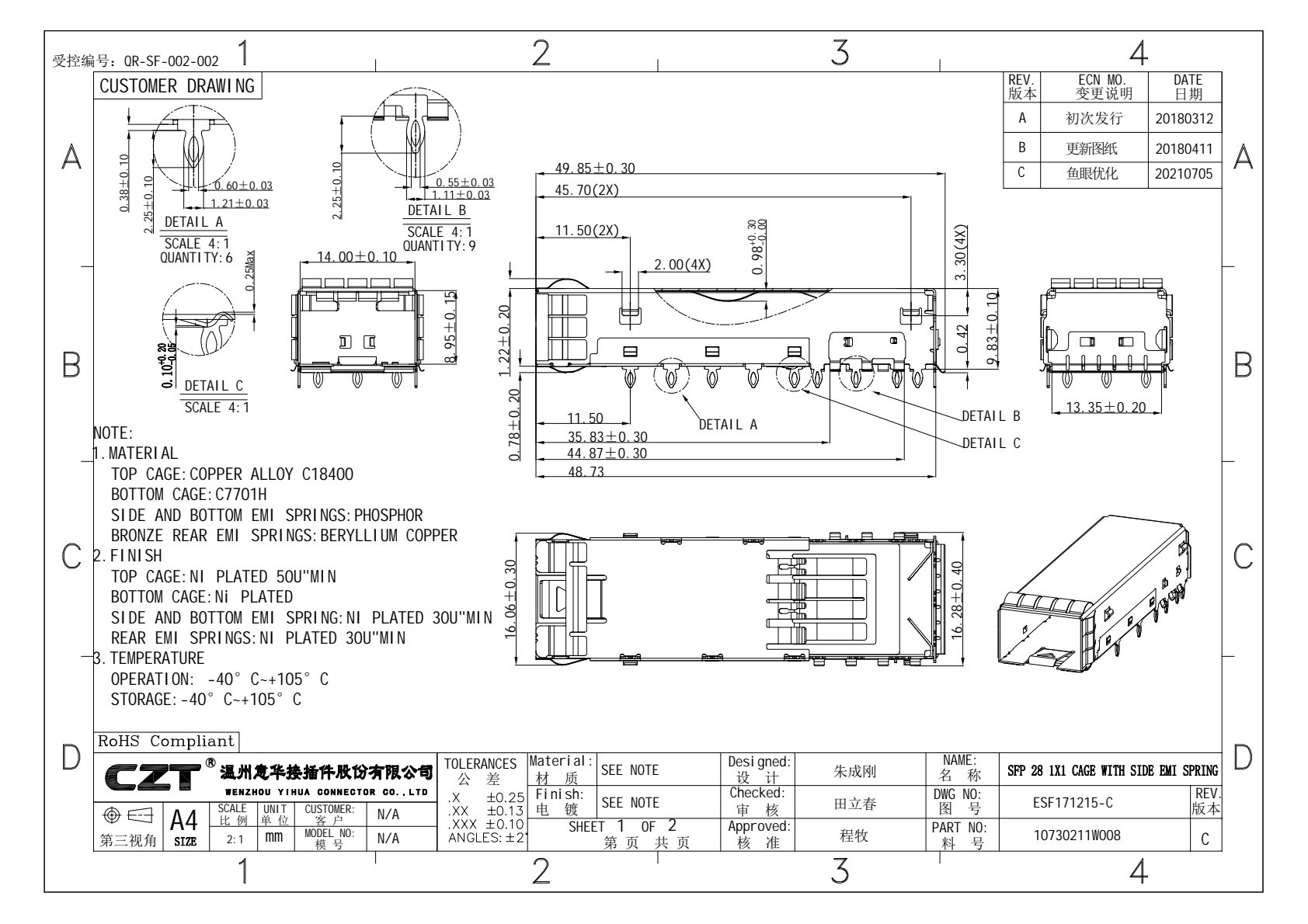
Second-Source Qualification Checklist for SFP Cages and Receptacles
Qualify an alternative SFP cage or receptacle by comparing the complete installed interface and production process. A matching port shape or nominal...
Read more
Fiber Optics
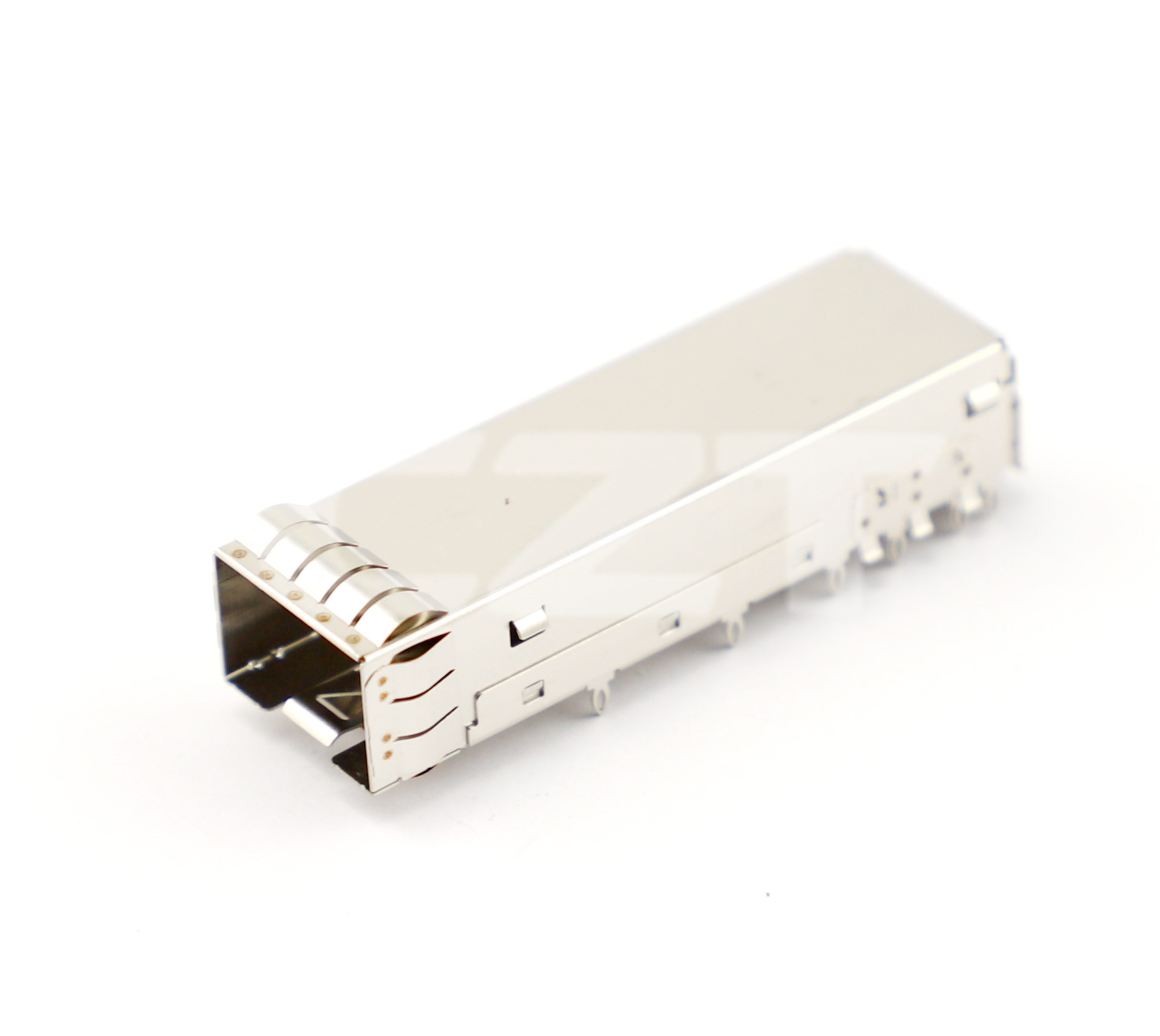
Validating Thermal Paths in High-Density SFP Cage Assemblies
Validate an SFP cage's thermal path with the actual module, neighboring ports, heat-transfer interfaces and airflow. A module power figure alone does not...
Read more
Fiber Optics
Diagnosing Intermittent Contacts in SFP Receptacles
Intermittent behavior at an SFP port should be isolated across the module, receptacle, cage, PCB and optical path before assigning a connector failure....
Read more
Fiber Optics
SFP-to-QSFP Hardware Migration: PCB and Front-Panel Review
An SFP-to-QSFP hardware migration requires a fresh review of the port's mechanical, electrical, thermal and service interfaces. The migration is not...
Read more
Fiber Optics
Coherent Optics Explained: How 100G+ Transmission Works
Learn how coherent optical transmission works: coherent vs direct-detect optics, modulation formats (DP-QPSK, QAM), and when to use coherent transceivers in practice.
Read more
Fiber Optics
FC Fiber Connector — Specs, Polish Types & Uses
How the FC fiber connector works: screw-lock mechanism, PC vs APC polish, specs, and comparison with LC and SC connectors.
Read more
Fiber Optics
Fiber Optic Termination Methods — Field, Splice & Fusion
Learn the four fiber optic termination methods: field polishing, pre-polished connectors, fusion splicing, and mechanical splicing.
Read more
Fiber Optics
LC Fiber Connector Guide: Everything You Need to Know
Learn the LC fiber connector: physical specs, LC/APC vs LC/UPC differences, duplex vs simplex, insertion loss, and why LC dominates SFP and data center cabling.
Read more
Fiber Optics
MPO vs MTP Connectors: High-Density Fiber for Data Centers
Learn the difference between MPO and MTP fiber connectors. Covers pin configurations, polarity types, and how to choose the right high-density solution.
Read more
Fiber Optics
Optical Transceiver Guide: Types, Specs & How to Choose
Learn optical transceiver types: SFP, SFP+, QSFP28, and QSFP-DD. Covers single-mode vs multimode fiber, reach categories, and how to choose the right module.
Read more
Fiber Optics
OS1 vs OS2 Fiber — Key Differences & When to Use Each
Compare OS1 vs OS2 single-mode fiber: attenuation specs, cable construction, bend radius, and which standard to use for indoor and outdoor installations.
Read more
Fiber Optics
SC Fiber Connector Guide: SC/APC vs SC/UPC Explained
Learn the SC fiber connector specs, SC/APC vs SC/UPC differences, insertion loss, return loss, and where SC connectors remain the preferred choice over LC.
Read more
Fiber Optics
ST Fiber Connector — How It Works & When to Use It
How the ST fiber connector works and when to use it. Covers bayonet locking, specs, multimode vs single-mode, and comparison with LC/SC.
Read more
Fiber Optics
Transceiver vs SFP: Optical Networking Terminology Guide
Confused by transceiver terminology? Explains what a transceiver is, how SFP, SFP+, and QSFP28 form factors relate, and how to choose the right module.
Read more
Fiber Optics
LC vs SC Connector: Which Fiber Connector Should You Use?
Compare LC and SC fiber optic connectors side by side. Learn the key differences in size, performance, cost, and applications to pick the right connector type.
Read more
Fiber Optics
SFP vs SFP+ vs QSFP28: Transceiver Module Comparison Guide
Compare SFP, SFP+, SFP28, QSFP+, and QSFP28 transceiver modules — covering SFP module types, SFP fiber connector interfaces, data rates, reach options, and how to choose the right optical module.
Read more
Fiber Optics
Single-Mode vs Multi-Mode Fiber: How to Choose the Right One
Compare single-mode and multi-mode fiber optic cables. Learn core size, distance, bandwidth, cost differences, and how to pick the right fiber type.
Read more
Fiber Optics
Types of Fiber Optic Connectors: LC, SC, ST, FC Explained
Learn about the main types of fiber optic connectors — LC, SC, ST, and FC — their specs, applications, and how to choose the right fiber connector type for your network.
Read more
Fiber Optics
What Is an Optical Transceiver? SFP Modules Explained
Learn what an optical transceiver is, how SFP modules work, and how to choose the right transceiver for your network. Covers SFP, SFP+, QSFP28, and more.
Read more
Need a Custom Connector Solution?
Our engineering team can help you find the right interconnect solution for your project.